Key takeaways
- Match reflectance to your light source: Beige and cream runners have a high light reflectance value, so they bounce illumination back up the walls and visually widen a dim corridor. Charcoal and ashen tones absorb it, which is what you want in a hallway that already gets spill light from adjoining rooms and reads washed out.
- Keep the pile low and even: Low-pile weaves scatter light softly. Anything shaggy or uneven casts small shadows across its own surface under a single overhead fixture, which reads as dirty even when the rug is spotless.
- Measure for a border of bare floor: Leave roughly 4 to 6 inches of flooring exposed on each side. That frame of reflective surface catches ambient light and keeps the runner from looking like wall-to-wall carpet.
- Insist on rubber backing, not just a “non-slip” label: Corridors take angled, fast footsteps. Full rubber backing holds position on tile and sealed wood without a separate pad, and it stops the curled corners that trip people in low light.
- Choose washable if the runner meets a door: Entryway and kitchen runs collect grit and water. Machine-washable, stain-resistant constructions let you keep the tone consistent, and a faded or blotchy rug distorts colour temperature more than most people expect.
What's inside
Hallways are the least flattering rooms in a house, and it has nothing to do with the paint. They are usually the only spaces with no window, lit by a single overhead fixture that throws light straight down onto hard flooring. That geometry creates two problems at once: a hot glare patch under the fixture and murky, undefined edges everywhere else. Add the drumming echo of footsteps on tile or engineered wood, and a corridor stops feeling like part of the home and starts feeling like a service passage between the parts you actually like.
A runner is the cheapest fix for both issues. The right one diffuses harsh downlight instead of reflecting it, deadens footfall, and draws a visual line that tells the eye where the space is going. This guide looks at hallway runners the way a lighting designer would: reflectance, texture, shadow behaviour at floor level, and how a rug reads at 11pm under a dimmed bulb versus noon in a bright entryway. Below are six washable, non-slip options across the lengths most homes actually need.
As an Amazon Associate we earn from qualifying purchases.



🛒 Best Price Today on Amazon
Prime members get fast, free shipping on everything above, plus member-only deals. New members get a 30-day free trial — cancel anytime.
How to Choose a Hallway Runner (2026)
- Match reflectance to your light source: Beige and cream runners have a high light reflectance value, so they bounce illumination back up the walls and visually widen a dim corridor. Charcoal and ashen tones absorb it, which is what you want in a hallway that already gets spill light from adjoining rooms and reads washed out.
- Keep the pile low and even: Low-pile weaves scatter light softly. Anything shaggy or uneven casts small shadows across its own surface under a single overhead fixture, which reads as dirty even when the rug is spotless.
- Measure for a border of bare floor: Leave roughly 4 to 6 inches of flooring exposed on each side. That frame of reflective surface catches ambient light and keeps the runner from looking like wall-to-wall carpet.
- Insist on rubber backing, not just a “non-slip” label: Corridors take angled, fast footsteps. Full rubber backing holds position on tile and sealed wood without a separate pad, and it stops the curled corners that trip people in low light.
- Choose washable if the runner meets a door: Entryway and kitchen runs collect grit and water. Machine-washable, stain-resistant constructions let you keep the tone consistent, and a faded or blotchy rug distorts colour temperature more than most people expect.
The Best Hallway Runners of 2026, Reviewed
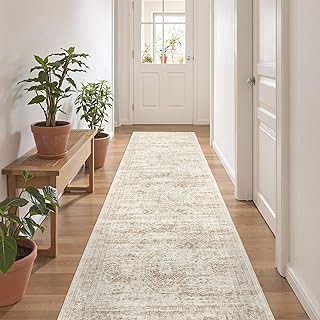
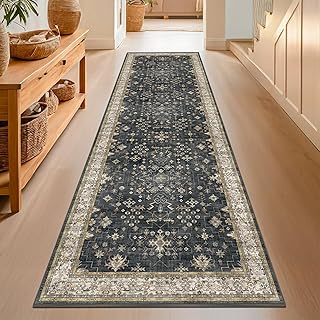
Hallway Washable Runner Rug, 2’6″ x 14′ Beige
At 14 feet, this covers the long single-corridor layouts common in ranch homes, and the vintage beige pattern is busy enough to hide traffic wear without competing with wall art. The pale ground lifts light back toward the ceiling, making it the strongest pick for hallways with no natural light at all.
2×8 Non-Slip Washable Runner, Beige
A thin, neutral workhorse for short halls, galley kitchens, and the stretch in front of a bathroom door. The low profile clears door swings cleanly and its soft, matte face avoids the specular glare you get from tighter synthetic weaves under recessed cans.
Madane Hallway Runner 3×10, Beige/Blue
The extra width is the point here: at three feet, it fills a standard corridor properly and gives a foyer some weight. The muted blue in the pattern cools slightly under warm 2700K bulbs, which keeps the beige from turning yellow at night.
3×20 ft Long Hallway Runner, Cream/Beige
Twenty feet is genuinely hard to find, and this one saves you from butting two runners together, which never lines up and always catches shadow at the seam. Best in wide, dim hallways where the cream ground can do real work brightening the floor plane.
Dark Washable Runner, 2’6″ x 8′ Ashen/Multi
The counterweight to everything above. In a bright, white-walled hall with a skylight or plenty of spill light, this boho ashen palette absorbs excess glare and anchors the space, and the rubber backing keeps it flat on tile.
Frequently Asked Questions
Will a light-coloured runner really brighten a dark hallway?
Yes, measurably. Floors receive most of the output from ceiling fixtures, and a pale rug returns a good share of it to the walls as soft indirect light. A dark runner in the same spot swallows it and the corridor reads narrower.
How long should my runner be?
Aim to stop 6 to 12 inches short of the wall or doorway at each end. Running fully to the wall makes the hallway look shorter and traps dust at the edges.
Do I need a rug pad underneath?
Not with these. All the picks here use rubber or non-slip backing designed for hard floors. On rugs with very smooth backing, check manufacturer guidance before use over radiant-heated floors.
What if my hallway is under six feet long?
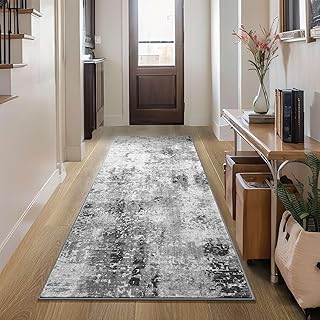
Go with something like the Ompaa 2×6 grey runner. Its abstract pattern and low pile suit small landings and bathroom thresholds, where a longer rug would look forced.
Final Thoughts
For most dim, windowless corridors, the 2’6″ x 14′ washable beige runner offers the best balance of coverage and light return, while the Madane 3×10 in beige and blue is the smarter choice if your hallway is wide enough to carry three feet. If your problem is too much glare rather than too little light, the 2’6″ x 8′ Ashen/Multi runner is the one that will settle the room down.