
Key takeaways
- Maximum Weight Recommendation: 600 Pounds
- Warranty Type: Push up board
- Assembly Instructions Description: No assembly required
The single most useful thing I did before buying any equipment was chalk an outline on the garage floor. Eight feet by ten, roughly the size of two parking spaces’ worth of walking room, and inside that rectangle I marked where a bench would sit, where a bar would travel, and where my heels needed to land when I stepped back from a rack. Half the gear I had bookmarked did not survive the chalk test. A treadmill ate the entire lifting zone. A full power rack put my head six inches from a garage door track. The rectangle told me what the reviews could not: home gyms are a spatial problem first and a shopping problem second.
What follows is the layout logic, the flooring math, and six pieces that cover strength, conditioning, and mobility inside a footprint most people already have — a spare bedroom, a basement corner, one bay of a two-car garage. Budget lands between roughly $700 and $1,600 depending on how much iron you want, and every item here folds, stacks, or hangs when you are done with it. Nothing on this list requires bolting into a joist or dedicating a whole room permanently.
Our top picks
 MQRW Push Up Board
- Maximum Weight Recommendation: 600 Pounds
- Warranty Type: Push up board
- Assembly Instructions Description: No assembly required
Combines a push-up board, resistance bands, and ab roller in one set
No assembly required, ready to use out of the box
Color-coded zones help target chest, triceps, and shoulders
Push-up board alone is rated to 600 pounds, bands wear faster
Managing many small accessories together can get cluttered
 YOLEO Adjustable Weight Bench for Home Gym
- Item Dimensions D x W x H: 41"D x 12.6"W x 42.5"H
- Material: Alloy Steel
ASTM-certified for an 827-pound capacity
Ships 98 percent pre-assembled, ready in seconds
84 adjustable positions cover nearly every bench angle
Maximum recommended user weight is listed lower at 330 pounds
Folds compact but still needs under-bed or closet storage space
 Ayombo Pilates Bar Kit with Resistance Bands
- Recommended Uses For Product: At Home Pilates Workout
- Tension Supported: Heavy
- Number of Resistance Levels: 2
360 degree rotating lugs keep resistance bands from tangling
Foam-wrapped bar grip reduces slipping from sweat
Carry bag makes it easy to bring to a gym or park
Included bands rated around 30 pounds limit max resistance
Multiple small pieces can be easy to misplace
| Product | Key specs | |
|---|---|---|
| MQRW Push Up Board | Maximum Weight Recommendation: 600 Pounds Warranty Type: Push up board Assembly Instructions Description: No assembly required | Check price |
| YOLEO Adjustable Weight Bench for Home Gym | Item Dimensions D x W x H: 41"D x 12.6"W x 42.5"H Material: Alloy Steel | Check price |
| Ayombo Pilates Bar Kit with Resistance Bands | Recommended Uses For Product: At Home Pilates Workout Tension Supported: Heavy Number of Resistance Levels: 2 | Check price |
 NICEPEOPLE Adjustable Weight Bench for Home Gym NICEPEOPLE Adjustable Weight Bench for Home Gym | Item Dimensions D x W x H: 46"D x 16.7"W x 17.2"H Material: Superior Alloy Steel | Check price |
 Hip Thrust Belt Hip Thrust Belt | Material: Neoprene Closure Type: Hook and Loop | Check price |
 HOXWC Ankle Resistance Bands with Cuffs HOXWC Ankle Resistance Bands with Cuffs | Tension Supported: 10LB, 20LB, 30LB Number of Resistance Levels: 3 Material Type: Neoprene | Check price |
 WIKDAY Resistance Bands for Working Out Exercise WIKDAY Resistance Bands for Working Out Exercise | Check price | |
 SincMill Home Gym Multifunctional Full Body Workout SincMill Home Gym Multifunctional Full Body Workout | Warranty Description: 10 Years Tension Supported: 148 pounds Handle Type: Pulldown, Strap | Check price |
As an Amazon Associate we earn from qualifying purchases at no extra cost to you.
As an Amazon Associate we earn from qualifying purchases.

Quick Comparison
| Piece | Working Footprint | Stored Footprint | Primary Job | Flooring Demand |
|---|---|---|---|---|
| Adjustable dumbbells (5–50 lb pair) | 4 ft x 6 ft | 2 ft x 1.5 ft on trays | Presses, rows, lunges, carries | High — drop risk on knurled ends |
| Folding adjustable bench | 3 ft x 5 ft | Vertical, 14 in deep | Incline, flat, seated support | Low — needs level, firm surface |
| Cast iron kettlebell (16–24 kg) | 5 ft x 5 ft swing arc | 10 in x 10 in | Swings, goblet squats, carries | Very high — 8 mm minimum |
| Suspension trainer | 4 ft x 7 ft | Stuff sack, shoebox size | Rows, pushes, single-leg work | Low |
| Doorway pull-up bar | 3 ft x 4 ft plus overhead | Stays mounted | Vertical pulling, hangs | Moderate — landing zone |
| Magnetic or air rower | 2 ft x 8 ft | Upright, 2 ft x 2 ft | Conditioning, warm-ups | Low — mat prevents creep |
How to Choose
- Chalk the rectangle before you shop. Measure your usable floor, subtract two feet on any side you need to walk past, then check the remainder against a piece’s working footprint rather than its shipping box. A rower’s listed length is not the length you need — add a foot behind the flywheel for the seat’s return and eighteen inches at the rail end for your knees.
- Match flooring thickness to your worst-case impact. Interlocking EVA puzzle tiles at 12 to 20 mm are fine for bodyweight, bands, and bench work over carpet or hardwood. The moment kettlebells or dumbbells enter the room, step up to 8 mm rubber roll or a 3/4-inch stall mat. Rubber absorbs and stays put; foam compresses permanently and telegraphs impact straight into a subfloor.
- Check overhead clearance with your arms up, not standing relaxed. Standing dumbbell presses need about 24 inches above your head, and a pull-up bar needs enough room that your chin clears without hitting a ceiling fixture. Anything under a 7-foot 6-inch ceiling means favoring seated and incline pressing.
- Buy adjustability over quantity. One pair of dial-adjustable dumbbells replaces fifteen fixed pairs and a rack that would swallow four square feet of wall. The same logic applies to a bench with seven back positions instead of a flat bench plus a separate incline.
- Weigh noise as a real constraint. Apartment lifters and anyone training above a sleeping child should skip air resistance and jumping in favor of magnetic rowers, urethane-coated weights, and rubber underlayment. A cheap air bike measured at conversational-shout volume will end a home gym faster than any injury.
Top Picks Reviewed
1. Dial-Adjustable Dumbbells, 5 to 50 Pounds
These are the anchor purchase. A pair covering 5 to 50 pounds in 2.5- or 5-pound steps handles pressing, rowing, hinging, and loaded carries for years, and the selector dial means changing weight mid-superset takes three seconds instead of thirty. Look for a plate-stack design with a locking pin you can feel engage, and set the cradles on the floor rather than a shelf — the plastic trays are load-bearing, and dropping a 50-pound block from waist height onto tile will crack both. Expect to spend $300 to $500 for the pair; the sub-$200 versions rattle and cap out around 25 pounds per hand.
2. Folding Adjustable Weight Bench
The bench you want has a ladder-style back adjustment reaching from decline through vertical, a pad no wider than 11 inches so your shoulder blades can retract, and a frame rated to at least 600 pounds combined. The folding hinge matters more than the star rating: a bench that stands vertically in a closet costs nothing in floor space between sessions. Test the wobble by pressing hard on one front corner — a stable unit rocks less than a quarter inch. Good ones run $130 to $250.
3. A Single Cast Iron Kettlebell
One bell, chosen well, replaces a cardio machine on days you have twenty minutes. Sixteen kilograms suits most beginners for swings and goblet squats; 24 kilograms if you already deadlift comfortably. Buy cast iron with a smooth, powder-coated handle wide enough for two hands, and skip the vinyl-dipped versions whose coating splits and traps grit. A bell is also the piece that dictates your flooring decision, because a controlled drop from hip height delivers several hundred pounds of force to one square foot.
4. Suspension Trainer with Door Anchor
For horizontal rowing without a rack, nothing beats straps. The door anchor turns any solid door into a pulling station, letting you adjust difficulty by walking your feet forward an inch at a time. Rows, chest presses, split squats, and hamstring curls all live here, and the whole system weighs under two pounds. Check that the straps use cam-lock adjusters rather than knots, and that the anchor webbing is at least 1.5 inches wide.
5. Doorway or Wall-Mounted Pull-Up Bar
Vertical pulling is the gap most home gyms never fill. A leverage-mounted doorway bar needs no drilling and holds 250 to 300 pounds, though it demands a door frame with at least 3.5 inches of trim depth. If your frame is shallow, a wall-mounted bar screwed into studs is more secure and gives you room to swing your knees through. Add a resistance band looped over the bar for assisted reps while you build strength.
6. Magnetic Rower with Upright Storage
A rower earns its footprint by training legs, back, and lungs at once with zero joint impact, and the magnetic-resistance models stay quiet enough for shared walls. Prioritize an aluminum rail with a seat that glides without side-to-side play, a monitor that reports stroke rate and 500-meter split, and a frame that tilts upright for storage. Budget $350 to $700; below that, plastic seat rollers develop a grinding stutter within a few months of regular use.
Frequently Asked Questions
How do I arrange these six pieces in a small room?
Put the rower along the longest wall since it is the least flexible dimension. Center your open training zone — a clear 6-by-6-foot square — in the middle of the room, with the bench folded against a wall and the dumbbell trays at the edge of the mat, not in the movement path. The pull-up bar goes over the doorway you use least, and the kettlebell lives in a corner where nobody’s toes find it.
What flooring works over hardwood or laminate?
Lay a rubber roll or stall mat directly on the finished floor with no adhesive, and put a thin felt or moisture barrier underneath if the space ever gets damp. Rubber’s weight keeps it flat, and it protects the finish from both compression marks and dropped iron. Avoid stick-down tiles entirely; the adhesive residue outlasts your interest in the room.
Can I skip the rower and just walk or run outside?
Yes, and many people should — that money moves to heavier dumbbells or a second kettlebell. The argument for keeping a rower is weather independence and the pulling volume it adds to a program otherwise heavy on pressing. If outdoor conditioning is reliable for you year-round, drop it and buy a jump rope and an ab wheel instead.
Is 8 mm rubber really necessary if I never drop weights?
If your training is bench, bands, and controlled dumbbell work, 12 to 20 mm foam tiles are enough. The 8 mm rubber recommendation exists for the accidental drop and for swing-heavy kettlebell sessions where the bell touches down under load. Rubber also grips better underfoot when your hands are chalked and your feet are sweaty, which matters during heavy split squats.
Final Thoughts
A home gym does not become good by accumulating equipment; it becomes good when every piece has a defined spot and nothing blocks the movement you actually want to do. Start with the chalk outline, get the flooring right before the iron arrives, then add the adjustable dumbbells and bench as your foundation. The kettlebell, straps, and pull-up bar cost under $200 combined and triple what the space can train. The rower is the one genuine luxury, and it is the piece to defer if the budget is tight. Set up in that order and you end up with a room you use four times a week rather than a storage unit with good intentions.
Best Shoes for Jump Rope: Assess Fit and the Practice Surface
The best shoes for jump rope should suit your feet, the activity and the surface where you intend to practise. Start with those conditions rather than...
Best Shoe for Jump Rope: Fit a Mixed Home Routine
The best shoe for jump rope should fit your feet and the activity you plan, rather than meet one universal foam thickness or heel-drop number. If rope...
Best Full Body Workout Equipment: Dedicated Station or Flexible Room?
The best full body workout equipment depends partly on whether the room can stay dedicated to training. A station that remains assembled and a...
Best Gym Equipment for Full Body Workout: Build a Balanced Room Plan
The best gym equipment for full body workout sessions is a collection chosen around the exercises you intend to perform, not around the number of...
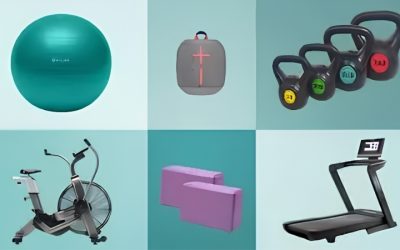
Best Workout Gym Equipment: Plan a Complete Home Setup
The best workout gym equipment for a home is a group of useful tools that fits both the planned activities and the building. Start with a small...
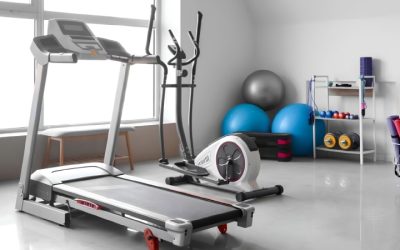
Best Workout Exercise Equipment: 6 Picks for Small Homes
Finding space for fitness equipment in a compact living situation often feels...
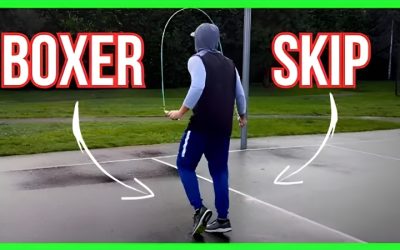
Best Boxer Jump Rope: Configuration, Sizing and Intended Use
The best boxer jump rope should be chosen for its actual construction and the rope work in your training. The word boxer is not enough to establish...
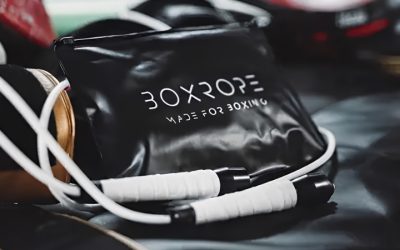
Best Boxing Jump Rope: Training Requirements and Equipment Fit
The best boxing jump rope is a tool that suits the rope work in your training and the space available for it. Compare the cord, handles and adjustment...
Best Beginner Jump Rope: Adjustment, Handling and Space
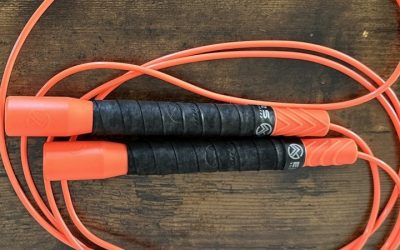
The best beginner jump rope is one you can size and handle as instructed in a suitable practice space. Choose it for learning the activity, rather than...
Best Workout Equipment for Glutes: Match Tools to Exercises
The best workout equipment for glutes depends on the exercises you plan to perform and the resistance you can use appropriately. Begin with the...
Write Your Review
No reviews yet. Be the first to share your experience!