Key takeaways
- Material Composition: PVC rolls offer a lighter, more flexible feel with a subtle sheen that reflects overhead lighting pleasantly, while rubber rolls absorb light and create a grounded, matte aesthetic. Match the material to whether your garage doubles as a showroom or a workshop.
- Thickness and Cushion: A 2.2 mm mat handles foot traffic and light spills comfortably, but stepping up to 2.8–3 mm adds noticeable underfoot cushioning and superior impact resistance beneath vehicles. Thicker rolls also dampen sound—a meaningful upgrade if your garage sits below living spaces.
- Coverage Dimensions: Measure your actual usable floor area before ordering. A 7.5 × 20 ft roll covers roughly 150 sq ft—enough for a standard two-car bay—while narrower 4 ft rolls work well for walkways, tool stations, or trailer beds where full coverage isn’t necessary.
- Surface Texture and Slip Resistance: Diamond-plate patterns create micro-facets that scatter light across the surface, reducing the visual flatness that plain mats produce. Beyond aesthetics, that texture provides genuine grip, especially critical around vehicle entry points where oil and water tend to collect.
- Edge and Seam Management: Look for rolls that ship with double-sided tape or include a beveled edge option. Seams that lie flat prevent tripping hazards and maintain a clean sightline—something anyone who cares about visual order in a space will appreciate immediately.
What's inside
Most homeowners treat garage floors as afterthought—a cracked slab collecting dust until something finally goes wrong. But the surface underfoot shapes everything: how light bounces when you flip that overhead switch, whether spilled oil spreads into a nightmare, and how polished your space feels when guests catch a glimpse through an open bay door. Choosing the right flooring roll isn’t just about protection; it’s about controlling the entire visual and tactile atmosphere of one of your home’s largest rooms.
This guide walks through the best garage flooring rolls available in 2026, comparing thickness, material, coverage area, and real-world durability. Each product here was evaluated not only on structural performance but also on surface finish—how it interacts with both natural and artificial light—and overall ease of installation for a single afternoon project.
As an Amazon Associate we earn from qualifying purchases.



🛒 Best Price Today on Amazon
Prime members get fast, free shipping on everything above, plus member-only deals. New members get a 30-day free trial — cancel anytime.
How to Choose Garage Flooring Rolls (2026)
- Material Composition: PVC rolls offer a lighter, more flexible feel with a subtle sheen that reflects overhead lighting pleasantly, while rubber rolls absorb light and create a grounded, matte aesthetic. Match the material to whether your garage doubles as a showroom or a workshop.
- Thickness and Cushion: A 2.2 mm mat handles foot traffic and light spills comfortably, but stepping up to 2.8–3 mm adds noticeable underfoot cushioning and superior impact resistance beneath vehicles. Thicker rolls also dampen sound—a meaningful upgrade if your garage sits below living spaces.
- Coverage Dimensions: Measure your actual usable floor area before ordering. A 7.5 × 20 ft roll covers roughly 150 sq ft—enough for a standard two-car bay—while narrower 4 ft rolls work well for walkways, tool stations, or trailer beds where full coverage isn’t necessary.
- Surface Texture and Slip Resistance: Diamond-plate patterns create micro-facets that scatter light across the surface, reducing the visual flatness that plain mats produce. Beyond aesthetics, that texture provides genuine grip, especially critical around vehicle entry points where oil and water tend to collect.
- Edge and Seam Management: Look for rolls that ship with double-sided tape or include a beveled edge option. Seams that lie flat prevent tripping hazards and maintain a clean sightline—something anyone who cares about visual order in a space will appreciate immediately.
The Best Garage Flooring Rolls (2026) Reviewed
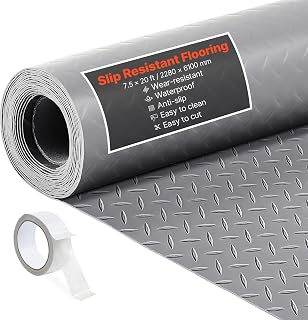
VEVOR 7.5 × 20 ft PVC Diamond Plate Roll (Silver Gray)
The silver-gray finish on this 2.2 mm PVC roll is a standout from a light-play perspective—its diamond-plate texture catches and diffuses both LED shop lights and daylight, giving the floor a clean, almost industrial-chic quality. It ships with double-sided tape and covers a generous footprint, making it a strong default choice for standard two-car garages.
7.8 × 18 FT Thickened Rubber Garage Floor Mat (2.8 mm)
At 2.8 mm, this rubber roll is noticeably more substantial underfoot than thinner PVC alternatives. The heavier gauge absorbs sound and vibration exceptionally well, and the deeper matte surface creates a rich, shadow-absorbing floor plane that hides minor debris between cleanings. Ideal for mid-size SUVs and daily-driver garages.
VEVOR 4 × 20 ft Rubber Diamond Plate Roll (Black)
This narrower 3 mm rubber roll excels in targeted installations—a single-car bay, a workshop bench zone, or a trailer bed. The thickened rubber and black matte finish absorb light rather than reflecting it, creating a focused, no-nonsense work surface. It’s the thickest option on this list, delivering maximum durability per square foot.
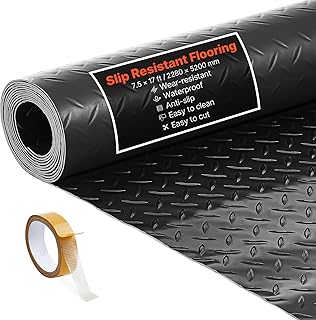
VEVOR 7.5 × 17 ft PVC Diamond Plate Roll (Black)
Black PVC strikes an interesting middle ground: it carries the lighter weight and easy-clean properties of vinyl while offering the deeper tonal presence typically associated with rubber. The included double-sided tape makes installation straightforward, and the 17 ft length suits compact two-car or single-car garages without excess material waste.
VEVOR Interlocking Garage Floor Tiles (12 × 12 in, 50-Pack)
While not a continuous roll, these interlocking polypropylene tiles deserve mention for anyone prioritizing modular flexibility. The double-sided texture provides slip resistance on both faces, and the 0.53 inch thickness creates a raised surface that allows airflow underneath—useful in humid climates where moisture buildup under solid mats is a concern.
Frequently Asked Questions
Can garage flooring rolls handle hot tire pickup?
High-quality PVC and rubber rolls with diamond-plate textures resist hot tire marking significantly better than flat-surface mats. Rubber generally outperforms PVC in this area due to its higher thermal tolerance, but both materials will perform well if you allow tires to cool slightly before parking on freshly laid flooring.
Do I need to prep my concrete before laying a garage floor roll?
Absolutely. Sweep thoroughly, degrease any oil stains, and fill visible cracks. Any debris left under the roll will create bumps that catch light unevenly and accelerate wear at high spots. A clean substrate also ensures the double-sided tape bonds properly for a flat, seamless installation.
How do I clean and maintain a garage flooring roll?
Regular sweeping removes grit that acts like sandpaper underfoot. For deeper cleaning, a mop with warm water and a mild degreaser restores the surface finish. Diamond-plate textures trap less grime than expected because the raised pattern channels liquid into channels rather than allowing it to pool across the surface.
Will these rolls work in an unheated garage during winter?
Both PVC and rubber rolls remain flexible in cold temperatures, though PVC can stiffen slightly below freezing. Rubber maintains its pliability more consistently. If your garage drops below 30°F regularly, rubber rolls are the safer choice for preventing curling at the edges.
Final Thoughts
For most homeowners seeking full two-car coverage with a clean, light-reflective finish, the VEVOR 7.5 × 20 ft Silver Gray PVC Roll offers the best balance of coverage, aesthetics, and value. If underfoot comfort and vehicle protection are your priority, the 7.8 × 18 FT Thickened Rubber Mat delivers noticeably more cushion and sound dampening. And for targeted installations where maximum durability in a compact footprint matters most, the VEVOR 4 × 20 ft Black Rubber Roll is the toughest option on this list.