Key takeaways
- Low surfaces: On a coffee table around 16–18 in. high, keep a tabletop plant low enough to preserve sightlines across the seating area.
- Side tables: On a typical 22–26 in. side table, a small plant about 6–12 in. tall adds greenery without competing with a reading lamp.
- Desks: On a desk around 28–30 in. high, use a compact plant that will not obstruct a monitor or take up the main work zone.
- Floor plants: A tree around 5–6 ft tall usually suits standard-height ceilings and furniture groupings. A taller plant can dominate a low-ceiling room, while a short one may disappear beside a tall bookcase.
Best Faux Plants That Look Convincing in Any Room
The best faux plants are proportioned to the room, have varied leaves in believable colors, and come in a pot that suits the space—or can be replaced with one that does. For a convincing result, prioritize leaf detail and a natural silhouette over sheer height, then check the plant’s full dimensions and the room it needs around it.
Quick picks by space and situation
| Where it will go | Best faux plant type | Useful size guide | What to check |
|---|---|---|---|
| Small apartment or narrow corner | Upright olive tree, ficus, or slim dracaena | 4–6 ft tall; roughly 12–18 in. wide | Look for a narrow canopy and a weighted base that does not need a wide floor basket. |
| Living-room corner with open floor space | Fiddle-leaf fig, bird of paradise, or fuller ficus | 6–7 ft tall; allow about 24–36 in. of canopy width | Compare the stated spread, not just the height. Large leaves need room to look natural. |
| Shelf or bookcase | Pothos, trailing philodendron, or compact fern | 6–14 in. pot; trailing stems around 12–30 in. | Check the shelf depth and where the foliage will hang; avoid blocking doors or nearby objects. |
| Desk or bedside table | Small succulent, peperomia, or compact orchid | 4–10 in. tall; 4–8 in. pot | Choose a stable pot with a finished surface so the planter does not look like a nursery insert. |
| Home with children or pets | Low, sturdy plant or securely anchored floor plant | Choose by available footprint rather than height alone | Keep small detachable leaves and loose decorative stones out of reach; secure tall plants against tipping. |
These are starting ranges, not product specifications: manufacturers measure plants differently, and foliage can often be shaped wider or narrower. Confirm the listing’s height, width, pot dimensions, and whether the height includes the pot before ordering.

Der Rose 3 Pack Fake Plants Artificial Plants for Office Bathroom Decor
Included for 'Best Faux Plants That Look Convincing in Any Room' as a relevant option in this category; details come from the product listing.
View on Amazon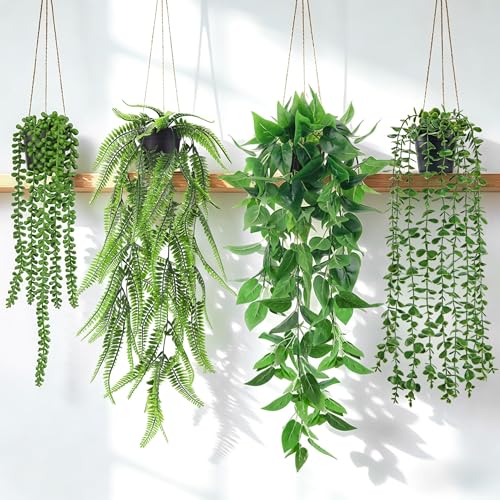
Der Rose 4Pcs Fake Hanging Plants with Lush Cascading Greenery
Included for 'Best Faux Plants That Look Convincing in Any Room' as a relevant option in this category; details come from the product listing.
View on Amazon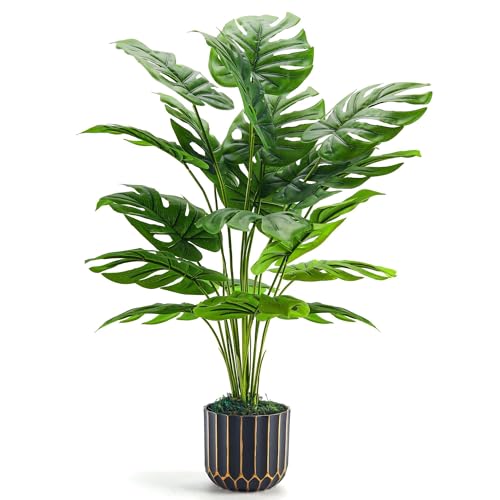
Der Rose 28" Fake Plants, Monstera Plant in Black Gold Pot for Home Decor
Included for 'Best Faux Plants That Look Convincing in Any Room' because the listing specifies Monstera Plant in Black Gold Pot for Home Decor, details this guide uses to compare options.
View on Amazon
Freyalife 28“ Fake Plant Artificial Monstera for Room Decor, Faux Potted Plants Indoor for Home Living Bedroom Aesthetic Farmhouse Dorm Office Classroom and Outdoor Garden Porch Balcony Decor
Included for 'Best Faux Plants That Look Convincing in Any Room' as a relevant option in this category; details come from the product listing.
View on AmazonWhat makes a faux plant look real?
Leaf color and variation
Real foliage is rarely one flat shade of green. Look for subtle changes in tone between leaves, natural-looking veins, and some variation in size and orientation. A few imperfect or younger-looking leaves can help; identical leaves repeated at regular intervals tend to reveal the artificial construction. White dusting or glossy finishes may suit certain plants, but an overly shiny surface can look plastic in bright light.
Materials and construction
Polyester and other fabric leaves can take detailed color and vein printing, but thin fabric may fray or look papery at close range. Plastic leaves hold crisp shapes and are easier to wipe, though a uniformly glossy finish can feel synthetic. Silk-style foliage can have a soft, convincing look, but “silk” is often used broadly in product descriptions, so inspect close-up images rather than relying on the label. Wire inside stems makes shaping possible; it also means branches should be adjusted gently to avoid kinks or exposed wire.
| Construction feature | Advantage | Trade-off | Best fit |
|---|---|---|---|
| Fabric or polyester leaves | Can show nuanced color and printed detail | May collect dust or fray if handled roughly | Shelves and rooms where leaf detail is visible up close |
| Molded plastic leaves | Hold shape and wipe clean easily | Gloss and repeated leaf shapes can look uniform | Busy areas where simple maintenance matters |
| Wire-supported branches | Allow the canopy to be opened and directed | Repeated sharp bending can damage stems | Trees that need to fit a corner or clear a walkway |
| Weighted or cement-filled base | Improves stability in a tall planter | Can make the plant awkward to lift or move | Permanent floor placement, especially where it may be bumped |
Match the plant to the room, not just the listing photo
Measure the area in two directions: the available floor or shelf footprint and the foliage’s expected spread. In a 10 × 12 ft room, a 6-ft tree with a 30-in. canopy can work in an open corner, but may crowd a narrow path if it sits beside a sofa or cabinet. For a slim walkway, aim to leave about 30–36 in. of clear passage where possible; in tighter rooms, keep the plant’s branches out of the main route rather than relying on its pot width alone.
For a floor plant beside furniture, leave a few inches between the planter and the wall so the pot does not scrape and the foliage can sit naturally. Avoid placing a wide canopy directly behind a chair where leaves will be pushed out of shape every time someone sits down. On a shelf, measure depth and the space above it, including any overhanging stems. A trailing plant can look full without taking up much surface area, but its vines need somewhere to fall without obstructing a screen, lamp, or cabinet door.
Choose a height that relates to nearby furniture
- Low surfaces: On a coffee table around 16–18 in. high, keep a tabletop plant low enough to preserve sightlines across the seating area.
- Side tables: On a typical 22–26 in. side table, a small plant about 6–12 in. tall adds greenery without competing with a reading lamp.
- Desks: On a desk around 28–30 in. high, use a compact plant that will not obstruct a monitor or take up the main work zone.
- Floor plants: A tree around 5–6 ft tall usually suits standard-height ceilings and furniture groupings. A taller plant can dominate a low-ceiling room, while a short one may disappear beside a tall bookcase.
These are visual guidelines, not fixed rules. Compare the plant’s height with the furniture beside it and leave enough open space for the foliage to read clearly.
Plan for the pot and the unboxing
Many faux plants arrive in a small, plain nursery pot intended to sit inside a decorative planter. Check that the inner pot will fit your chosen cover pot, allowing a little space for filler such as paper or foam to keep it level. A larger planter can improve the proportions of a tall tree, but it does not make the plant itself wider or heavier at the base unless you add ballast.
Before buying a large floor plant, check the packed weight and the dimensions of the shipping carton if they are provided. A bulky tree may arrive compressed, with branches folded toward the trunk. It can need more shaping than a compact tabletop plant, and the carton may be harder to carry through a narrow entry or up stairs. For a heavy base, decide where it will live before filling or assembling the planter; moving it afterward may require lifting the pot and canopy together.
Shape it for a natural silhouette
After unpacking, separate crowded branches and bend wire-supported stems gradually outward. Step back every few adjustments: a convincing canopy has open gaps, varied branch angles, and no obvious fan-shaped outline. Turn the plant so its fuller side faces the room, but avoid making every leaf point forward. If it looks too dense, spread the branches rather than cutting them. Keep the plant away from direct heat and harsh, prolonged sunlight, which can fade some materials or soften plastic over time.
Simple buying checklist
- Compare close-up foliage photos for varied color, leaf shape, and visible veins.
- Confirm plant height, maximum width, pot diameter, and whether the pot is included in the height.
- Measure the walkway, shelf depth, ceiling clearance, and nearby furniture before choosing a size.
- Check whether the branches are shapeable and whether the base is weighted or needs a separate planter.
- Choose a finish and material that suit how closely people will see it and how often it may need cleaning.
A well-chosen faux plant should fit its room before it is shaped, then look balanced after its branches are opened. If space is limited, a narrow tree or trailing shelf plant is usually more convincing than squeezing an oversized specimen into a tight corner.