Key takeaways
- Under 1 inch: Best for one to three delicate stems, such as a single flower, eucalyptus sprig, or thin dried grass. It prevents sparse arrangements from looking loose.
- 1–2 inches: A versatile opening for a small fresh bouquet or a gathered bundle of dried stems. This is the safest everyday size for shelves and desks.
- 2–4 inches: Suitable for fuller bouquets and flexible branch arrangements. Add a flower frog, tape grid, or internal insert if stems spread too far.
- Over 4 inches: Best for a sculptural display, broad branches, or a vase filled with decorative objects. It can make a small bouquet look lost.
The best decorative vases are chosen by height, opening width, stability, and material—not by appearance alone: use a low, wide vessel for coffee tables, a medium bud vase for desks and shelves, and a tall, weighted vase for floor arrangements and long stems.
Best Decorative Vases by Room and Situation
The right vase should fit both the furniture and the arrangement it will hold. Before shopping, measure the shelf depth or tabletop, check the available vertical clearance, and decide whether you need a watertight vessel for fresh flowers or a lightweight opening for dried stems.

Vanselia Ceramic Flower Vase Home Decor - Farmhouse Table Vases Rustic Vintage Living Room Kitchen Bedroom Decorations for House Book Shelf Office Coffee Desk Dining Fireplace (7.4" Rustic)
Included for 'Best Decorative Vases for Every Room and Budget' as a relevant option in this category; details come from the product listing.
View on Amazon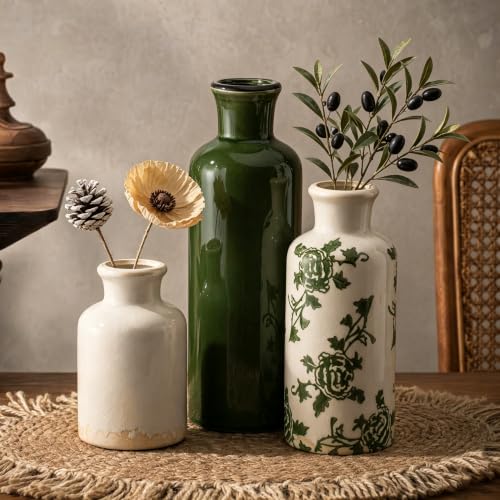
LIFESTYLO Ceramic Vintage Vase Set of 3, Green and White Crackle Glaze, Chinoiserie Floral Decor for Farmhouse Shelf, Table Centerpiece, Mantel, Living Room & Office
Included for 'Best Decorative Vases for Every Room and Budget' because the listing specifies Green and White Crackle Glaze and Chinoiserie Floral Decor for Farmhouse Shelf, details this guide uses to compare options.
View on Amazon
Ceramic Vase Set-3, Small Flower Vases for Decor, Modern Boho Farmhouse Style, Decorative Vases for Pampas Grass & Dried Flowers, Distressed Finish (Beige)
Included for 'Best Decorative Vases for Every Room and Budget' because the listing specifies Small Flower Vases for Decor and Modern Boho Farmhouse Style, details this guide uses to compare options.
View on Amazon
Lvases Snuggle Hollow Ceramic Vase Set of 2, Boho Tabletop Home Decor Vases
Included for 'Best Decorative Vases for Every Room and Budget' because the listing specifies Boho Tabletop Home Decor Vases, details this guide uses to compare options.
View on Amazon| Room or situation | Best vase profile | Useful dimensions | Why it works |
|---|---|---|---|
| Small apartment or narrow console | Short cylinder, bud vase, or slim bottle | 6–10 in. tall; base no wider than 4–6 in. | Uses vertical space without blocking walkways or making a small surface feel crowded. |
| Coffee table | Low bowl, rounded urn, or wide-neck vessel | 5–9 in. tall; 8–12 in. wide | Maintains sightlines across the room and suits a compact branch arrangement. |
| Dining table | Low, long vase or several small bud vases | 4–8 in. tall when seated | Guests can see across the table and reach serving dishes more easily. |
| Bookcase or open shelving | Narrow bottle, geometric vase, or small ceramic form | 8–14 in. tall; allow at least 1 in. side clearance | Creates height variation while fitting between shelves and neighboring objects. |
| Entryway or living-room floor | Tall cylinder, tapered urn, or oversized sculptural vase | 20–36 in. tall; heavy base preferred | Provides visual weight in an empty corner without requiring a large furniture piece. |
| Desk or bedside table | Bud vase or compact rounded vase | 4–8 in. tall; opening under 2 in. | Leaves room for a lamp, monitor, books, or a glass of water. |
Choosing Vase Height: A Practical Rule
For a tabletop arrangement, start with a vase between one-third and one-half the height of the furniture’s visible styling area. On a 30-inch-high console, a 10–16-inch vase usually looks proportionate, depending on whether it contains short foliage or tall branches. For a dining table, keep the total height of vase and flowers below approximately 12 inches if people will be seated across from one another.
Floor vases need more than visual height. Leave roughly 3 inches of clearance from the wall so the rim and arrangement do not scrape painted surfaces. In a walkway, keep the base outside the main traffic path; a vase that projects 10 inches from a wall can become an obstacle in a hallway narrower than 36 inches. In a 10-by-12-foot room, one large floor vase is often enough. Two oversized pieces can make the room feel visually congested unless they sit in opposite, unused corners.
Opening Size: Match the Neck to the Stems
- Under 1 inch: Best for one to three delicate stems, such as a single flower, eucalyptus sprig, or thin dried grass. It prevents sparse arrangements from looking loose.
- 1–2 inches: A versatile opening for a small fresh bouquet or a gathered bundle of dried stems. This is the safest everyday size for shelves and desks.
- 2–4 inches: Suitable for fuller bouquets and flexible branch arrangements. Add a flower frog, tape grid, or internal insert if stems spread too far.
- Over 4 inches: Best for a sculptural display, broad branches, or a vase filled with decorative objects. It can make a small bouquet look lost.
A narrow neck also reduces water evaporation and helps flowers stand upright, but it can be difficult to clean. If the opening is smaller than the widest part of the vase, check that your hand or a bottle brush can reach the interior. For fresh flowers, a removable liner is useful when the outer vessel is porous or difficult to wash.
Shape-by-Shape Comparison
Cylinder vases
Cylinders are dependable for tulips, leafy branches, and modern interiors. Their straight sides provide generous water capacity and make arranging simple. A tall, narrow cylinder is less stable than a broad one, so choose a weighted base for stems taller than 24 inches.
Bottle and bud vases
Bottle shapes have a narrow opening and are ideal for a single stem or a restrained group. They work especially well on crowded shelves, nightstands, and desks. Their limitation is capacity: a narrow neck can pinch thick stems, while a very lightweight bottle may tip when foliage extends to one side.
Urns and bulbous vessels
Urns and rounded vases offer a stable footprint and strong visual presence. They suit coffee tables, consoles, and floor arrangements, particularly when the opening is moderately narrow. Their curves may hide the lower stems, which is helpful when flowers are uneven or the water line needs to be concealed.
Wide bowls and low vessels
Low bowls are the safest choice for dining tables and coffee tables because they preserve sightlines. They work with floating flowers, short cuttings, and compact arrangements. A wide opening requires more stems or a support grid; otherwise the display can spread flat across the surface.
Material Trade-Offs for Fresh and Dried Arrangements
| Material | Advantages | Limitations | Best use |
|---|---|---|---|
| Glazed ceramic | Usually watertight, visually substantial, available in matte and glossy finishes | Can chip; heavier to move; unglazed bases may mark wood | Fresh flowers, consoles, dining tables, and homes needing a stable display |
| Glass | Shows stems and water; easy to coordinate with many styles | Breakable; fingerprints and cloudy water are visible; lighter pieces can tip | Fresh bouquets, minimalist rooms, and transparent floral arrangements |
| Metal | Durable exterior, often lightweight, strong sculptural finish | Some metals can tarnish or react with standing water; may need an inner liner | Dried stems or fresh flowers placed in a separate watertight insert |
| Stone or concrete | Very stable and resistant to tipping; strong texture | Heavy, porous unless sealed, and potentially abrasive to furniture | Floor displays and large branches; use felt pads underneath |
| Wood | Warm texture and low visual shine; often light to carry | Usually not watertight; prolonged moisture can swell or stain it | Dried flowers, faux stems, or a removable glass liner |
| Acrylic or resin | Lightweight and less likely to shatter than glass | Can scratch, discolor in strong sunlight, or look less substantial | Kids’ rooms, rentals, and areas where low weight matters |
Best Choices for Homes with Children, Pets, or Limited Space
For children and pets, prioritize a low center of gravity, a wide base, rounded edges, and a shatter-resistant material. A 7-inch-tall resin or thick-walled acrylic vase is generally easier to manage than a 20-inch glass bottle. Keep tall arrangements away from the edge of furniture and avoid placing cords, table runners, or trailing stems where they can be pulled.
Renters should look for lightweight vessels with felt or silicone feet. They are easier to move during cleaning and less likely to damage floors or shelving. If a decorative metal or wood vase is not watertight, place a smaller glass container inside rather than risking a leak.
For a small apartment, choose one hero vase rather than several small accessories. A 10–14-inch ceramic vessel on a console can create a focal point while leaving adequate room for keys and lighting. On shelves less than 10 inches deep, select a base no wider than 6 inches and verify that stems will not hit the wall.
Buying Checklist Before You Order
- Measure the display surface’s depth, width, and vertical clearance.
- Leave at least 2 inches around a vase on a crowded tabletop and about 1 inch on a shelf.
- For fresh flowers, confirm that the interior is watertight or large enough for a liner.
- Compare the base diameter with the height: tall, narrow vases need extra weight or a broader foot.
- Check the empty weight if the vase will be moved often. A large stone or concrete piece may weigh 15–30 pounds before adding water.
- Inspect the underside for rough ceramic, exposed metal, or an unsealed base that could scratch furniture.
- Choose a finish that suits maintenance needs: glossy surfaces show fingerprints, while textured finishes can collect dust.
How to Style One Vase Without Overcrowding
Place the vase slightly off-center rather than automatically in the middle of the furniture. For a narrow console, pair a tall vase with one low object, such as a tray or small bowl, leaving a clear section for practical use. On a coffee table, keep the vase within the center zone but avoid covering more than about one-third of the tabletop. With dried stems, trim gradually and rotate the arrangement until its widest side faces the room. With fresh flowers, refresh the water every few days and wipe the base before returning it to wood or stone.
The best decorative vases are the ones whose proportions match the room, whose opening supports the stems you actually use, and whose material suits the household’s maintenance and safety needs. When those three factors are right, even an inexpensive vase can look intentional and remain useful through changing arrangements.