Key takeaways
- Support layer, not just top feel: Extra firm should come from a pocketed coil unit or high-density base foam, not a thin rigid quilt over a soft core. Ask what the bottom eight inches are doing, since that’s the layer resisting the sag that shows up in year three.
- Edge integrity: Reinforced perimeters keep the silhouette crisp and give you usable sleeping surface right to the seam. In visual terms, a firm edge reads as a straight line under a wall sconce; a collapsing one reads as a sigh.
- Height and sightlines: A 12-inch profile suits taller platform frames and keeps the mattress top below a low window sill. A 14-inch build pairs better with low platforms and bedside lamps around 24 to 26 inches tall, where the shade sits just above the pillow line.
- Sleeping position honesty: Back and stomach sleepers, and anyone over roughly 230 pounds, generally benefit most from extra firm. Dedicated side sleepers should look for a hybrid with a modest comfort layer rather than the firmest option on the list.
- Materials transparency: Look for CertiPUR-US certified foams, explicit fiberglass-free construction, and a trial long enough to survive a full seasonal cycle. A 365-night trial is now common and worth prioritizing.
What's inside
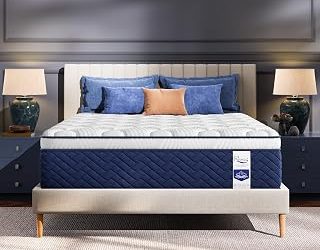
I spend my working days deciding how a room reads at 7 a.m. and again at 10 p.m. — where the light lands, how a surface holds shadow, what makes a bedroom feel composed instead of merely furnished. And the single element that most often ruins a carefully lit bedroom is the bed itself. A mattress that dishes in the middle throws a soft crease across the duvet that no lamp placement can flatter, and a slumped edge kills the clean horizontal line that makes a king bed feel architectural. Firmness isn’t only a comfort decision. It’s a decision about how the largest object in the room sits under light.
Extra firm king mattresses solve for that, plus the far more important stuff: lumbar support, spinal neutrality, and the sag resistance that keeps a 76-by-80-inch surface honest for a decade. This guide covers what actually separates a genuinely supportive extra firm build from a merely hard one, then walks through the models worth your attention in 2026 — hybrids with pocketed coils, high-density foam decks, and the certifications that tell you what’s inside.
As an Amazon Associate we earn from qualifying purchases.


🛒 Best Price Today on Amazon
Prime members get fast, free shipping on everything above, plus member-only deals. New members get a 30-day free trial — cancel anytime.
How to Choose a/an Extra Firm King Mattress (2026)
- Support layer, not just top feel: Extra firm should come from a pocketed coil unit or high-density base foam, not a thin rigid quilt over a soft core. Ask what the bottom eight inches are doing, since that’s the layer resisting the sag that shows up in year three.
- Edge integrity: Reinforced perimeters keep the silhouette crisp and give you usable sleeping surface right to the seam. In visual terms, a firm edge reads as a straight line under a wall sconce; a collapsing one reads as a sigh.
- Height and sightlines: A 12-inch profile suits taller platform frames and keeps the mattress top below a low window sill. A 14-inch build pairs better with low platforms and bedside lamps around 24 to 26 inches tall, where the shade sits just above the pillow line.
- Sleeping position honesty: Back and stomach sleepers, and anyone over roughly 230 pounds, generally benefit most from extra firm. Dedicated side sleepers should look for a hybrid with a modest comfort layer rather than the firmest option on the list.
- Materials transparency: Look for CertiPUR-US certified foams, explicit fiberglass-free construction, and a trial long enough to survive a full seasonal cycle. A 365-night trial is now common and worth prioritizing.
The Best Extra Firm King Mattresses (2026) Reviewed
SLEEP100 14″ Extra Firm King
An all-foam approach that leans on gel-infused, ventilated memory foam over a firm support core, which gives you contouring at the shoulder without letting the hips drop. It’s the quietest option here in the literal sense — no coil response at all — making it a good match for light sleepers and rooms where every sound carries.
BedStory 14″ Extra Firm Hybrid
BedStory targets the lumbar and hip zones specifically, and the hybrid build delivers noticeably better pushback under the pelvis than comparable foam-only beds at this height. The 365-night trial and fiberglass-free, CertiPUR-US construction make it an easy recommendation for a primary bedroom.
BedStory 14″ Pocket Spring Hybrid
The pocketed-spring version trades a little surface softness for superior motion isolation and edge structure, so the mattress keeps its shape and its clean rectangular line across a wide king frame. Couples with mismatched schedules will feel the difference most.
Beautyrest Silver BRS900 12″ Extra Firm
The most conventional pick, and the one I’d choose for a guest room or a bed you want to look tailored under a duvet: the 12-inch profile sits neatly on standard frames and the fill compresses less over time. Ten-year warranty, CertiPUR-US foams, and a familiar coil feel that most guests will recognize immediately.
Sleepmax 12″ Extra Firm Hybrid
A slimmer hybrid that manages to accommodate side sleepers better than its firmness rating suggests, thanks to a comfort layer that yields at the shoulder. The 365-night trial and forever warranty take most of the risk out of the decision, and the 14-inch Sleepmax is there if you want a taller, more hotel-like presence in the room.
Frequently Asked Questions
Is extra firm bad for back pain?
Not inherently — the research points toward medium-firm to firm for most people, but heavier sleepers and back or stomach sleepers often need extra firm to keep the spine neutral. If your hips sink, firmer helps.
Do I need a special frame or foundation?
Use a platform or slatted base with slats no more than three inches apart. Wider gaps let the mattress deflect between supports, which is exactly the sag you paid to avoid.
How long until a bed-in-a-box feels normal?
Allow 48 to 72 hours for full expansion and two to four weeks for your body to adapt. Judge it in week three, not night one.
Will an extra firm mattress soften over time?
Slightly. Expect a modest break-in during the first month, then stability — which is the whole argument for a coil or high-density core rather than a soft base foam.
Final Thoughts
If you want one recommendation, the BedStory 14″ pocket spring hybrid gives you the best combination of lumbar support, edge structure, and a year-long trial. The Beautyrest Silver BRS900 is the safer, more traditional choice at a lower profile, and the SLEEP100 14″ is the one to pick if you want firm support with zero coil response and a cooler foam surface.