Key takeaways
- Finish reflectance: Pale surfaces like white laminate throw light back into the room and lift dark corners, while walnut and oak absorb it and read warmer under low-wattage bulbs. Choose light if your room faces north or has one small window; choose wood tones if you already get strong afternoon sun and want to take the edge off.
- Shadow geometry: Round and oval tops produce a continuous, gradual shadow that flows around the base, whereas square corners create hard dark wedges that visually chop up a small floor. Curved silhouettes also let you walk closer without clipping a hip, which matters in a two-metre gap.
- Fixture alignment: Measure where your existing pendant or ceiling light actually hangs before committing to a shape. A round table centred under a single downlight gives even coverage; a long rectangular table under one central fixture leaves both ends underlit unless you add a wall sconce or floor lamp.
- Window clearance: Tables that fold, nest, or roll away preserve your daylight path when not in use. If your table sits near the only window, prioritise a low profile and slim legs over storage shelves that block light at floor level.
- Extension behaviour: Check whether the table expands lengthwise, drops a leaf, or flips. Expanding away from the light source keeps your primary seats well lit; expanding toward a wall pushes guests into shadow. Also confirm the leaf sits flush, since a seam that catches light is visible from across the room.
What's inside
A small dining area lives or dies by how light moves through it. Most buyers focus on footprint alone, measuring the gap between wall and counter, then discover the real problem after delivery: a table that blocks the window, casts a heavy shadow across the floor, or sits so far from the pendant that dinner happens in a dim pool of nothing. Cramped rooms amplify every mistake in reflectance, sightline, and shadow depth, which is why two tables with identical dimensions can make the same studio feel either airy or claustrophobic.
This guide looks at compact dining tables through a lighting-and-ambience lens alongside the usual structural checks. We cover how finish tone affects bounced light, why round edges soften shadow lines in tight corners, how folding and extending mechanisms change your relationship to daylight, and which builds hold up under daily use. Each pick below is assessed for both practical seating capacity and the quality of atmosphere it helps create.
As an Amazon Associate we earn from qualifying purchases.


🛒 Best Price Today on Amazon
Prime members get fast, free shipping on everything above, plus member-only deals. New members get a 30-day free trial — cancel anytime.
How to Choose a Dining Table For Small Space (2026)
- Finish reflectance: Pale surfaces like white laminate throw light back into the room and lift dark corners, while walnut and oak absorb it and read warmer under low-wattage bulbs. Choose light if your room faces north or has one small window; choose wood tones if you already get strong afternoon sun and want to take the edge off.
- Shadow geometry: Round and oval tops produce a continuous, gradual shadow that flows around the base, whereas square corners create hard dark wedges that visually chop up a small floor. Curved silhouettes also let you walk closer without clipping a hip, which matters in a two-metre gap.
- Fixture alignment: Measure where your existing pendant or ceiling light actually hangs before committing to a shape. A round table centred under a single downlight gives even coverage; a long rectangular table under one central fixture leaves both ends underlit unless you add a wall sconce or floor lamp.
- Window clearance: Tables that fold, nest, or roll away preserve your daylight path when not in use. If your table sits near the only window, prioritise a low profile and slim legs over storage shelves that block light at floor level.
- Extension behaviour: Check whether the table expands lengthwise, drops a leaf, or flips. Expanding away from the light source keeps your primary seats well lit; expanding toward a wall pushes guests into shadow. Also confirm the leaf sits flush, since a seam that catches light is visible from across the room.
The Best Dining Table For Small Space (2026)s Reviewed
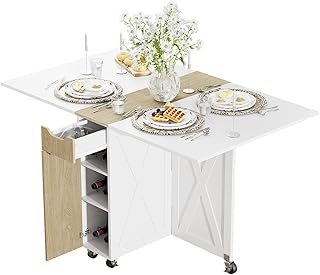
Folding Dining Table with 6 Wheels (White)
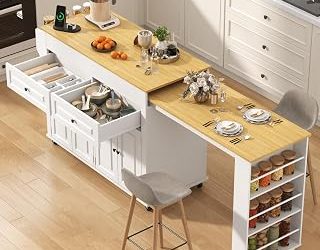
The white surface is the strongest daylight amplifier in this group, bouncing available light upward and making tight kitchens read noticeably brighter. Six wheels mean you can roll it clear of the window when you need the floor back, and it doubles credibly as a sewing or craft surface.
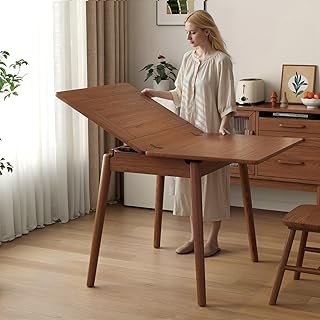
Solid Wood Expandable Table, 23.6″–47.2″ (Walnut)
The walnut tone drinks up harsh light and produces a warm, settled mood that suits evening meals under dimmable bulbs. The near-doubling span from 23.6 to 47.2 inches is genuinely useful, and solid wood construction means the surface ages into something better rather than chipping at the edges.
Extendable Round to Oval Table, 35.4″–47.2″ (Oak)
Going from a 35.4-inch circle to a 47.2-inch oval is the smartest shape shift here, since both states keep curved edges that avoid hard shadow corners. The hidden storage compartment is well judged, and the oak reads bright without the clinical flatness of white laminate.
AWQM 3-Piece Dining Set for 2 (Brown)
A complete breakfast-nook solution that suits corners and alcoves where a standalone table would leave awkward dead space. The brown finish is forgiving under warm-white bulbs, though it needs a nearby lamp or sconce if the nook sits away from a window.
42″–58″ Extendable Round Table with Flip Leaf
The built-in flip leaf is the most convenient mechanism on this list, expanding to 58 inches without hunting for a stored panel. Metal legs give it real stability, and the slim profile keeps floor-level light moving, though the storage shelf does interrupt that a little.
Frequently Asked Questions
Does a light or dark table make a small room feel bigger?
Light finishes generally win, since they reflect more of the available light and reduce the visual weight sitting in the middle of your floor. Dark tables can work beautifully in small rooms, but they need more deliberate lighting to avoid becoming a heavy anchor.
Round or rectangular for a tight space?
Round tops usually feel roomier because they have no corners to collide with and their shadows fall softly. Rectangular tables use wall-adjacent space more efficiently, so they suit narrow galley layouts better.
How high should my pendant hang above the table?
Roughly 30 to 34 inches from the tabletop to the bottom of the shade is the standard range. In a small room, hang toward the lower end so the light pools on the table rather than spilling across the walls and shrinking the space visually.
Are folding tables sturdy enough for everyday meals?
Modern folding designs with locking mechanisms handle daily dining without trouble. Check the locking hardware and, for wheeled models like the six-wheel folding table, confirm the casters lock before you rely on it for anything involving a knife and fork.
Final Thoughts
For most small dining areas, the Extendable Round to Oval Oak Table is the best balance of shape, finish, and flexibility, keeping curved edges and warm reflectance in both configurations. If daylight is scarce, the white Folding Dining Table with wheels does more to brighten a room than anything else here, while the Solid Wood Walnut Expandable Table is the pick for anyone building a moodier, lamp-lit evening atmosphere.