Key takeaways
- Coverage Area and Capacity: Match the dehumidifier’s rated liters-per-day extraction to your tent’s square footage. An undersized unit cycles endlessly without stabilizing RH, while an oversized one over-dries and stresses plants during late flower.
- Smart Sensors and Probe Accuracy: Models with external sensor probes read conditions at canopy level — not at the unit itself — giving you data that reflects what your plants actually experience. Look for ±2% RH accuracy at minimum.
- Temperature Cross-Management: The best units in this category monitor temperature alongside humidity and adapt extraction accordingly. A dehumidifier that ignores heat load will create cold spots during dark cycles and upset your VPD targets.
- Noise Floor and Heat Output: Grow tents sit in living spaces more often than not. A unit pushing 40 dB or above competes with conversation and leaks acoustic presence into the room. Lower heat rejection from the compressor also means fewer variables to manage in sealed tents.
- Smart Integration and Auto-Restart: App control lets you monitor conditions remotely and adjust thresholds without opening the tent. Auto-restart after power interruption is non-negotiable — a single overnight lapse during flower can invite mold that erases weeks of work.
What's inside
Every grow tent operator eventually runs into the same wall: condensation creeping across walls, a musty film settling on leaves, and your carefully tuned environment slowly working against you. Humidity does not announce itself with drama — it erodes yield and flavor in quiet, cumulative ways, warping the ambience you designed from the ground up. The right dehumidifier is not an accessory; it is a core atmospheric instrument, as essential to your grow space as the light spectrum hanging above it.
This guide cuts through the noise. We evaluated six dehumidifiers built for grow-tent duty and confined-space work, then narrowed the field to five standouts worth your attention in 2026. Each pick is assessed through the lens of environmental control — how precisely it manages moisture without disrupting temperature, airflow, or the overall mood of your growing zone.
As an Amazon Associate we earn from qualifying purchases.


🛒 Best Price Today on Amazon
Prime members get fast, free shipping on everything above, plus member-only deals. New members get a 30-day free trial — cancel anytime.
How to Choose a Dehumidifier For Grow Tent (2026)
- Coverage Area and Capacity: Match the dehumidifier’s rated liters-per-day extraction to your tent’s square footage. An undersized unit cycles endlessly without stabilizing RH, while an oversized one over-dries and stresses plants during late flower.
- Smart Sensors and Probe Accuracy: Models with external sensor probes read conditions at canopy level — not at the unit itself — giving you data that reflects what your plants actually experience. Look for ±2% RH accuracy at minimum.
- Temperature Cross-Management: The best units in this category monitor temperature alongside humidity and adapt extraction accordingly. A dehumidifier that ignores heat load will create cold spots during dark cycles and upset your VPD targets.
- Noise Floor and Heat Output: Grow tents sit in living spaces more often than not. A unit pushing 40 dB or above competes with conversation and leaks acoustic presence into the room. Lower heat rejection from the compressor also means fewer variables to manage in sealed tents.
- Smart Integration and Auto-Restart: App control lets you monitor conditions remotely and adjust thresholds without opening the tent. Auto-restart after power interruption is non-negotiable — a single overnight lapse during flower can invite mold that erases weeks of work.
The Best Dehumidifier For Grow Tent (2026) Reviewed
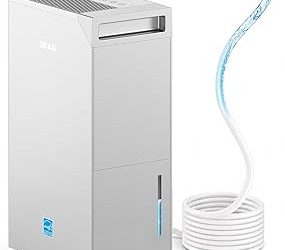
VIVOSUN AeroDrain D12 Smart Dehumidifier
This is the most thoughtfully engineered unit in the roundup for serious indoor growers. The external sensor probe reads conditions right at canopy height, and its app-based control lets you fine-tune extraction without opening the tent and disrupting the light cycle. Smart-system compatibility means it plays nicely with VIVOSUN’s broader grow ecosystem, making it the cleanest integration play for anyone already invested in that platform.
Small Grow Tent Dehumidifier for Electric Box and Cabinet
Designed for genuinely confined volumes — safes, electrical enclosures, compact cabinets — this kit prioritizes automated humidity management in spaces where larger units physically cannot operate. The AC/DC wide-voltage input (85–265V) makes it versatile across different power setups, and its auto shut-off protects against overflow during unattended runs.
Grow Tent Dehumidifier with Smart Temperature and Humidity Controller
The standout feature here is the external heating or cooling interface, which lets you bridge the dehumidifier into a temperature-management chain — a rare capability at this price tier. For growers running sealed or semi-sealed tents where humidity and temperature are deeply interlinked, this dual-interface approach offers a level of environmental orchestration most compact units simply cannot match.
Automatic Small Dehumidifier for Grow Tent
A straightforward, no-frills extraction unit with a built-in temperature control switch that handles cycling autonomously. At 110V/240V dual compatibility, it works across international power standards without adapters. It lacks the app connectivity of pricier options, but for growers who prefer manual oversight and reliable basic performance, it delivers clean mechanical simplicity.
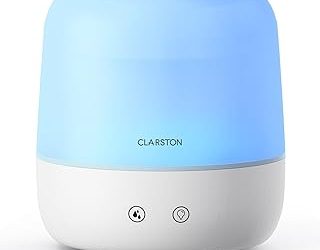
35 OZ Dehumidifier for Bedroom and RV
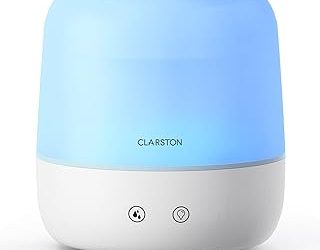
Originally designed for residential bedrooms and RVs, this unit earns its place in the conversation for micro-tent and cloning-chamber applications. At 28 dB it is the quietest option tested — barely perceptible in a silent room — and the seven-color ambient light is a minor novelty, but the genuinely low noise floor makes it ideal for tents sharing space with a sleeping area.
Frequently Asked Questions
What humidity should I target inside a grow tent?
Most indoor growers aim for 40–60% relative humidity during vegetative growth and 30–45% during late flower. The exact target depends on your temperature and stage of growth — VPD (vapor pressure deficit) charts are the most reliable way to dial this in for your specific setup.
Can I use a regular household dehumidifier in my grow tent?
Household dehumidifiers are built for open rooms and lack the probe accuracy, smart control, and compact form factor that grow-tent environments demand. They also tend to produce more heat and noise relative to their extraction capacity, which can destabilize the tightly controlled atmosphere inside a tent.
How often should I empty the dehumidifier reservoir?
It depends on your extraction rate and ambient conditions, but most grow-tent units need draining every one to three days during active flower. Models with continuous-drain hose options eliminate this chore entirely — run a line to a floor drain or external bucket and the unit operates autonomously.
Does a dehumidifier affect grow tent temperature?
Every compressor-based dehumidifier rejects some heat as a byproduct of extraction. In a sealed tent, this extra warmth can shift your temperature by two to four degrees Fahrenheit. Factor this into your environmental planning, especially during lights-on periods when ambient temperature is already elevated.
Final Thoughts
For most grow-tent operators, the VIVOSUN AeroDrain D12 is the strongest all-around choice — its sensor probe, app control, and system compatibility represent the most complete environmental management package available at this size. Growers working in ultra-compact or non-traditional spaces should look at the electric-box dehumidifier kit, while the temperature-and-humidity controller model earns a strong recommendation for anyone managing sealed tents where dual-interface control makes a measurable difference in crop consistency.