Key takeaways
- Seat Depth and Proportion: True deep seat sofas measure 24 inches or more from cushion front to backrest. Measure your room’s walkways first—a deep frame can consume clearance on all sides, blocking the light flow that keeps a space feeling open.
- Fabric and Light Interaction: Chenille and wide-wale corduroy catch side-light and create visible texture even in dim rooms, while flat linen weaves read smoother and brighter under overhead fixtures. Match your fabric to your dominant light source, not a showroom lamp.
- Color Temperature Response: Oatmeal and beige tones shift warm under 2700K bulbs and stay neutral in daylight. Dark grey absorbs light and anchors a room visually—ideal for large, bright spaces but potentially heavy in small or north-facing rooms.
- Scale Relative to Ceiling Height: Oversized sectionals below eight-foot ceilings compress vertical volume and can make a room feel cave-like. Aim for visual breathing room between the sofa back and any overhead light sources.
- Modularity and Rearrangement: Modular pieces let you reconfigure as lighting conditions change or fixtures get updated. A sectional you can split into a sofa and ottoman gives far more flexibility than a fixed-frame alternative.
What's inside
Walk into any furniture showroom and a deep seat sofa looks magnificent under perfectly calibrated track lighting that makes every texture sing. Bring that same sofa home, drop it into a living room with a single overhead fixture and afternoon sun from one window, and the entire visual character shifts. Warm fabric reads cool, plush surfaces flatten into monotone slabs, and a piece you loved becomes the wrong shape for your space.
As a lighting and ambience designer, I evaluate furniture for how it behaves under the light you actually live with. The deep seat sofas below were chosen for material quality, dimensional proportions, and how their surfaces interact with natural and artificial light. Here is a buyer’s guide, honest reviews, and answers to the questions that matter most.
As an Amazon Associate we earn from qualifying purchases.



🛒 Best Price Today on Amazon
Prime members get fast, free shipping on everything above, plus member-only deals. New members get a 30-day free trial — cancel anytime.
How to Choose a Deep Seat Sofa (2026)
- Seat Depth and Proportion: True deep seat sofas measure 24 inches or more from cushion front to backrest. Measure your room’s walkways first—a deep frame can consume clearance on all sides, blocking the light flow that keeps a space feeling open.
- Fabric and Light Interaction: Chenille and wide-wale corduroy catch side-light and create visible texture even in dim rooms, while flat linen weaves read smoother and brighter under overhead fixtures. Match your fabric to your dominant light source, not a showroom lamp.
- Color Temperature Response: Oatmeal and beige tones shift warm under 2700K bulbs and stay neutral in daylight. Dark grey absorbs light and anchors a room visually—ideal for large, bright spaces but potentially heavy in small or north-facing rooms.
- Scale Relative to Ceiling Height: Oversized sectionals below eight-foot ceilings compress vertical volume and can make a room feel cave-like. Aim for visual breathing room between the sofa back and any overhead light sources.
- Modularity and Rearrangement: Modular pieces let you reconfigure as lighting conditions change or fixtures get updated. A sectional you can split into a sofa and ottoman gives far more flexibility than a fixed-frame alternative.
The Best Deep Seat Sofa (2026)s Reviewed
Ihanherry U-Shaped Modular Sectional
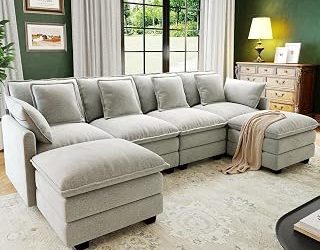
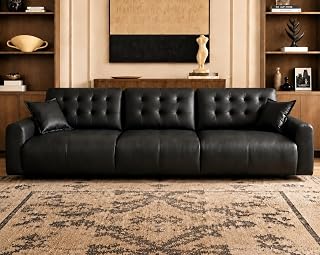
At 111.4 inches, this chenille U-shaped cloud couch demands a large room, but the included ottomans let you break the silhouette open for better light penetration. The black chenille has a directional nap that catches window light beautifully and simplifies into a bold dark anchor under evening fixtures—layer the five included pillows near an accent lamp for a genuinely dramatic vignette.
Oversized 85″ Deep Seat Sofa in Oatmeal Linen
This natural linen 3-seater is the quietest piece in the roundup, and that restraint is its superpower. The oatmeal tone acts as a neutral reflector, bouncing light from adjacent windows back into the room rather than swallowing it. The linen weave softens harsh overhead illumination into a diffused, gallery-like glow across the seating surface—exactly the effect you want when the sofa needs to brighten a room instead of dominate it.
COPIAE 89″ Wide Corduroy Sofa
The wide corduroy fabric creates a micro-landscape of highlights and shadow valleys that shifts as natural light arcs through the room. Morning side-light emphasizes every ridge; warm evening pendants make the fabric read softer and more uniform. The extra deep seats and sculpted armrests add genuine comfort to all that visual texture, and the dark grey finish holds its character without going muddy across different color temperatures.
Korser 89″ Mid-Century Chenille Sofa
Slim legs lift the generous deep seating off the floor, and that clearance is more than stylistic—it lets light pass underneath, preserving your floor plane’s openness and maintaining the sense of spaciousness a deep sofa can otherwise steal. The grey chenille balances texture and smoothness equally well under warm pendants and cooler LEDs, making this the strongest pick for rooms juggling mixed light sources.
Gericco Mid-Century Modern 89″ Linen Sofa
In beige linen, the Gericco reads as the most luminous option here. Clean lines and evenly stretched upholstery produce a bright surface that contributes to overall room brightness rather than consuming it. The mid-century frame keeps proportions honest, and the linen breathes in warm climates without the heat buildup that darker, denser fabrics create under sustained afternoon sun.
Frequently Asked Questions
What depth qualifies as a deep seat sofa?
Anything with 24 inches or more of seat depth—from the cushion’s front edge to the backrest—qualifies. This extra depth supports full reclining or leg-tucked lounging, putting these sofas squarely in the comfort-forward category rather than formal upright seating territory.
Does dark upholstery make a room feel smaller?
Dark fabrics absorb light and can reduce perceived spaciousness, but in large or well-lit rooms they create a commanding focal point without actually shrinking anything. The critical variable is your room’s total light volume—pair dark upholstery with adequate ambient and accent lighting and the result feels intentional, not heavy.
Which fabric wears best over time?
Wide-wale corduroy and tightly woven chenille both resist daily wear well. Corduroy’s ridged texture naturally conceals compression marks, while chenille’s dense pile recovers from body impressions. Flat linen shows wrinkles more visibly but can be fully refreshed through its removable, machine-washable cover.
Can a deep seat sofa work in a small apartment?
Absolutely. Choose an 85-inch 3-seater and maintain at least 18 inches of clearance on the primary walking sides. Lighter upholstery tones and exposed legs preserve the sense of open floor area and keep light flowing around the piece rather than stopping dead at its front edge.
Final Thoughts
For pure light reflection and room brightening, the Oversized 85″ Oatmeal Linen is unmatched in this field. The COPIAE 89″ Corduroy delivers the most dynamic visual texture across different times of day, rewarding you with a sofa that looks like a different piece from morning to night. And the Korser 89″ Chenille is the most consistent performer when your room’s lighting refuses to sit in one category. Choose the quality your space needs most.