Key takeaways
- Room size and blade span: A 42-inch fan is ideal for rooms under 144 square feet—bedrooms, small kitchens, or home offices. Anything larger than 144 square feet calls for a 50-to-52-inch blade span to move air efficiently without overworking the motor.
- Ceiling height and mounting style: Rooms with 8-foot ceilings practically demand a low-profile or flush-mount design so the fan blades clear heads comfortably. Standard-mount fans suit 9-foot ceilings and above, and many include optional downrods for vaulted spaces.
- Light vs. no-light configuration: If the room already has recessed lighting or pendant fixtures, a no-light fan eliminates visual clutter overhead and keeps the ceiling plane unbroken. When the fan is the primary light source, look for integrated LEDs with warm color temperatures—2700K to 3000K—for a living space that feels inviting rather than clinical.
- Motor noise and airflow (CFM): A quiet motor matters most in bedrooms and living rooms where conversation or sleep happens beneath the fan. Look for motors rated under 1 sone if possible, and CFM ratings above 3,000 for rooms exceeding 200 square feet.
- Finish and material cohesion: Brushed nickel reads contemporary and pairs well with cool-toned interiors. Oil-rubbed bronze or new bronze works in transitional and traditional spaces. Snow white or fresh white disappears against a light ceiling—useful when you want the fan to recede rather than become a focal point.
What's inside
Choosing a ceiling fan without a remote sounds simple until you realize you’re navigating a sea of near-identical listings that all claim the same thing. Many buyers assume a pull-chain fan is a downgrade—old-fashioned, inconvenient—when in reality it’s a deliberate design choice that pairs reliability with a cleaner ceiling profile. No remote to lose, no receiver to install, no battery compartment to forget about. The real challenge is picking one that actually suits your room’s dimensions, ceiling height, and the kind of light atmosphere you’re after.
This guide draws on lighting-and-ambience principles to cut through the noise. We evaluated airflow performance, motor noise, mounting options, light quality (where applicable), and how each fan’s physical footprint affects the perceived volume of a room. Below you’ll find our curated picks, followed by a focused buying guide so you can match the right fan to your space with confidence.
As an Amazon Associate we earn from qualifying purchases.


🛒 Best Price Today on Amazon
Prime members get fast, free shipping on everything above, plus member-only deals. New members get a 30-day free trial — cancel anytime.
How to Choose a Ceiling Fan Without Remote
- Room size and blade span: A 42-inch fan is ideal for rooms under 144 square feet—bedrooms, small kitchens, or home offices. Anything larger than 144 square feet calls for a 50-to-52-inch blade span to move air efficiently without overworking the motor.
- Ceiling height and mounting style: Rooms with 8-foot ceilings practically demand a low-profile or flush-mount design so the fan blades clear heads comfortably. Standard-mount fans suit 9-foot ceilings and above, and many include optional downrods for vaulted spaces.
- Light vs. no-light configuration: If the room already has recessed lighting or pendant fixtures, a no-light fan eliminates visual clutter overhead and keeps the ceiling plane unbroken. When the fan is the primary light source, look for integrated LEDs with warm color temperatures—2700K to 3000K—for a living space that feels inviting rather than clinical.
- Motor noise and airflow (CFM): A quiet motor matters most in bedrooms and living rooms where conversation or sleep happens beneath the fan. Look for motors rated under 1 sone if possible, and CFM ratings above 3,000 for rooms exceeding 200 square feet.
- Finish and material cohesion: Brushed nickel reads contemporary and pairs well with cool-toned interiors. Oil-rubbed bronze or new bronze works in transitional and traditional spaces. Snow white or fresh white disappears against a light ceiling—useful when you want the fan to recede rather than become a focal point.
The Best Ceiling Fan Without Remote (2026) Reviewed
Hunter Builder Elite 52-Inch
The Builder Elite in brushed nickel is a masterclass in restraint. Its clean five-blade silhouette and chain-pull operation keep the ceiling plane uninterrupted, making it an excellent choice for rooms where ambient lighting is handled separately. The 52-inch span pushes generous airflow across standard living rooms and bedrooms, and the no-light configuration is a genuine asset if you’ve invested in layered lighting design elsewhere in the room.
Hunter Anisten 44-Inch
At 44 inches with an integrated LED module, the Anisten hits a sweet spot for medium-sized bedrooms where the fan doubles as the primary overhead light. The included bulbs ship at a warm 3000K that reads softly against white ceilings—no blue-tinged fluorescence to fight with your paint choices. Fresh white finish lets it vanish visually, which is exactly what you want from a fan that’s doing its real work in silence above you.
Honeywell Glen Alden 52-Inch
The Glen Alden brings something the Hunter lineup doesn’t: oil-rubbed bronze with reversible blades, giving you two looks in one purchase. Its low-profile mount hugs the ceiling tightly, preserving headroom in standard 8-foot spaces. The motor is remarkably quiet for its price tier, and the pull-chain control is reassuringly mechanical. For rooms where you want warmth and weight in the metal finish without spending ceiling height, this is a strong pick.
Hunter Builder Deluxe 52-Inch
The Builder Deluxe pairs the same trusted 52-inch airframe with an integrated LED light kit in a new bronze finish—effectively upgrading the Elite for homeowners who need a single overhead fixture to handle both airflow and illumination. The light output is sufficient for rooms up to roughly 200 square feet, and the standard-mount design works cleanly on 9-foot ceilings. It’s the pragmatic all-in-one choice.
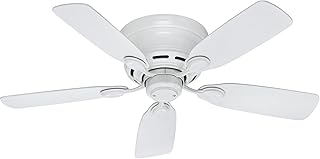
Hunter Low Profile IV 42-Inch
The Low Profile IV is the smallest fan here at 42 inches, and its flush-mount design makes it the most practical option for tight spaces with standard ceilings—guest bedrooms, laundry rooms, or compact kitchens. Snow white finish and no-light design mean it reads as architecture rather than appliance. Pull-chain operation is simple and predictable, which is precisely the point.
Frequently Asked Questions
Do I really need a remote-controlled ceiling fan?
Not necessarily. Pull-chain fans eliminate a common failure point—remote receivers and batteries—while also simplifying installation. If you already have light switches within arm’s reach and don’t mind a brief standing reach, a pull-chain fan is arguably more dependable over a ten-year lifespan.
What’s the ideal blade span for a 12×14 bedroom?
A 42-to-44-inch fan handles that square footage comfortably. Going larger won’t hurt anything, but it may create disproportionate visual weight against the ceiling. The Hunter Low Profile IV and Hunter Anisten are both well-suited to rooms of this size.
Can I install these fans on a sloped ceiling?
Most Hunter models accommodate slopes up to roughly 20 to 30 degrees with their standard mounting hardware. The Honeywell Glen Alden’s low-profile mount is designed primarily for flat ceilings. If your ceiling pitch exceeds 15 degrees, verify the specific manufacturer’s angle rating before purchasing.
Are integrated LEDs serviceable?
Integrated LED modules are not typically user-replaceable in the traditional bulb sense, but they’re designed to last 25,000 to 50,000 hours. For most households that translates to well over a decade of daily use. Models like the Anisten that include replaceable bulbs offer more flexibility if you want to tune color temperature later.
Final Thoughts
For most buyers, the Hunter Builder Elite 52-inch delivers the best balance of quiet airflow, clean aesthetics, and no-fuss pull-chain simplicity—especially in rooms with existing layered lighting. If you need the fan to be your primary light source, the Hunter Anisten 44-inch offers integrated LED illumination with a warm, room-flattering tone in a ceiling-friendly package. And for tight spaces on a budget, the Hunter Low Profile IV 42-inch disappears overhead while doing its job without ceremony. Any of these three will serve you well; the right choice comes down to how your room is already lit.