Key takeaways
- Blade Span: For rooms larger than 400 square feet, look for fans in the 72-to-84-inch range. Larger blades move more air at lower RPMs, which means quieter operation and less mechanical noise competing with your ambiance.
- Motor Type: DC motors consume roughly 60% less energy than traditional AC motors and run significantly quieter — critical when the fan hangs above a living area where conversation and background music matter.
- Light Temperature Flexibility: CCT-selectable lighting (3CCT or 6CCT) lets you shift from a crisp 6500K for task work down to a warm 2700K for evening gatherings, eliminating the need for separate dimmable fixtures.
- Airflow Rating (CFM): Aim for a fan delivering above 5,000 CFM on its highest setting for big rooms. Anything lower and you’re just stirring the air near the ceiling while the floor level stays stagnant.
- Mounting and Damp Rating: Check whether the fan is rated for covered outdoor or damp locations. A gazebo or screened porch demands different construction tolerances than a dry living room, and skipping this detail shortens the fan’s lifespan dramatically.
What's inside
Walk into a room over 400 square feet and most ceiling fans look like afterthoughts — underpowered, noisy, or stuck on a single harsh white tone that flattens every carefully chosen paint color. When the square footage climbs, airflow demands multiply, and the wrong fan doesn’t just fail to cool the space; it actively fights the mood you spent months curating.
This roundup tackles exactly that problem. Every fan here is built for expansive rooms, open-plan living areas, covered patios, or commercial spaces where a standard 52-inch unit simply cannot keep up. We evaluated airflow output, motor type, lighting versatility, noise floor, and how each fan actually shapes the feel of a room after dark — because a ceiling fan should work with your lighting design, not against it.
As an Amazon Associate we earn from qualifying purchases.


🛒 Best Price Today on Amazon
Prime members get fast, free shipping on everything above, plus member-only deals. New members get a 30-day free trial — cancel anytime.
How to Choose a Ceiling Fan For Big Room (2026)
- Blade Span: For rooms larger than 400 square feet, look for fans in the 72-to-84-inch range. Larger blades move more air at lower RPMs, which means quieter operation and less mechanical noise competing with your ambiance.
- Motor Type: DC motors consume roughly 60% less energy than traditional AC motors and run significantly quieter — critical when the fan hangs above a living area where conversation and background music matter.
- Light Temperature Flexibility: CCT-selectable lighting (3CCT or 6CCT) lets you shift from a crisp 6500K for task work down to a warm 2700K for evening gatherings, eliminating the need for separate dimmable fixtures.
- Airflow Rating (CFM): Aim for a fan delivering above 5,000 CFM on its highest setting for big rooms. Anything lower and you’re just stirring the air near the ceiling while the floor level stays stagnant.
- Mounting and Damp Rating: Check whether the fan is rated for covered outdoor or damp locations. A gazebo or screened porch demands different construction tolerances than a dry living room, and skipping this detail shortens the fan’s lifespan dramatically.
The Best Ceiling Fan For Big Room (2026)s Reviewed
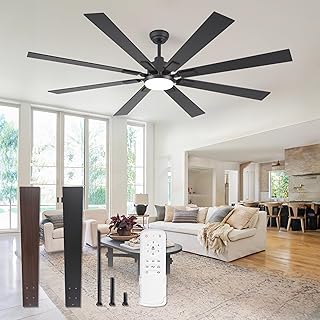
ZMISHIBO 72-Inch DC Ceiling Fan with Light
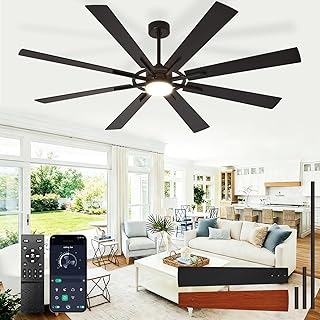
The ZMISHIBO 72 hits a sweet spot for living rooms that demand both serious airflow and refined lighting. Its 24-watt LED module spans three color temperatures, letting you dial in a warm amber glow for evening entertaining or a cool daylight tone for weekend cleaning sessions. The dual-finish blades add a subtle design dimension — one side reads clean and modern, the other leans rustic — so the fan adapts as your room evolves.
ZMISHIBO 84-Inch Industrial Ceiling Fan with Light
When square footage exceeds what a 72-inch fan can comfortably cover, the ZMISHIBO 84 steps up with eight reversible aluminum blades and industrial-grade airflow. It belongs in garages, workshops, gazebos, and open-plan great rooms where raw power matters most. Despite its size, the DC motor keeps vibration minimal — you feel the breeze before you hear anything at all.
84-Inch Propeller Ceiling Fan (No Light, Deep Walnut)
Sometimes the best lighting plan is one you control separately. This extra-large propeller-style fan strips away the built-in light entirely, leaving three broad walnut blades that look like they belong in a mid-century pavilion. It pairs beautifully with recessed downlights or pendant clusters, giving you total command over ambiance without fighting a competing light source at ceiling level.
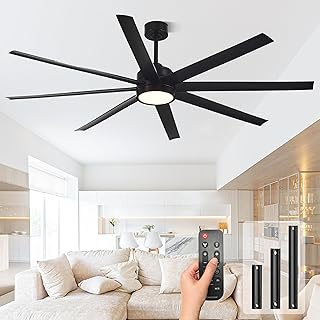
72-Inch 8-Blade Ceiling Fan with 6CCT Lighting
Six selectable color temperatures give this fan an unusual level of lighting precision. For rooms that pull double duty — a home library by day and a cocktail lounge by night — the ability to fine-tune color tone across six steps matters more than most buyers realize. The eight-blade design pushes steady, even airflow without the turbulent buffeting that fewer blades can produce at speed.
72-Inch 8-Blade Smart Fan with App Control
App connectivity elevates this fan from mechanical fixture to integrated lighting tool. Scheduling color temperature shifts to follow the sun’s arc throughout the day is exactly the kind of detail that separates a well-lit room from a thoughtfully lit one. The sleek black finish and low-profile motor housing keep visual clutter near the ceiling to a minimum.
Frequently Asked Questions
What size ceiling fan do I need for a large room?
Rooms between 400 and 700 square feet generally benefit from 72-inch fans, while spaces exceeding 700 square feet or rooms with ceilings above 10 feet call for 84-inch models. Undersized fans force you to run higher speeds continuously, which increases noise and reduces motor lifespan.
Are DC motor fans worth the extra cost?
Yes, particularly for large rooms where the fan runs for extended periods. DC motors draw significantly less power, operate at a lower noise floor, and typically offer more speed settings than AC alternatives — all factors that compound over years of daily use.
Can I install a ceiling fan on a sloped ceiling?
Most of the fans listed here support sloped ceiling installations with an optional downrod adapter. Check the maximum slope angle specified by the manufacturer — typically between 15 and 30 degrees — and ensure you have sufficient downrod length to maintain proper blade clearance.
Do built-in lights on ceiling fans produce good enough lighting for a big room?
Modern CCT-selectable fan lights work well as ambient fill, but for rooms over 500 square feet, supplementing with wall sconces or recessed fixtures creates the layered lighting depth that a single ceiling-mounted source cannot achieve on its own.
Final Thoughts
For most large living rooms, the ZMISHIBO 72-Inch DC delivers the best balance of airflow, quiet operation, and lighting flexibility. If your space demands maximum coverage, the ZMISHIBO 84-Inch Industrial is difficult to match. And for design-forward rooms where you already have a separate lighting plan, the 84-Inch Propeller in Deep Walnut offers clean, uncompromised airflow with genuine visual character.