Key takeaways
- Color temperature control: A 3CCT fan lets you switch between roughly 3000K, 4000K, and 5000K. Warm settings flatter wood, textiles, and skin tones in living and sleeping spaces; cooler settings suit kitchens and workrooms. Fixed 4000K modules give you no room to adjust once the walls are painted.
- Dimming range: Ambience lives in the bottom third of the dimming curve. Look for fans that dim smoothly toward a low glow rather than dropping out or flickering at 20%. Remote or app dimming beats a pull chain if the fan is your primary evening light source.
- Blade span and ceiling height: Match sweep to room size — roughly 42 inches for spaces under 150 sq ft, 52 inches for standard bedrooms and living rooms, and 60 inches or more for great rooms and covered patios. Under an 8-foot ceiling, a flush or low-profile mount preserves headroom and reduces shadow flicker.
- Motor type and noise floor: DC motors draw less power, offer more speed steps, and run near-silent, which matters at low speeds in a bedroom. AC motors are proven and less expensive but usually offer three speeds and a slightly higher hum.
- Diffuser quality and glare: A frosted, evenly lit lens spreads light without hot spots. Bare LED arrays behind clear glass create visible glare from a seated position and make ceilings feel harsher than the lumen count suggests.
What's inside
Most ceiling fan disappointment isn’t about airflow. It’s about light. A fan gets installed dead center in the room, becomes the single brightest object in the ceiling plane, and suddenly the space feels like a waiting room at 8 p.m. Blades chop the downlight into a faint strobe, the color temperature reads a hard bluish white against warm oak floors, and there’s no way to dial any of it back. The cooling works fine. The room stopped feeling good.
This guide looks at ceiling fans the way a lighting designer would: as a fixture first and a fan second. We weigh color temperature options, dimming behavior, glare from the diffuser, blade sweep against ceiling height, and how quietly the motor runs when the room goes still. Below are six models worth considering in 2026, followed by selection criteria, individual assessments, and answers to the questions that come up most often.
As an Amazon Associate we earn from qualifying purchases.



🛒 Best Price Today on Amazon
Prime members get fast, free shipping on everything above, plus member-only deals. New members get a 30-day free trial — cancel anytime.
How to Choose a Ceiling Fan Consumer Reports (2026)
- Color temperature control: A 3CCT fan lets you switch between roughly 3000K, 4000K, and 5000K. Warm settings flatter wood, textiles, and skin tones in living and sleeping spaces; cooler settings suit kitchens and workrooms. Fixed 4000K modules give you no room to adjust once the walls are painted.
- Dimming range: Ambience lives in the bottom third of the dimming curve. Look for fans that dim smoothly toward a low glow rather than dropping out or flickering at 20%. Remote or app dimming beats a pull chain if the fan is your primary evening light source.
- Blade span and ceiling height: Match sweep to room size — roughly 42 inches for spaces under 150 sq ft, 52 inches for standard bedrooms and living rooms, and 60 inches or more for great rooms and covered patios. Under an 8-foot ceiling, a flush or low-profile mount preserves headroom and reduces shadow flicker.
- Motor type and noise floor: DC motors draw less power, offer more speed steps, and run near-silent, which matters at low speeds in a bedroom. AC motors are proven and less expensive but usually offer three speeds and a slightly higher hum.
- Diffuser quality and glare: A frosted, evenly lit lens spreads light without hot spots. Bare LED arrays behind clear glass create visible glare from a seated position and make ceilings feel harsher than the lumen count suggests.
The Best Ceiling Fan Consumer Reports (2026)s Reviewed
52″ Modern Ceiling Fan with Lights and Remote (DC Reversible)
The most flexible lighting package here: three selectable color temperatures, full remote dimming, and a DC motor quiet enough that you notice the room’s air moving before you notice the fan. Indoor/outdoor rating and reversible winter mode make it a genuine year-round fixture.
Hunter Builder Deluxe 52″ (New Bronze, 53091)
A dependable AC workhorse with warm bronze detailing that sits comfortably in traditional and transitional rooms. Pull-chain operation and included bulbs keep it simple, though you’ll want a wall dimmer or a warmer bulb swap if evening softness matters to you.
ZMISHIBO 72″ Ceiling Fan with Lights
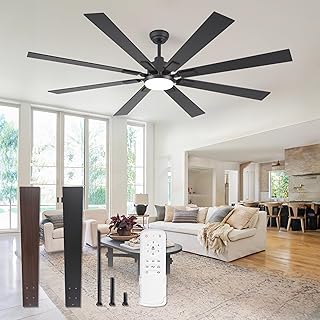
Built for volume — covered patios, vaulted great rooms, and open-plan spaces where a 52-inch fan barely registers. The 24W 3CCT LED throws usable ambient light across a wide footprint, and the damp rating plus dual-finish blades hold up in sheltered outdoor settings.
ZMISHIBO 52″ Flush Mount with Remote and App Control
The strongest pick for low ceilings and smart-home routines: a dimmable 20W LED you can schedule or fade from your phone, in a low-profile body that keeps blades clear of head height. Ideal for apartments and bedrooms where the fan doubles as mood lighting.
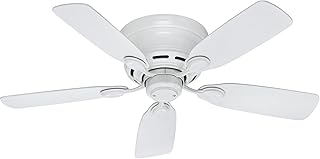
Hunter Low Profile IV 42″ (Snow White, 51059)
No light module at all, which is the point — pair it with wall sconces, cove lighting, or recessed cans and let your layered scheme do the work. The flush mount and compact sweep suit small bedrooms, kitchens, and hallways with tight clearance.
Frequently Asked Questions
What color temperature should I choose for a bedroom?
Stay at 3000K or below in the evening. Warmer light supports the wind-down cues your body expects after dark, while 5000K settings are better reserved for task-heavy daytime spaces.
Do ceiling fans really need to be dimmable?
If the fan is the only overhead light, yes. A single fixed brightness forces the room into one mood, and that mood is usually too bright for relaxing.
Is a DC motor worth the extra cost?
For bedrooms and quiet offices, generally yes — you get finer speed control, lower energy draw, and a noticeably lower noise floor. In busier rooms, an AC motor is perfectly adequate.
Can I put a light kit on a fan sold without one?
Only if the manufacturer offers a compatible kit for that model. Fans like the Low Profile IV are designed as light-free, so plan on separate fixtures instead.
Final Thoughts
For most rooms, the 52″ Modern DC Ceiling Fan with 3CCT lighting gives you the widest control over both air and ambience. Choose the ZMISHIBO 52″ Flush Mount if low ceilings or app scheduling are priorities, or the ZMISHIBO 72″ if you’re lighting and cooling a genuinely large space.