Key takeaways
- Live enzymes, not just surfactants: Cat urine leaves uric acid crystals that soap cannot lift. You want a bio-enzymatic formula that digests the residue, which is why dwell time matters more than elbow grease.
- Volume for the depth of the mess: A surface mist treats a surface stain. Anything that has reached the pad needs real saturation, so a gallon jug is often more economical than three spray bottles.
- Fiber and finish safety: Look for CRI certification or explicit approval for wool, and always test a closet corner first. Oxidizers can lighten dyes, and warm-toned carpet shows fading faster under lamplight than under daylight.
- Scent strategy: Fresh or lime scents mask during the working period; lavender reads calmer in bedrooms. Whatever you pick should fade to neutral, because a perfumed room is its own kind of clutter.
- Repeat-marking deterrence: If the ammonia note isn’t fully destroyed, your cat will return to the same square foot. Complete odor removal is the behavioral fix as much as the cosmetic one.
What's inside
I spend my working life on how a room feels after dark — the warmth of a 2700K bulb, a dimmer set low enough to soften a corner, a floor lamp angled to keep shadows generous. And I’ve learned something humbling from years of walk-throughs: none of it survives a smell. You can layer light beautifully across a living room and a guest will still stiffen at the door, because the nose reports before the eye does. Cat urine is the worst offender, partly because it doesn’t stay put. It wicks into carpet backing, soaks the pad beneath, and then reactivates every time humidity climbs, which means the room you carefully tuned in April smells wrong again in July.
The fix isn’t fragrance and it isn’t scrubbing harder. It’s the right chemistry, applied generously enough to reach the depth the urine reached. This guide covers what actually breaks down feline uric acid crystals, how to judge a formula before it touches your wool or your nylon loop pile, and which bottles I keep in the utility closet of every home I work in — including a blacklight trick that makes the whole job far less guesswork.
As an Amazon Associate we earn from qualifying purchases.



🛒 Best Price Today on Amazon
Prime members get fast, free shipping on everything above, plus member-only deals. New members get a 30-day free trial — cancel anytime.
How to Choose a Cat Pee Carpet Cleaner (2026)
- Live enzymes, not just surfactants: Cat urine leaves uric acid crystals that soap cannot lift. You want a bio-enzymatic formula that digests the residue, which is why dwell time matters more than elbow grease.
- Volume for the depth of the mess: A surface mist treats a surface stain. Anything that has reached the pad needs real saturation, so a gallon jug is often more economical than three spray bottles.
- Fiber and finish safety: Look for CRI certification or explicit approval for wool, and always test a closet corner first. Oxidizers can lighten dyes, and warm-toned carpet shows fading faster under lamplight than under daylight.
- Scent strategy: Fresh or lime scents mask during the working period; lavender reads calmer in bedrooms. Whatever you pick should fade to neutral, because a perfumed room is its own kind of clutter.
- Repeat-marking deterrence: If the ammonia note isn’t fully destroyed, your cat will return to the same square foot. Complete odor removal is the behavioral fix as much as the cosmetic one.
The Best Cat Pee Carpet Cleaners (2026) Reviewed
Rocco & Roxie Stain & Odor Eliminator
This is my default recommendation and the bottle I hand to clients, because the enzyme culture works patiently on old set-in spots rather than just bleaching them out of sight. CRI certification means I’m comfortable using it on light nylon and wool blends, and it moves easily from carpet to a crate or a car footwell.
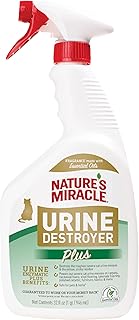
Nature’s Miracle Cat Urine Destroyer Plus
Purpose-built for feline chemistry, which shows up in how thoroughly it handles the sharp ammonia edge that generic pet cleaners leave behind. I reach for this on repeat-marking hotspots near doorways and baseboard corners.
Nature’s Miracle Advanced Cat Stain & Odor Eliminator, Severe Mess
The heavier-duty sibling, meant for the situations you discover late — a closet floor, a rug under a console table. Give it a long soak and resist blotting too early; the enzymes need contact time to finish the job.
Biokleen Bac Out
My pick for households that want plant-based, low-tox chemistry without giving up performance, and the lime scent is genuinely pleasant rather than clinical. It also concentrates well, so a bottle stretches further than the label suggests.
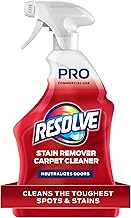
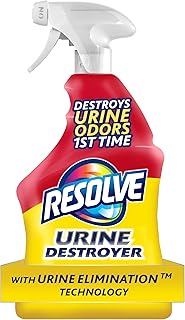
Resolve Urine Destroyer Spray
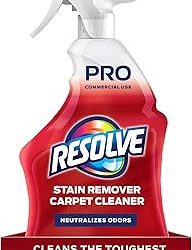
The most accessible option here and a solid first responder for fresh accidents caught within the hour. It handles the visible stain reliably; for anything that has already dried, step up to a dedicated enzyme soak.
Frequently Asked Questions
How do I find spots I can’t see?
Kill the room lights and sweep a UV blacklight across the carpet at a low angle. Dried urine fluoresces a dull yellow-green, and you’ll almost always find the stain is wider than you assumed. Outline it with painter’s tape before you treat.
Can I use a steam cleaner?
Not with heat on protein stains — high temperature can set them permanently. Apply the enzyme cleaner first, let it fully work, then extract with cool water if needed.
Why did the smell come back a week later?
You treated the fiber but not the pad. Residue below the carpet reactivates with humidity, so the second pass needs enough liquid to reach the same depth the urine did. This is where a one-gallon option like Urine B-Gone earns its shelf space.
Will vinegar work instead?
It temporarily neutralizes odor but leaves the uric acid crystals intact, so the problem returns. Skip ammonia-based products entirely, since they read as a scent marker to your cat.
Final Thoughts
If you buy one bottle, make it the Rocco & Roxie — it’s the most forgiving across fibers and the most reliable on older damage. Add Nature’s Miracle Urine Destroyer Plus for active marking zones, and keep Biokleen Bac Out on hand if you’d rather work with plant-based chemistry. Get the odor genuinely gone, and the room you designed finally reads the way you intended.