Key takeaways
- Workspace Footprint & Lighting: Measure the exact area where the saw will live, including clearance for infeed and outfeed. A saw that blocks overhead task lighting or casts deep shadows across the blade line is a safety hazard, not just an inconvenience. Prioritize models with a compact or foldable profile that lets you preserve clean sightlines.
- Motor Power & Cut Capacity: For hardwoods and repeated crosscuts, a 15A motor with RPM north of 5,000 gives you clean edges without bogging down. Check max blade height at both 90° and 45° — a difference of even half an inch matters when you’re resawing thick stock for furniture panels.
- Portability vs. Stability: If your saw doubles as a workbench or needs to roll into storage, folding legs and a lightweight frame are essential. But portability shouldn’t sacrifice a flat, rigid table surface. Look for models that lock firmly in position and don’t wobble under load.
- Dust Collection & Air Quality: Fine particulate wrecks both your lungs and your workspace ambiance. A saw with a well-placed dust port that integrates with a shop vac or cyclone system keeps the air clear and your finished surfaces free of embedded grit.
- Included Accessories & Expandability: Built-in clamps, bench dogs, and extendable table wings save you from buying add-ons separately. A saw that accepts standard rip fences and miter gauges gives you room to grow without replacing the entire unit.
What's inside
A bench table saw has to earn its place in your home, and not just on raw power. If you work in a converted garage, a corner of the basement, or a shed you’ve turned into a personal studio, you already know the real challenge: finding a machine that fits the room, the light, and the rhythm of your space without turning every project into a logistical headache. The wrong saw crowds out your bench, kicks up dust in ways your ventilation can’t handle, or sits so low it puts your back out before noon.
This guide cuts through the noise. We evaluated bench table saws through the lens of someone who spends days calibrating how a room feels — because the tool you choose shapes not just your cuts, but the entire atmosphere of your workspace. From motor strength and bevel capacity to footprint, portability, and how naturally a saw integrates into a well-lit, well-organized shop, here’s what’s actually worth your money in 2026.
As an Amazon Associate we earn from qualifying purchases.



🛒 Best Price Today on Amazon
Prime members get fast, free shipping on everything above, plus member-only deals. New members get a 30-day free trial — cancel anytime.
How to Choose a Bench Table Saw (2026)
- Workspace Footprint & Lighting: Measure the exact area where the saw will live, including clearance for infeed and outfeed. A saw that blocks overhead task lighting or casts deep shadows across the blade line is a safety hazard, not just an inconvenience. Prioritize models with a compact or foldable profile that lets you preserve clean sightlines.
- Motor Power & Cut Capacity: For hardwoods and repeated crosscuts, a 15A motor with RPM north of 5,000 gives you clean edges without bogging down. Check max blade height at both 90° and 45° — a difference of even half an inch matters when you’re resawing thick stock for furniture panels.
- Portability vs. Stability: If your saw doubles as a workbench or needs to roll into storage, folding legs and a lightweight frame are essential. But portability shouldn’t sacrifice a flat, rigid table surface. Look for models that lock firmly in position and don’t wobble under load.
- Dust Collection & Air Quality: Fine particulate wrecks both your lungs and your workspace ambiance. A saw with a well-placed dust port that integrates with a shop vac or cyclone system keeps the air clear and your finished surfaces free of embedded grit.
- Included Accessories & Expandability: Built-in clamps, bench dogs, and extendable table wings save you from buying add-ons separately. A saw that accepts standard rip fences and miter gauges gives you room to grow without replacing the entire unit.
The Best Bench Table Saw (2026)s Reviewed
WORX Pegasus 2-in-1 Folding Workbench
The WX051 blurs the line between workbench and saw support with a design that folds flat in seconds. Its 31-by-25-inch surface holds serious weight without sagging, and the included clamps and bench dogs mean you’re set up for glue-ups, sanding, or crosscutting right out of the box. For tight workshops where every square foot matters, this is the kind of unobtrusive foundation that keeps your space feeling open rather than cramped.
Prostormer 10 Inch Table Saw
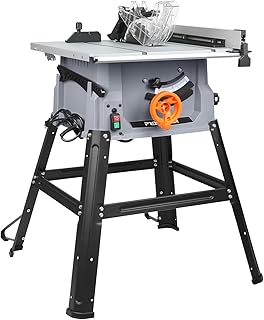
At 5,000 RPM with a 15A motor, this portable benchtop unit handles decking, trim, and cabinetry cuts with surprising authority for its size. The included stand raises the blade to a comfortable working height — something your lower back will thank you for during long sessions. Bevel adjustments to 45° are smooth and repeatable, which matters when you’re cutting miters for furniture frames that need tight, light-gap-free joints.
DOVAMAN 10″ Table Saw with Stand
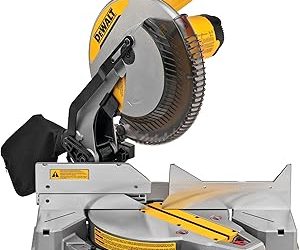
The DTS10A stands out with its copper-wound motor pushing 5,300 RPM and a max cutting height that edges out competitors at 3.35 inches on 90° cuts. The one-side extendable table is genuinely useful — it gives you extra support for wider panels without permanently hogging floor space. For a home shop where you alternate between small craft pieces and full-sized shelving, this adaptability keeps the workflow feeling effortless rather than forced.
SKIL 10 Inch Worm Drive Table Saw
Worm drive gearing delivers the kind of sustained torque that direct-drive motors simply can’t match, and the SPT99-11 brings that advantage to a benchtop form factor. This is the saw you reach for when you’re ripping hardwoods all afternoon and need consistent power without motor fade. The stand is robust, the fence locks down accurately, and the overall build quality puts it a tier above portable competition.
Portable Folding Workbench with Sawhorse Design
This 500-lb-capacity folding bench pairs with your circular saw or miter saw to create an instant workstation. The 31-by-25-inch surface and six bench dogs give you solid hold-down for sheet goods, and the mobile design means you can wheel it into position wherever the light and ventilation are best. It’s not a table saw itself, but as a platform that makes your existing tools more versatile, it earns its spot in a well-planned shop.
Frequently Asked Questions
What’s the difference between a bench table saw and a contractor table saw?
A bench table saw sits on an existing surface or a compact stand and is designed for portability and smaller workshops. Contractor saws are larger, heavier, and typically have their own full-size base with more rip capacity. For home furniture projects and tight spaces, benchtop models deliver more than enough performance.
Can a bench table saw handle hardwoods like oak and walnut?
Yes, a 15A motor running at 5,000+ RPM will cut through hardwoods cleanly, provided you use a sharp, appropriate blade. Feed rate matters more than motor size in many cases — slow, steady passes prevent burning and produce smoother surfaces that need less sanding under task lighting.
How important is dust collection on a small table saw?
Critical. Fine wood dust is both a health hazard and a finish killer. Even a basic dust port connected to a shop vac dramatically improves air quality. Position your saw so overhead lighting doesn’t get obscured by dust buildup, and clean the blade guard regularly to maintain visibility.
Should I buy a saw with a built-in stand or use a separate workbench?
A built-in stand is convenient and ensures correct working height, but a separate folding workbench offers more flexibility if you reconfigure your shop often. The ideal setup lets you adjust the saw’s position relative to your light sources and ventilation so each cut is both safe and comfortable.
Final Thoughts
For most home furniture makers, the DOVAMAN DTS10A offers the best balance of power, cut height, and expandable workspace. If portability tops your list, the WORX Pegasus is an incredibly flexible foundation that keeps your shop adaptable. And for anyone pushing through dense hardwoods regularly, the SKIL SPT99-11 worm drive delivers the sustained torque that makes long sessions feel effortless. Choose the saw that fits not just your projects, but the room you build them in.