Key takeaways
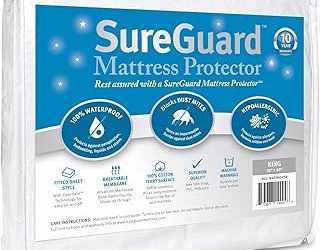
- Pocket depth first, everything else second: Measure your mattress with a topper and protector on, then add two inches. Foam beds commonly run 12–14 inches, and 16–21 inch pockets are the safe zone. A set that fits cleanly also keeps the mattress edge reading as one unbroken line rather than a puckered rim that catches shadow.
- Weave over thread count: Percale gives a matte, dry surface that diffuses light softly and breathes better on foam. Sateen returns a low specular sheen — flattering under a single warm lamp, but it will show every fold. Pick the look you want the room to have at 9pm.
- Airflow, because foam won’t help you: Memory foam gives back heat instead of dispersing it. Long-staple cotton, bamboo-derived viscose, or a genuinely open-weave microfiber all move air far better than a dense, high-count sateen sold as “cooling.”
- Color temperature compatibility: Cool greys can drift green or muddy under budget 2700K LEDs with poor color rendering. Warm neutrals — wheat, sand, oatmeal — hold their character across almost any bulb. Deep charcoal absorbs light and quietly lowers the perceived brightness of the whole room, which is useful if you want the bed to recede.
- Wrinkle behavior and certification: Wrinkle-resistant finishes matter more here than on a spring bed, since foam doesn’t let fabric self-tension. An OEKO-TEX mark tells you the finish chemistry was tested, which is worth having on something pressed against your face nightly.
What's inside
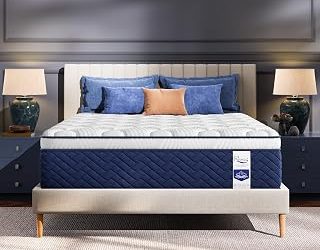
Memory foam behaves differently from an innerspring in almost every way that matters to a sheet. It sits taller, especially once you add a topper, so standard 12-inch pockets pop off the corners by morning. It traps body heat instead of venting it through coils. And because the surface has almost no give at the corners, any slack in the fabric gathers into ridges — which, if you spend your days thinking about how light lands in a room the way I do, is the part that gives everything away. Raking light from a bedside lamp turns a loose fitted sheet into a topographic map of shadow lines.
This guide looks at bed sheets for memory foam mattresses from two angles at once: the practical fit and thermal questions, and the ambience question nobody puts on the packaging — how a weave, a sheen, and a color actually read under the warm, low-output lighting most of us use at night. Below you’ll find the sets worth considering in 2026, a short checklist for narrowing them down, and honest notes on where each one lands.
As an Amazon Associate we earn from qualifying purchases.



🛒 Best Price Today on Amazon
Prime members get fast, free shipping on everything above, plus member-only deals. New members get a 30-day free trial — cancel anytime.
How to Choose a Bed Sheets For Memory Foam Mattress (2026)
- Pocket depth first, everything else second: Measure your mattress with a topper and protector on, then add two inches. Foam beds commonly run 12–14 inches, and 16–21 inch pockets are the safe zone. A set that fits cleanly also keeps the mattress edge reading as one unbroken line rather than a puckered rim that catches shadow.
- Weave over thread count: Percale gives a matte, dry surface that diffuses light softly and breathes better on foam. Sateen returns a low specular sheen — flattering under a single warm lamp, but it will show every fold. Pick the look you want the room to have at 9pm.
- Airflow, because foam won’t help you: Memory foam gives back heat instead of dispersing it. Long-staple cotton, bamboo-derived viscose, or a genuinely open-weave microfiber all move air far better than a dense, high-count sateen sold as “cooling.”
- Color temperature compatibility: Cool greys can drift green or muddy under budget 2700K LEDs with poor color rendering. Warm neutrals — wheat, sand, oatmeal — hold their character across almost any bulb. Deep charcoal absorbs light and quietly lowers the perceived brightness of the whole room, which is useful if you want the bed to recede.
- Wrinkle behavior and certification: Wrinkle-resistant finishes matter more here than on a spring bed, since foam doesn’t let fabric self-tension. An OEKO-TEX mark tells you the finish chemistry was tested, which is worth having on something pressed against your face nightly.
The Best Bed Sheets For Memory Foam Mattress (2026)s Reviewed
Bedlifes 1000TC Egyptian Cotton Queen Sheets
The 18–24 inch pockets swallow even a foam mattress stacked with a thick topper, and the long-staple sateen weave has a restrained luster that catches lamplight without looking glossy. It’s the pick if you want the bed to read as the warmest, softest surface in the room.
Bedsure Queen Sheet Set
The embossed texture is quietly clever from a lighting standpoint: micro-relief scatters light in a way that hides the small creases smooth microfiber tends to advertise. Easy care, genuinely breathable for the price, and reliably colorfast through repeated washing.
DREAMCARE Queen Sheet Set — Extra Deep, Gray
Up to 21 inches of pocket depth plus side pockets means the corners stay locked on a tall foam build, so the mattress silhouette stays crisp. The grey is a genuine neutral rather than a blue-leaning one, which keeps it stable under warm bulbs.
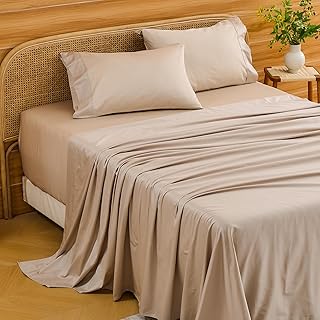
Extra Deep 6-Piece Queen Set — Wheat
Two extra pillowcases and a warm, slightly earthy wheat tone that behaves beautifully at 2700K — this is the set I’d point to for anyone chasing a soft, low-lit bedroom rather than a bright hotel look. Secure fit and minimal wrinkling round it out.
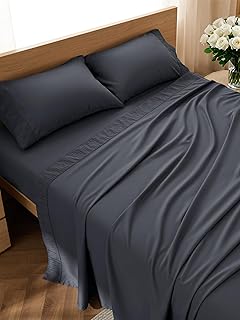
Queen 4-Piece Cooling Set — Dark Grey
Deep pockets, an easy-fit design, and an OEKO-TEX certified finish in a charcoal that absorbs rather than reflects light, dropping the room’s overall brightness a notch. A strong choice for warm sleepers who want the bed to feel like a quiet, cave-like anchor.
Frequently Asked Questions
What pocket depth do I need for a memory foam mattress?
Measure your mattress from seam to seam with the topper and protector in place, then add roughly two inches of headroom. Most foam beds land between 12 and 14 inches, so 16-inch pockets are the practical minimum and 18–21 inches covers nearly every configuration.
Do cooling sheets actually help on foam?
They help at the surface, which is where you feel it. Breathable cotton and open-weave fabrics move moisture and air away from your skin, but no sheet changes the fact that foam itself stores heat — pair them with a ventilated topper if you sleep genuinely hot.
Percale or sateen for a foam bed?
Percale for coolness and a matte, light-diffusing finish; sateen for a smoother hand and a soft sheen that flatters warm lamplight. Sateen shows folds more readily on a non-yielding foam surface, so it rewards a tidy make.
Why do my fitted sheets keep coming off?
Almost always insufficient depth or weak elastic. Foam has firm, square corners that give the sheet nothing to grip, so look for all-around elastic, secure-fit construction, or side pockets rather than corner-only banding.
Final Thoughts
If you want one set that solves fit, breathability, and a genuinely handsome surface at once, the Bedlifes 1000TC Egyptian Cotton set is the strongest all-rounder here, with pockets deep enough for any foam build. The Wheat 6-piece set is my pick for anyone designing around warm, low light, and the Bedsure Queen set is the value option I’d recommend without hesitation — its embossed texture forgives more than smooth fabrics do.