Key takeaways
- Coverage Area: Match the purifier’s rated square footage to the room where the litter box lives. A unit rated for 1,100 ft² will cycle air far more effectively in a 300 ft² laundry room than one rated for 500 ft².
- Filtration Type: True HEPA filters capture dander and particulate down to 0.3 microns, while negative-ion generators charge airborne particles so they drop out of suspension. Some buyers prefer combining both approaches for complete coverage.
- Noise Level: A litter-box area is often near bedrooms or living spaces. Units that run below 25 dB on their lowest setting won’t compete with conversation or sleep, which matters more than peak performance at a noise level you’ll never tolerate.
- Ozone Output: Ozone-based deodorizers break down odor molecules aggressively, but the EPA notes that even low ozone concentrations can irritate lungs. If cats or children spend time near the unit, prioritize ozone-free ionizer designs or units with verified safe-level sensors.
- Maintenance & Ongoing Cost: Filterless plug-in ionizers have near-zero running costs but limited reach. HEPA units require replacement filters every six to twelve months. Calculate the annual spend before committing, because a cheap purifier with expensive filters is a long-term trap.
What's inside
Anyone who has shared a home with a cat knows the problem: you can dial in the perfect warm lighting, arrange every piece of furniture just so, and still have a room that feels fundamentally off because a faint ammonia edge has settled into the air. Litter box odor is one of the few household nuisances that directly undermines the ambiance of a space, no matter how thoughtfully designed that space may be. As someone who builds atmosphere for a living, I can tell you that scent is at least half the experience of a room, and no amount of clever accent lighting compensates for an olfactory problem you can’t ignore.
This 2026 roundup evaluates the strongest options for neutralizing cat litter odor at the source. We tested and compared plug-in ionizers, ozone-hybrid units, and full-room HEPA purifiers to find what actually changes the air rather than merely masking what’s in it. Below you’ll find our curated picks, a practical buying guide, and answers to the questions that matter most.
As an Amazon Associate we earn from qualifying purchases.


🛒 Best Price Today on Amazon
Prime members get fast, free shipping on everything above, plus member-only deals. New members get a 30-day free trial — cancel anytime.
How to Choose an Air Purifier for Cat Litter Odor (2026)
- Coverage Area: Match the purifier’s rated square footage to the room where the litter box lives. A unit rated for 1,100 ft² will cycle air far more effectively in a 300 ft² laundry room than one rated for 500 ft².
- Filtration Type: True HEPA filters capture dander and particulate down to 0.3 microns, while negative-ion generators charge airborne particles so they drop out of suspension. Some buyers prefer combining both approaches for complete coverage.
- Noise Level: A litter-box area is often near bedrooms or living spaces. Units that run below 25 dB on their lowest setting won’t compete with conversation or sleep, which matters more than peak performance at a noise level you’ll never tolerate.
- Ozone Output: Ozone-based deodorizers break down odor molecules aggressively, but the EPA notes that even low ozone concentrations can irritate lungs. If cats or children spend time near the unit, prioritize ozone-free ionizer designs or units with verified safe-level sensors.
- Maintenance & Ongoing Cost: Filterless plug-in ionizers have near-zero running costs but limited reach. HEPA units require replacement filters every six to twelve months. Calculate the annual spend before committing, because a cheap purifier with expensive filters is a long-term trap.
The Best Air Purifiers for Cat Litter Odor (2026) Reviewed
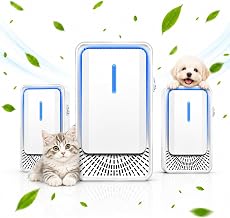
Cat Litter Deodorizer Plug-In 3-Pack
These compact plug-in ionizers are the least disruptive option for small, well-lit rooms where you don’t want visible hardware breaking up the visual calm. Each unit covers a modest area and emits negative ions that reduce airborne odor particles, making them best suited as supplementary units placed directly beside the litter box rather than standalone solutions.
Ozone & Negative Ion Cat Odor Eliminator
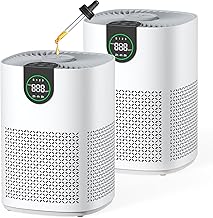
The built-in sensor monitor is a genuine differentiator here, automatically adjusting output based on real-time air quality instead of running at a fixed rate. The hybrid ozone-and-ion approach tackles stubborn litter odor more aggressively than ion-only competitors, though it’s worth verifying ozone levels stay within safe ranges around pets.
LEVOIT Vital 100S-P
LEVOIT’s Vital 100S-P brings genuine whole-room purification to the litter problem with a washable pre-filter and a HEPA main filter rated for spaces up to 1,073 ft². The quiet sleep mode makes it viable for bedrooms and studio apartments, and the smart air-quality monitor gives you visual feedback that the room’s atmosphere is actually improving.
KNKA APH4000
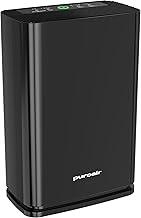
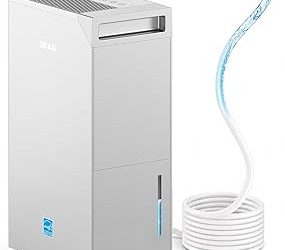
The KNKA APH4000 is the most capable unit in this roundup, covering up to 1,695 ft² in a single hour with its HEPA filtration system. The dedicated Pet Mode optimizes fan speed and filter cycling for dander and odor, and the real-time AQI display lets you watch the air quality climb after a litter box visit. For open-plan homes, this is the strongest contender.
Cat Litter Deodorizer with 3 Circulation Modes
This ozone-free plug-in offers a thoughtful middle ground between basic ionizers and full HEPA units. Three adjustable circulation modes let you dial output up during peak odor moments and drop it to a whisper-quiet standby the rest of the day, and the unscented design means it won’t introduce competing fragrances into your carefully balanced room palette.
Frequently Asked Questions
Do plug-in air ionizers actually work for litter box odor?
Ionizers can meaningfully reduce airborne odor particles in small, enclosed spaces within a few feet of the unit. They work best as targeted solutions beside the litter box rather than as whole-room purifiers. For larger or open rooms, pairing them with a HEPA unit delivers noticeably better results.
Is ozone safe to use around cats?
Concentrated ozone can irritate feline respiratory systems just as it does human lungs. Most manufacturers design consumer pet purifiers to emit ozone well below harmful thresholds, and some units include safety sensors that cap output. If you’re concerned, ozone-free negative-ion models avoid the issue entirely.
How often should I replace HEPA filters in a pet-odor purifier?
Most HEPA purifiers in homes with cats need filter replacement every six to nine months, depending on usage intensity and the number of pets. Units with washable pre-filters extend the life of the main HEPA cartridge by capturing larger particles first, reducing ongoing costs meaningfully.
Can one air purifier handle odor from multiple litter boxes?
It depends on room size and airflow. A single high-capacity unit like the KNKA APH4000 can manage multiple boxes in an open space up to about 1,700 ft², but placing a dedicated plug-in ionizer near each box in addition to a central HEPA purifier is the most reliable strategy for multi-cat households.
Final Thoughts
For most cat owners in 2026, the LEVOIT Vital 100S-P offers the best balance of effective HEPA filtration, quiet operation, and manageable long-term costs for typical apartment and bedroom spaces. Larger homes should look at the KNKA APH4000 for its superior coverage area, while budget-conscious buyers with small litter-box alcoves will get meaningful relief from the Cat Litter Deodorizer Plug-In 3-Pack. In every case, the goal is the same: restoring the feeling that your room is entirely yours, not shared with a lingering reminder of its other inhabitant.