4 Best AA Batteries for Outdoor Lights (November 2026)
Compare four AA batteries for outdoor lights by chemistry, cold-weather strength, shelf life and pack size, so every fixture stays lit through the night.
An outdoor light that dies at midnight usually has a tired battery, not a broken fixture. Path lights, string lights, lanterns, and motion sensor lights all run on the same small AA cell, yet they ask very different things of it: a lantern on a cold porch needs a cell that still delivers power below freezing, a patio string light needs a cell that holds charge for weeks, and a motion light by the driveway needs a cell that can sit idle for months and still fire the sensor. The real decision is the chemistry inside the cell, because alkaline, lithium, and rechargeable NiMH cells behave very differently once the temperature drops.
This guide is for anyone keeping battery-powered outdoor lights running, from a few lanterns on a porch to a full set of path and string lights. Every battery below was chosen from its name and specifications on its Amazon listing, with size, chemistry, voltage, pack size, and shelf life taken from the listing itself.
Quick Picks
As an Amazon Associate we earn from qualifying purchases
Product
Best for
Key spec from title
Energizer Ultimate Lithium AA Batteries
Cold nights and lights left out all winter
1.5V lithium, 8-pack
Duracell Coppertop AA Batteries
Everyday outdoor lights and spares
1.5V alkaline, 24-pack
Amazon Basics AA Alkaline Batteries
Stocking a whole yard of lights at once
1.5V alkaline, 48-pack
eneloop Panasonic BK-3MCCA4BA AA Batteries
Rechargeable cells for lights used every night
1.2V NiMH, 2100 cycles, 4-pack
How to Choose
Match the chemistry to the fixture first
Open one light and read what the maker asks for before buying a pack, because chemistry decides whether the light works at all. Most battery-powered outdoor lights are built around standard 1.5-volt alkaline cells, and a lithium AA at the same 1.5 volts drops straight into those fixtures with no change. A rechargeable NiMH cell runs at 1.2 volts, which suits most modern lights but can make an older motion sensor or a dimmer circuit behave oddly, so check the manual when the fixture is old. Never put a rechargeable cell in a fixture that tries to charge it unless the fixture is made for that, and never mix chemistries in the same light.
Plan for cold nights, not mild evenings
Outdoor lights spend their hardest hours in the cold, and temperature separates the chemistries more than any other factor. Alkaline cells lose strength as the temperature falls, so a path light that glows all evening in summer can fade early on a frosty night. Lithium cells hold their voltage far better in the cold, which is why the Energizer lithium pack in this guide is the pick for lights that stay out through winter. NiMH cells sit in the middle, steady in mild cold but weaker in a hard freeze, so they suit sheltered porches better than an exposed fence line in January.
Read shelf life as readiness, not runtime
Shelf life tells you how long a spare cell stays useful in a drawer, and that matters when a light only needs new cells a few times a year. The lithium pack in this guide lists a 25-year shelf life, and the alkaline packs list 10 and 12 years, so a bulk pack bought now can still serve the lights several seasons on. A rechargeable cell has no shelf life in the same sense, because it slowly loses charge as it sits, though the eneloop cells here are made to hold most of their charge for years. Buy the pack size that matches how many lights you run, and keep spares dry and cool rather than in a damp shed.
Count the cells before you count the cost
A single outdoor light often takes two or four AA cells, and a yard full of path lights can swallow a whole pack in one round of changes. Count the cells in every fixture, add them up, and then choose the pack size that covers at least one full change with a few spares left over. The 48-pack in this guide suits a yard with many lights, the 24-pack suits a handful of fixtures, and the 8-pack lithium suits the two or three lights that face the worst weather. A small pack of rechargeable cells only makes sense when the same lights run every night and the cells can be rotated through a charger.
The 4 Best Options
Energizer Ultimate Lithium AA Batteries
Top Pick
Energizer Ultimate Lithium AA Batteries
Best for: Outdoor lights that stay out through cold nights and winter weather.
This lithium 8-pack is the strongest choice for outdoor lights that face real cold, and it earns that place on chemistry rather than on pack size. A lithium cell holds its 1.5 volts far better than an alkaline cell in the cold, so a lantern on an exposed porch or a motion light by a gate keeps working on nights when alkaline cells fade. The listing gives a 25-year shelf life, so spares bought now stay ready for years, and the 8-pack covers the two or three fixtures that need the toughest cells. Lithium cells are also light, which helps in a hanging lantern that swings in the wind.
Watch out for: The same 8-pack title appears under more than one listing code, so confirm the listing shows model L91SBP-8 before ordering.
Duracell Coppertop AA Batteries
Runner-Up
Duracell Coppertop AA Batteries
Best for: Everyday path, string, and lantern lights in mild weather, with spares on hand.
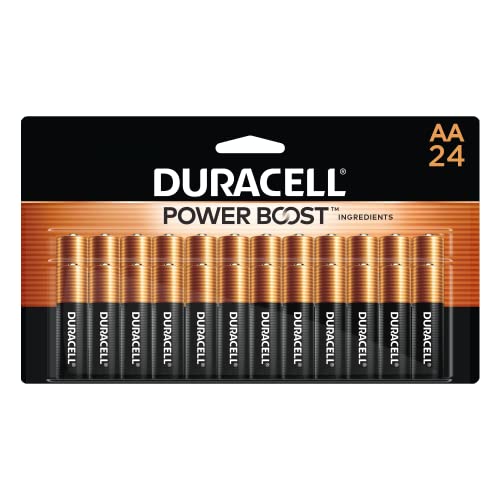
This 24-pack is the everyday workhorse for outdoor lights, and it suits the fixtures that run in mild weather and need a fresh set a few times a season. The alkaline cells run at the standard 1.5 volts that most battery-powered lights expect, and the Power Boost ingredients in the listing aim to hold power in household and outdoor devices alike. A 24-pack covers a handful of fixtures with spares left over, and the listed 12-year shelf life means the spares stay good for years. The pack size hits the middle ground between a small trial pack and a bulk buy.
Watch out for: Alkaline cells lose strength in deep cold, so move the lithium pack into any light that has to work through a freezing night.
Amazon Basics AA Alkaline Batteries
Amazon Basics AA Alkaline Batteries
Best for: Stocking a yard full of outdoor lights with one bulk pack.
This 48-pack is the pick for anyone running a whole yard of outdoor lights and tired of buying small packs one at a time. The cells are standard 1.5-volt alkaline, so they drop into any fixture that takes an alkaline AA, and the 48-count covers a full round of changes across many path lights, string lights, and lanterns with spares to spare. The listing gives a 10-year shelf life, which suits a bulk buy that gets used over several seasons, and the model number on the listing is ALK AA48FFP-U AMZ. For a homeowner who changes cells in a dozen fixtures at once, the large pack is the practical choice.
Watch out for: Keep the spares dry and cool, because damp storage shortens the life of any alkaline cell long before its listed shelf life runs out.
eneloop Panasonic BK-3MCCA4BA AA Batteries
eneloop Panasonic BK-3MCCA4BA AA Batteries
Best for: Lights that run every night, where rechargeable cells replace constant single-use buying.
Lights that run every night, where rechargeable cells replace constant single-use buying.
Watch out for
The capacity is listed as 2000mAh on Amazon and 2100mAh on some other pages, and the 1.2-volt output may not suit every older fixture, so check the manual first.
This 4-pack of rechargeable NiMH cells is the pick for lights that run every night, where buying single-use cells becomes a chore. The cells run at 1.2 volts and can be recharged up to 2100 times according to the listing, so one pack can serve a pair of nightly path lights for years with a charger in rotation. They arrive pre-charged and ready to use, and the listing says they hold most of their charge for up to 10 years in storage. The 4-pack covers one or two fixtures at a time, and a second pack lets the rotation run without a gap.
Watch out for: The capacity is listed as 2000mAh on Amazon and 2100mAh on some other pages, and the 1.2-volt output may not suit every older fixture, so check the manual first.
Which One Fits Your Situation
Lights that face freezing nights
Pick the Energizer Ultimate Lithium 8-pack. Lithium holds its voltage in the cold while alkaline cells fade, so the porch lantern and the gate motion light keep working through winter, even on the coldest nights. Use these cells only in the fixtures that face the worst weather, and keep alkaline cells for the sheltered ones.
A handful of lights around the patio
Pick the Duracell Coppertop 24-pack. It covers a few string lights, lanterns, and path lights around the patio and garden with spares left over, and the standard alkaline chemistry fits every fixture that expects a 1.5-volt cell. The 12-year shelf life means the spares stay ready between changes, so the lights are never left dark for want of a cell.
A whole yard of path and string lights
Pick the Amazon Basics 48-pack. One bulk pack covers a full round of changes across many fixtures, from the front path to the back fence, and the 10-year shelf life suits a supply that gets used over several seasons. Count the cells in every light first so one pack truly covers the yard.
Lights that run every night
Pick the eneloop Panasonic 4-pack. Rechargeable cells make sense when the same lights burn night after night, because the pack pays for itself in rotations through a charger instead of a stream of single-use cells. Buy a second pack if the lights cannot sit dark while a set charges, so the rotation never leaves a fixture unlit.
Common Mistakes
Mixing old and new cells in the same light, which leaves the fresh cells doing the work of the tired ones.
Mixing alkaline and lithium cells in one fixture, which can unbalance the light and shorten the life of both.
Putting a standard alkaline cell in a solar fixture that tries to recharge it, which the cell was never made to handle.
Storing spare cells in a damp shed or garage, where moisture corrodes the contacts before the cells are ever used.
Throwing used cells in the bin without checking local battery recycling, which many towns now offer for free.
Frequently Asked Questions
Can I use lithium AA batteries in any outdoor light?
A lithium AA cell runs at 1.5 volts, the same as an alkaline AA, so it fits any fixture made for a standard AA cell. Its advantage is cold-weather strength and a long shelf life, which suits lights left out all winter. Check the fixture manual first, because a few older lights warn against lithium cells, and never use one in a fixture that tries to recharge its batteries.
Are rechargeable AA batteries good for outdoor lights?
They are a good choice for lights that run every night, because the cells can be rotated through a charger instead of being bought again and again. They run at 1.2 volts rather than 1.5, so most modern lights accept them, but an older motion sensor or dimmer circuit may behave differently. They also lose strength in a hard freeze, so they suit sheltered spots better than exposed ones.
How many AA batteries does an outdoor light need?
Most battery-powered outdoor lights take two or four AA cells, and a large lantern can take more. Open the battery compartment and count the cells before ordering, then add up every fixture in the yard. A 48-pack covers a yard with many lights, while an 8-pack suits two or three fixtures that need the toughest cells.
How should I store spare AA batteries?
Keep spares in a cool, dry place inside the house, in their original packaging or a battery case, with the terminals kept apart. Damp storage corrodes contacts, and heat shortens shelf life, so a shed or a hot garage is a poor choice. Keep cells away from metal objects like keys and coins, which can short the terminals if they touch.
H
Home Beautiful Design Editorial Team
We compare specs, materials and verified owner reviews before a product earns a spot. Rankings are never paid.
Affiliate disclosure. As an Amazon Associate we earn from qualifying purchases at no extra cost to you. Prices accurate as of the date shown.
Five desk lamps for miniature painting compared on CRI, daylight temperature and lux, from wide clamp bars for batches to 95+ CRI picks for display work.
Compare five LEGO lighting kits for the Titanic, Hogwarts Castle, Eiffel Tower, Millennium Falcon and Bonsai Tree, with parts, power and install notes.
Five DMX controllers for lighting compared: 384-channel boards with scene banks, chases and MIDI, a hybrid dimmer console and a compact LED color board.
Compact stage lights for small bars, cafés and community stages: low-profile pars, an RGBA wash par and battery uplights with DMX, sized for low ceilings.
Compare the best LED floor lamps for plants, from vertical bars to multi-head tripod grow lights, with full spectrum output, timers and adjustable heights.



 eneloop Panasonic BK-3MCCA4BA AA Batteries