Key takeaways
- ENERGY STAR Rating: A certified unit uses noticeably less electricity per pint of moisture removed — look for models that carry the 2026 ENERGY STAR label, especially if the dehumidifier will run for eight or more hours daily in a finished living area.
- Drainage Method: Gravity-fed drain hoses require elevation; built-in pumps let you route condensate uphill into a sink or window. If nobody will be home to empty a bucket, a pump-equipped model eliminates the risk of an overflow shutoff killing your humidity control overnight.
- Coverage Area: Match the unit’s rated square footage to your actual space, accounting for ceiling height and airflow obstructions. A dehumidifier spec’d at 4,500 square feet may underperform in an open-plan basement with multiple partition walls that block air circulation.
- Noise Output: Bedrooms and home offices demand quieter compressors. Check the decibel rating — anything below 52 dB won’t compete with a standard HVAC system and allows the unit to run during sleep hours without disruption.
- Warranty and Build Quality: A five-year warranty signals manufacturer confidence in compressor and coil longevity. Galvanized steel housings resist corrosion in high-humidity environments far better than ABS plastic shells, especially in salty coastal air or flooded basements.
What's inside
A crawl space that smells like wet cardboard. A basement where paint peels in curling sheets. A bedroom where your skin feels tacky by 3 a.m. Excess humidity is a silent home-damage accelerator — it warps furniture joints, feeds mold colonies behind baseboards, and turns every soft surface into a reservoir for dust mites. If you’ve ever noticed condensation creeping across a windowpane or found a musty towel still damp after a full day, your living space is telling you something important.
A 70-pint dehumidifier sits in a sweet spot: powerful enough to tame a 4,500-square-foot basement or a commercial crawl space, yet compact enough to run beneath a staircase without demanding a dedicated mechanical room. We evaluated six current models against energy draw, drainage convenience, noise floor, and long-term reliability. Below you’ll find our curated picks and a clear buying framework so you can match the right unit to your exact moisture challenge.
As an Amazon Associate we earn from qualifying purchases.




🛒 Best Price Today on Amazon
Prime members get fast, free shipping on everything above, plus member-only deals. New members get a 30-day free trial — cancel anytime.
How to Choose a 70 Pint Dehumidifier (2026)
- ENERGY STAR Rating: A certified unit uses noticeably less electricity per pint of moisture removed — look for models that carry the 2026 ENERGY STAR label, especially if the dehumidifier will run for eight or more hours daily in a finished living area.
- Drainage Method: Gravity-fed drain hoses require elevation; built-in pumps let you route condensate uphill into a sink or window. If nobody will be home to empty a bucket, a pump-equipped model eliminates the risk of an overflow shutoff killing your humidity control overnight.
- Coverage Area: Match the unit’s rated square footage to your actual space, accounting for ceiling height and airflow obstructions. A dehumidifier spec’d at 4,500 square feet may underperform in an open-plan basement with multiple partition walls that block air circulation.
- Noise Output: Bedrooms and home offices demand quieter compressors. Check the decibel rating — anything below 52 dB won’t compete with a standard HVAC system and allows the unit to run during sleep hours without disruption.
- Warranty and Build Quality: A five-year warranty signals manufacturer confidence in compressor and coil longevity. Galvanized steel housings resist corrosion in high-humidity environments far better than ABS plastic shells, especially in salty coastal air or flooded basements.
The Best 70 Pint Dehumidifier (2026)s Reviewed
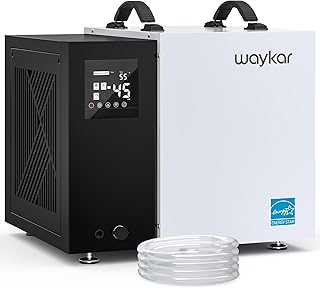
Waykar 70 Pint Energy Star Crawl Space Dehumidifier
The Waykar earns its top spot by pairing an ENERGY STAR-certified compressor with a built-in pump and a robust five-year warranty — a combination rarely found at its price point. Its compact footprint slides into tight crawl spaces, while the included drain hose kit handles up to 4,900 square feet with steady, low-maintenance operation. For homeowners who need a set-and-forget solution in hard-to-reach areas, this unit delivers dependable moisture extraction without the noise intrusion that cheaper alternatives bring.
AprilAire E070 Pro Dehumidifier Bundle
AprilAire designed the E070 Pro as a whole-house solution, and the full bundle — complete with installation hardware — makes professional integration straightforward for HVAC technicians. Covering spaces up to 2,800 square feet, it excels in combined crawl-space-and-basement configurations where ducted airflow keeps relative humidity below the 50 percent threshold that mold needs to colonize. The five-year warranty backs what is genuinely a commercial-grade appliance built for years of uninterrupted service.
70 Pint ENERGY STAR Commercial Crawl Space Dehumidifier
This pump-equipped commercial unit prioritizes raw moisture extraction over frills. Its galvanized steel chassis withstands the humid, debris-laden environment of unfinished crawl spaces, and the integrated pump allows condensate discharge to a floor drain positioned well above unit height. Energy Star certification keeps operating costs in check for units that run around the clock — a practical pick for property managers handling water-damage restoration or persistent foundation dampness.
AIRPLUS 70 Pint Dehumidifier for Basement
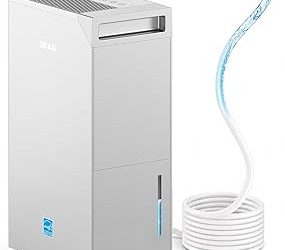
The AIRPLUS balances residential convenience with serious capacity, featuring an intelligent humidistat that automatically cycles the compressor to maintain your target moisture level without constant manual adjustment. Continuous drainage via the included hose kit removes the chore of bucket-emptying, while a sleep-friendly noise profile makes it viable for upstairs bedrooms as well as basements. It’s a versatile workhorse for households dealing with seasonal humidity spikes.
KNKA Energy Star 80 Pint Dehumidifier
KNKA pushes past the 70-pint threshold with a maximum 80-pint-per-day rating, giving you extra headroom during peak summer humidity. Smart humidity control and a dedicated sleep mode keep energy consumption disciplined and noise unobtrusive — a thoughtful pairing for open-plan homes where the dehumidifier sits in a shared living space. ENERGY STAR certification reinforces the efficiency story, making the slight over-spec a worthwhile buffer rather than an energy penalty.
Frequently Asked Questions
What size room does a 70-pint dehumidifier handle?
Most 70-pint units effectively manage spaces between 2,500 and 4,500 square feet, depending on ceiling height, ambient temperature, and how saturated the air already is. Enclosed basements with restricted airflow may require a unit at the higher end of that range to maintain consistent humidity below 50 percent.
Do I need a model with a built-in pump?
If the dehumidifier sits below the level of your floor drain — which is common in basements and crawl spaces — gravity alone won’t move condensate out of the unit. A built-in pump lets you route the drain hose uphill to a laundry sink, utility drain, or even a ground-level window, preventing overflow shutdowns and eliminating daily bucket duty.
How much electricity does a 70-pint dehumidifier use?
ENERGY STAR-certified 70-pint models typically draw between 600 and 750 watts at peak operation. Running roughly eight hours per day during a humid summer month translates to about 145 to 170 kWh — roughly $15 to $20 on the average U.S. electricity rate, making continuous operation quite affordable for the protection it provides.
Can a dehumidifier help with allergies?
Yes. Maintaining indoor relative humidity between 30 and 50 percent suppresses dust mite reproduction, inhibits mold spore growth, and reduces the musty volatile compounds that trigger allergic responses. A properly sized 70-pint unit keeps that range stable even in moisture-heavy spaces where a portable unit rated below 50 pints would struggle.
Final Thoughts
For most homeowners, the Waykar 70 Pint Energy Star hits the best balance of coverage, drainage convenience, and long-term warranty protection. If you’re outfitting a whole-house HVAC system or managing a commercial crawl space, the AprilAire E070 Pro Bundle offers unmatched integration and durability. For open living spaces where noise matters, the KNKA 80 Pint provides smart controls and a generous capacity buffer that keeps humidity invisible and energy bills reasonable.