Key takeaways
- Tooth count: Blades with 80 to 120 teeth generally produce cleaner trim and joinery cuts, while 40- to 60-tooth designs remove material faster and suit rougher or mixed-purpose work.
- Tooth geometry: Alternate-top-bevel, or ATB, teeth are a dependable choice for wood. They slice across grain cleanly and help reduce visible breakout on plywood, MDF, and veneered panels.
- Kerf and vibration: A thin-kerf blade requires less power and can feel more responsive on compact saws. Look for a well-balanced plate and expansion slots to keep the cut quiet and steady.
- Material compatibility: Wood blades are not automatically suitable for aluminum or other non-ferrous metals. Choose a blade specifically rated for the material, and always follow the saw and blade manufacturer’s safety guidance.
- Arbor fit: Confirm that the blade has the correct 5/8-inch arbor for your saw. A precise fit matters for safe operation, accurate alignment, and a calm, low-vibration cutting experience.
What's inside
Choosing a 10-inch miter saw blade can feel surprisingly complicated. Tooth counts range from aggressive general-purpose patterns to ultra-fine finishes, while kerf, arbor size, and the material being cut all influence whether a project feels smooth and controlled—or noisy, ragged, and frustrating. The wrong blade can turn carefully selected furniture stock into a trail of splintered edges.
This guide evaluates the leading options through a furniture-making lens, with particular attention to cut quality, visual finish, vibration, and the atmosphere of the workshop. Whether you are building cabinets, trimming hardwood, sizing plywood, or cutting aluminum components, these recommendations help match the blade to both the material and the finish you want to see.
As an Amazon Associate we earn from qualifying purchases.


🛒 Best Price Today on Amazon
Prime members get fast, free shipping on everything above, plus member-only deals. New members get a 30-day free trial — cancel anytime.
How to Choose a 10 Inch Miter Saw Blade (2026)
- Tooth count: Blades with 80 to 120 teeth generally produce cleaner trim and joinery cuts, while 40- to 60-tooth designs remove material faster and suit rougher or mixed-purpose work.
- Tooth geometry: Alternate-top-bevel, or ATB, teeth are a dependable choice for wood. They slice across grain cleanly and help reduce visible breakout on plywood, MDF, and veneered panels.
- Kerf and vibration: A thin-kerf blade requires less power and can feel more responsive on compact saws. Look for a well-balanced plate and expansion slots to keep the cut quiet and steady.
- Material compatibility: Wood blades are not automatically suitable for aluminum or other non-ferrous metals. Choose a blade specifically rated for the material, and always follow the saw and blade manufacturer’s safety guidance.
- Arbor fit: Confirm that the blade has the correct 5/8-inch arbor for your saw. A precise fit matters for safe operation, accurate alignment, and a calm, low-vibration cutting experience.
The Best 10 Inch Miter Saw Blades (2026) Reviewed
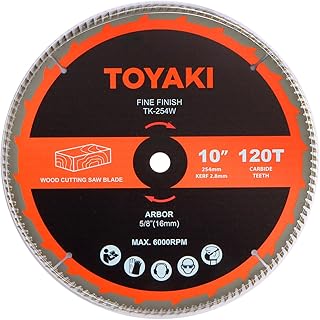
10-Inch 120-Tooth Fine-Finish Blade
This 120-tooth professional woodworking blade is built for the kind of cuts that define polished furniture: crisp miters, clean trim ends, and minimal fuzzing on finished stock. Its broad compatibility with miter, table, and circular saws makes it a compelling choice when surface appearance matters more than speed.
WEN BL1080 80-Tooth Ultra-Fine Finish Blade
The WEN BL1080 offers a strong middle ground for detailed woodworking without moving all the way to an extremely dense tooth pattern. Its carbide-tipped teeth are well suited to cabinetry, molding, and crosscutting boards where a smooth edge and controlled feed are more important than fast stock removal.
KENDO 10-Inch 40T/60T Blade Set
KENDO’s two-blade set is useful for a workshop that shifts between construction and finish work. The 40-tooth blade handles faster ripping, while the 60-tooth option is better suited to plywood, MDF, and laminate; together, they let you change the visual character of a project without buying two unrelated systems.
Benchmark Abrasives 10-Inch 100-Tooth Aluminum Blade
For furniture designs that combine wood with metal accents, the Benchmark Abrasives 100-tooth TCT blade is the specialist pick. It is designed for aluminum and other non-ferrous metals, offering a more appropriate cutting surface than a conventional wood blade; use it only for approved materials and with the correct safety setup.
ANGELSWORD 10-Inch 60T Fine-Finish Blade, 2-Pack
The ANGELSWORD two-pack gives budget-conscious makers a practical reserve for repeated wood-cutting sessions. Its 60-tooth configuration favors smooth everyday crosscuts in boards and panels, making it a sensible fit for home furniture projects where reliability and a presentable edge matter more than an exhibition-grade finish.
Frequently Asked Questions
Is a 10-inch blade universal for every miter saw?
No. The saw must be rated for a 10-inch blade, and the arbor must match—many models use a 5/8-inch arbor, but you should verify your owner’s manual. Also check the blade’s maximum RPM rating before installation.
How many teeth are best for cutting furniture parts?
For clean crosscuts, trim, and visible joinery, 80 to 120 teeth are often the most refined choices. A 60-tooth blade is more versatile for general furniture work, while a 40-tooth blade is preferable when faster cutting or occasional ripping is part of the job.
Can a wood-cutting blade cut aluminum?
Only use a blade specifically designed and labeled for aluminum or other non-ferrous metals. Wood blades have different tooth geometry and operating requirements, so substituting one can produce unsafe results and a poor cut.
When should a miter saw blade be replaced?
Replace or professionally sharpen it when cuts become visibly rough, the saw requires unusual force, burning appears, or the blade starts wandering. Cleaning built-up resin can restore performance temporarily, but damaged or missing carbide teeth require replacement.
Final Thoughts
For the cleanest furniture-grade edges, the 10-Inch 120-Tooth Fine-Finish Blade is the precision specialist, while the WEN BL1080 is a balanced choice for cabinetry and detailed workshop work. The KENDO 40T/60T set is the most adaptable option, and Benchmark Abrasives is the clear pick when aluminum enters the design.