Key takeaways
- Mesh density and sheen: Open, matte-finish mesh lets light pass through and keeps the chair from becoming a solid dark block in a small room. Tight, glossy weave catches specular highlights from overhead fixtures and reads heavier than it is. If your desk faces a window, matte wins every time.
- Lumbar support that actually moves: A fixed bulge stamped into the frame is decoration. You want a lumbar pad you can raise, lower, or push forward until it meets the curve of your own lower back — that adjustment range matters far more than padding thickness.
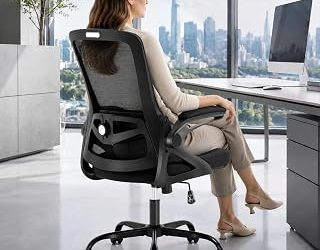
- Armrest geometry: Flip-up arms let the chair tuck fully under a desk, which shrinks its visual footprint and clears sightlines in tight rooms. 3D armrests (height, pivot, width) suit people who switch between typing and reading.
- Recline range and tilt lock: A 90–120° range with positive locking positions gives you a genuine second posture for calls and reading, not just a wobble. Test that the lock holds under your full weight before you commit to it.
- Base, casters, and shadow: A five-star nylon base on smooth casters is standard; what varies is clearance. Chairs that sit higher off the floor let light travel underneath and cast a softer, less blocky shadow — a small detail that makes a compact office feel less cluttered.
What's inside
Most office chairs under $200 are bought in a hurry, at the end of a long day, after the third afternoon of aching shoulders. The listings blur together: identical mesh backs, identical promises, identical stock photography shot in a room that looks nothing like yours. What almost nobody checks is how the chair will actually behave once it’s living in your space — under a north-facing window at 9 a.m., under a warm 2700K desk lamp at 8 p.m., cutting a silhouette across whatever wall sits behind it. I spend my working life on light and atmosphere in rooms, and a task chair is the single largest piece of movable mass in a home office. It shapes the room’s visual weight whether you planned for it or not.
This guide looks at the strongest sub-$200 ergonomic chairs available in 2026 through two lenses at once: how they hold your spine through a six-hour stretch, and how they read in the room — mesh transparency, surface sheen, glare behavior, and how much shadow they throw. Below you’ll find the shortlist, followed by what to prioritize and short reviews of the top five.
As an Amazon Associate we earn from qualifying purchases.


How to Choose an Ergonomic Office Chair Under $200 (2026)
- Mesh density and sheen: Open, matte-finish mesh lets light pass through and keeps the chair from becoming a solid dark block in a small room. Tight, glossy weave catches specular highlights from overhead fixtures and reads heavier than it is. If your desk faces a window, matte wins every time.
- Lumbar support that actually moves: A fixed bulge stamped into the frame is decoration. You want a lumbar pad you can raise, lower, or push forward until it meets the curve of your own lower back — that adjustment range matters far more than padding thickness.
- Armrest geometry: Flip-up arms let the chair tuck fully under a desk, which shrinks its visual footprint and clears sightlines in tight rooms. 3D armrests (height, pivot, width) suit people who switch between typing and reading.
- Recline range and tilt lock: A 90–120° range with positive locking positions gives you a genuine second posture for calls and reading, not just a wobble. Test that the lock holds under your full weight before you commit to it.
- Base, casters, and shadow: A five-star nylon base on smooth casters is standard; what varies is clearance. Chairs that sit higher off the floor let light travel underneath and cast a softer, less blocky shadow — a small detail that makes a compact office feel less cluttered.
The Best Ergonomic Office Chairs Under $200 (2026) Reviewed
Marsail Ergonomic Chair with 2D Headrest
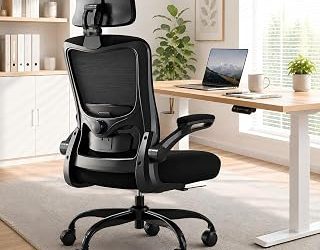
The most complete package here: adjustable armrests, a contoured seat cushion that distributes pressure properly across the thighs, and a 2D headrest that adjusts to actual neck height rather than a single fixed guess. Its breathable back stays visually light in a room, and the recline is smooth enough to use as a real working position.
Marsail High-Back Mesh Task Chair
Same design language, a taller back and 3D armrests — the better choice if you’re over six feet or work with dual monitors that pull your gaze upward. The high-back frame does throw a larger shadow, so give it a little breathing room from the wall rather than pushing it flush.
Fizzin Mesh Office Chair
Fizzin pairs a mesh back with a noticeably thickened seat cushion, which is the right compromise if all-mesh seats have left you sore before. The black finish is matte enough to avoid hotspots under downlights, and adjustable lumbar support plus a headrest cover the essentials without inflating the price.
330 lb High-Back Mesh Chair with Flip-Up Armrests
The flip-up armrests are the standout feature: fold them and the chair disappears under the desk, which genuinely changes how open a small office feels. A 330 lb capacity and adjustable lumbar support make it a sturdy, unfussy daily driver.
High-Back Big and Tall Mesh Task Chair
Built for larger frames, with a wide cushion, headrest, and a 90–120° tilt lock that holds firmly through the full range. Flip-up arms keep the footprint manageable despite the generous proportions.
Frequently Asked Questions
Is a mesh or padded back better?
Mesh breathes better and reads lighter in a room, letting lamplight pass through instead of absorbing it. Padded backs feel warmer and more enclosing — the right call in cold rooms or when you want the chair to anchor a corner visually.
Can a chair under $200 last more than a couple of years?
Yes, if you buy for mechanism quality rather than features. Gas lift and tilt hardware fail first, so favor models with strong long-term review histories and a stated weight capacity comfortably above your own.
Do I really need a headrest?
Only if you recline. If you sit upright and forward at a desk all day, a headrest mostly sits unused and adds bulk to the chair’s silhouette.
Will a black chair make my office feel smaller?
A solid black chair will. Open mesh in black won’t, because light travels through the weave and the frame stays visually slim. Matte finishes also avoid the harsh highlights that make dark furniture look bulkier under overhead light.
Final Thoughts
For most home offices, the Marsail with 2D headrest offers the best balance of adjustability, comfort, and a frame that stays visually quiet in a room. Taller users should step up to the Marsail high-back with 3D armrests, and anyone working in a genuinely tight space should prioritize the 330 lb flip-up armrest model — folding those arms and tucking the chair away buys back more openness than any other feature at this price.