Key takeaways
- Lumbar Support Architecture: Look for built-in adjustable lumbar rather than a removable pillow alone. A sculpted backrest that follows your spinal curve maintains posture without conscious effort, which is what you actually need at hour six.
- Seat Cushion Density and Depth: High-resilience foam that doesn’t bottom out under your weight is non-negotiable. A seat pan too shallow leaves your thighs unsupported; too deep, and it presses behind your knees. Aim for a depth you can fine-tune or that naturally fits your leg length.
- Upholdery Material and Finish: Genuine leather develops a patina that absorbs warm desk lighting beautifully over time, while bonded or PU leather can crack and reflect harsh overhead light in unflattering ways. Consider how your chair’s surface will interact with your actual lighting setup—task lamp, window, monitor glow.
- Recline and Tilt Lock Range: A chair that locks at multiple recline angles lets you shift posture throughout the day without leaving the seat. A 155° recline range is a genuine bonus for midday resets, especially if your workspace doubles as a reading nook under ambient light.
- Weight Capacity and Frame Integrity: Steel bases and reinforced mechanisms aren’t marketing fluff—they determine whether the chair still operates smoothly after two years of daily use. Verify the stated capacity against your needs with a comfortable margin.
What's inside
Settling into a leather office chair for a ten-hour workday is one of those small decisions that quietly reshapes your entire home workspace—yet most buyers grab the first high-back option that looks executive enough and regret it by Thursday. The real challenge isn’t finding a leather chair; it’s finding one whose ergonomics, material quality, and presence in the room actually support the long haul without making your office feel like a waiting room.
This guide cuts through the noise. We evaluated six popular leather office chairs on lumbar engineering, adjustability depth, upholstery resilience under sustained use, and how each one sits within a lit workspace—because the way light catches a leather surface matters more than marketers admit. Below are our top picks for 2026, followed by the criteria that should guide your choice.
As an Amazon Associate we earn from qualifying purchases.


How to Choose a Leather Office Chair For Long Hours (2026)
- Lumbar Support Architecture: Look for built-in adjustable lumbar rather than a removable pillow alone. A sculpted backrest that follows your spinal curve maintains posture without conscious effort, which is what you actually need at hour six.
- Seat Cushion Density and Depth: High-resilience foam that doesn’t bottom out under your weight is non-negotiable. A seat pan too shallow leaves your thighs unsupported; too deep, and it presses behind your knees. Aim for a depth you can fine-tune or that naturally fits your leg length.
- Upholdery Material and Finish: Genuine leather develops a patina that absorbs warm desk lighting beautifully over time, while bonded or PU leather can crack and reflect harsh overhead light in unflattering ways. Consider how your chair’s surface will interact with your actual lighting setup—task lamp, window, monitor glow.
- Recline and Tilt Lock Range: A chair that locks at multiple recline angles lets you shift posture throughout the day without leaving the seat. A 155° recline range is a genuine bonus for midday resets, especially if your workspace doubles as a reading nook under ambient light.
- Weight Capacity and Frame Integrity: Steel bases and reinforced mechanisms aren’t marketing fluff—they determine whether the chair still operates smoothly after two years of daily use. Verify the stated capacity against your needs with a comfortable margin.
The Best Leather Office Chair For Long Hours (2026) Reviewed
Furmax Office Executive High Back Chair
The Furmax punches well above its price bracket in lumbar curve design, offering a natural S-shape support that holds up across long sessions. Its PU leather has a matte quality that doesn’t glare under desk lamps—a small but welcome detail when you’re working under focused task lighting for hours.
Ergonomic Leather Office Chair (Brown)
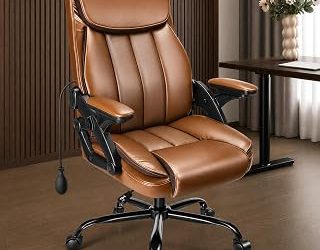
This brown leather option brings genuine warmth to a workspace, especially one with wood-tone desks or warm-temperature bulbs. The adjustable headrest and 360° swivel are solid, and the brown upholstery develops character over time rather than showing wear—an aesthetic advantage lighter colors can’t match.
COLAMY High Back Executive Chair
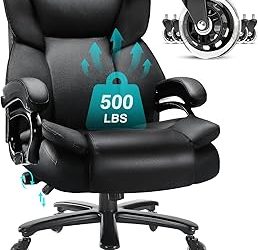
COLAMY’s inflatable lumbar system lets you dial in support with precision that fixed pillows simply can’t match. The flip-up arms are practical for varied desk setups, and the black leather presents a clean silhouette under any lighting condition without competing with other room elements.
Heavy Duty Leather Office Chair (400lbs Capacity)
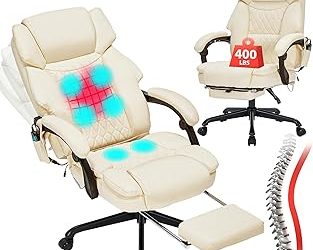
Built for serious use, this chair’s 155° recline with locking function is the widest range in this lineup. The 3″ adjustable armrests and ergonomic lumbar pillow make it a genuinely comfortable option for larger users who’ve been underserved by standard executive chairs. The robust frame inspires confidence from first sit.
Brown Leather Executive Chair with Flip-Up Arm
The flip-up arm design is practical for tighter desk spaces, and the brown leather finish reads as sophisticated rather than corporate. Lumbar support is integrated cleanly into the backrest, and the high-back profile fills out a room’s visual composition without overwhelming smaller home offices.
Frequently Asked Questions
Is PU leather good enough for long daily use?
Quality PU leather holds up well for three to five years of regular office use, though it won’t develop the supple patina that genuine leather does. For a home office, PU is a sensible budget choice—just expect to replace the chair sooner than you would a real leather piece.
How important is adjustable lumbar for eight-plus hour days?
It’s arguably the single most important feature. Fixed lumbar curves work for average builds, but adjustable systems let you fine-tune support to your specific spine geometry, preventing the lower-back fatigue that accumulates catastrophically over long workdays.
Do leather chairs need special lighting considerations?
Yes. Highly reflective leather surfaces can create distracting glare under cool-white overhead LEDs. Matte-finish or darker leather absorbs light more gracefully. If your office relies on a single overhead source, positioning a warm-toned desk lamp nearby softens the chair’s visual presence considerably.
What’s the real lifespan of a leather office chair?
A well-built leather chair with a steel base should last seven to ten years with normal use. The gas cylinder and casters typically need replacement before the upholstery does—budget for a cylinder swap around year five if the seat height starts drifting.
Final Thoughts
For most home offices, the COLAMY High Back Executive offers the best balance of adjustable support, clean aesthetics, and long-term value. If your workspace leans warm and wood-toned, the Brown Leather Executive with Flip-Up Arm brings the kind of ambient cohesion that turns a desk corner into a genuine room. And for users who simply need a chair that holds up without fuss, the Furmax Executive High Back remains a reliable, well-priced foundation.