Key takeaways
- Surface finish over surface color: Matte and lightly textured laminates scatter light softly. High-gloss tops act like a second monitor, throwing ceiling fixtures straight back into your eyes, so save the shine for spaces with only indirect daylight.
- Orientation and reversibility: A reversible or splice-board layout lets you put the long leg parallel to the window instead of facing into it, which is the single cheapest fix for glare. Confirm the return can swap sides before you buy.
- Built-in power placement: Onboard outlets and USB ports keep task lamp cords off the floor and let you light the desk from the desk. Check whether the outlet sits on the front edge or under the rear lip — rear placement looks tidier but is awkward for a lamp you reposition often.
- Height range versus window sill height: Electric desks that top out near 48 inches can lift a monitor into direct sun. Measure your sill and pick a range that keeps the screen below or well above the bright band.
- Shelving and drawer shadow: Hutches, storage shelves, and privacy panels all block light. They are genuinely useful, but plan for a small clamp light or strip underneath rather than assuming your ceiling fixture will reach.
What's inside
A corner desk changes the light in a room before it changes anything else. The moment you push two work surfaces into a right angle, one leg almost always faces a window and the other almost always faces a wall — which means half your day is spent squinting at a monitor backlit by afternoon sun, and the other half is spent working in the shadow your own shoulder casts across the return. Most buyers discover this on day three, after the desk is assembled and the receipt window is closing.
This guide looks at L-shaped desks the way a lighting designer would: how the surface finish handles glare, whether the frame leaves room for a floor lamp or under-shelf strip, how integrated outlets shorten your lamp runs, and whether raising the desk to standing height drags your monitor into the brightest part of the window. Below are six desks worth considering for a 2026 home office, followed by the specifications that actually affect how a room feels at 4 p.m.
As an Amazon Associate we earn from qualifying purchases.




How to Choose an L-Shaped Desk For Home Office (2026)
- Surface finish over surface color: Matte and lightly textured laminates scatter light softly. High-gloss tops act like a second monitor, throwing ceiling fixtures straight back into your eyes, so save the shine for spaces with only indirect daylight.
- Orientation and reversibility: A reversible or splice-board layout lets you put the long leg parallel to the window instead of facing into it, which is the single cheapest fix for glare. Confirm the return can swap sides before you buy.
- Built-in power placement: Onboard outlets and USB ports keep task lamp cords off the floor and let you light the desk from the desk. Check whether the outlet sits on the front edge or under the rear lip — rear placement looks tidier but is awkward for a lamp you reposition often.
- Height range versus window sill height: Electric desks that top out near 48 inches can lift a monitor into direct sun. Measure your sill and pick a range that keeps the screen below or well above the bright band.
- Shelving and drawer shadow: Hutches, storage shelves, and privacy panels all block light. They are genuinely useful, but plan for a small clamp light or strip underneath rather than assuming your ceiling fixture will reach.
The Best L-Shaped Desks For Home Office (2026), Reviewed
SIAGO 63″ L-Shaped Standing Desk with Charging Station
The splice-board top and memory controller make this a flexible corner unit, and the integrated charging station means your desk lamp, phone, and monitor all draw from one spot instead of a floor strip. The lightly grained surface diffuses overhead light better than most laminates in this price range.
YIHAYO 63″ x 55″ Electric Corner Standing Desk
Black tops absorb rather than bounce, which suits rooms with strong daylight but demands a proper task lamp once the sun drops. The electric lift is smooth and the frame is open underneath, leaving clean floor space for an uplight or torchiere.
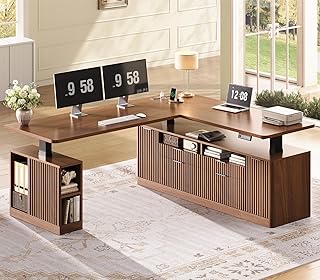
SEDETA Fluted L-Shaped Executive Desk with 4 Drawers
The fluted front is the most interesting surface here from a lighting standpoint — graze it with a low side lamp and the ridges produce a soft vertical rhythm that flattens out under ceiling light alone. Four drawers and storage shelves make it the best choice if you want the desk to carry the room’s visual weight.
71″ Executive Standing Desk with Privacy Panel
The widest option of the group, with a black walnut finish that reads warm under 2700K bulbs and slightly flat under cool white. The privacy panel casts a real shadow across the footwell, so budget for a small under-desk strip if you work evenings.
Itaar Farmhouse Executive L-Shaped Desk
White surfaces act as a giant reflector, lifting ambient light in basements and north-facing rooms without adding a single fixture. The file drawer and storage cabinet are conventional but well built, and the power outlet spares you an extension run.
Frequently Asked Questions
Should the long side of an L-shaped desk face the window?
Ideally, no. Position it perpendicular so daylight arrives from the side. Facing a window creates screen glare; facing away puts the window behind you and reflects it into the display.
Do white desks really brighten a room?
Yes, measurably. A large light surface bounces both daylight and lamp light back up into the space, which is why the Casaottima and Itaar models suit darker rooms.
Does a standing desk need different lighting?
It needs adjustable lighting. A clamp lamp or monitor light bar travels with the surface; a fixed floor lamp aimed at seated height will miss entirely once you rise.
How much clearance do I need for a corner lamp?
Allow roughly 10 to 12 inches of depth behind the monitor for a lamp base, or use a clamp fixture on the rear edge if your desk is 55 inches deep or less.
Final Thoughts
For most home offices, the SIAGO 63″ is the balanced pick — flexible layout, onboard power, and a finish that plays well with mixed daylight. Choose the SEDETA Fluted for a room where the desk should look deliberate under warm accent lighting, or the Casaottima 63″ white reversible model if your priority is pushing more light into a dim corner.