Key takeaways
- Seat width and shape: Give yourself at least two inches of clearance on either side of your hips. Narrow seats and aggressive side bolsters — common on gaming-style chairs — compress the greater trochanter and make hip pain worse, so prefer a flat or gently waterfall-edged pan.
- Foam density over foam thickness: A plush four-inch cushion that bottoms out in three months is worse than two inches of high-resilience or memory foam. Press hard with your palm: if you feel the base plate quickly, the foam won’t hold your pelvis level all day.
- Independent lumbar adjustment: Hip pain and pelvic tilt travel together. Look for lumbar support you can move up and down or inflate to depth, not a fixed lump molded into the backrest at someone else’s spine height.
- Seat height range and tilt: Your hips should sit marginally higher than your knees, which usually means a cylinder that reaches 20 inches or more for taller users. A forward tilt or rocking function lets you shift load off one side periodically.
- Weight rating as a durability proxy: A 400 to 500 lb rating signals a steel frame, a heavier gas lift, and denser foam even if you weigh far less. That structural margin is what keeps the seat geometry honest in year three.
What's inside
I spend my working life in dim rooms, hunched over a lighting console while a client decides whether the dining area wants 2700K or 3000K. Those sessions run four, five, six hours without a real break, and for years I blamed the ache in my right hip on the crouching and cable-pulling. It wasn’t the crouching. It was the chair — a cheap swivel seat with a cushion that had compressed into a shallow bowl, quietly tipping my pelvis and grinding one hip socket every time I leaned toward a dimmer channel. Hip pain from sitting rarely announces itself as a chair problem. It shows up as stiffness when you stand, a dull burn down the outside of the thigh, or a sciatic twinge that has nothing to do with your back.
The fix is mostly about pressure and pelvic position: how evenly your weight spreads across the seat, whether your hips sit slightly above your knees, and whether the backrest holds your lumbar curve so your pelvis stops rolling backward. Below are the chairs and cushions I’d recommend to anyone who works long, still hours — plus a short buying framework so you can judge any seat on its merits rather than its marketing copy.
As an Amazon Associate we earn from qualifying purchases.


How to Choose a Office Chair For Hip Pain (2026)
- Seat width and shape: Give yourself at least two inches of clearance on either side of your hips. Narrow seats and aggressive side bolsters — common on gaming-style chairs — compress the greater trochanter and make hip pain worse, so prefer a flat or gently waterfall-edged pan.
- Foam density over foam thickness: A plush four-inch cushion that bottoms out in three months is worse than two inches of high-resilience or memory foam. Press hard with your palm: if you feel the base plate quickly, the foam won’t hold your pelvis level all day.
- Independent lumbar adjustment: Hip pain and pelvic tilt travel together. Look for lumbar support you can move up and down or inflate to depth, not a fixed lump molded into the backrest at someone else’s spine height.
- Seat height range and tilt: Your hips should sit marginally higher than your knees, which usually means a cylinder that reaches 20 inches or more for taller users. A forward tilt or rocking function lets you shift load off one side periodically.
- Weight rating as a durability proxy: A 400 to 500 lb rating signals a steel frame, a heavier gas lift, and denser foam even if you weigh far less. That structural margin is what keeps the seat geometry honest in year three.
The Best Office Chair For Hip Pain (2026)s Reviewed
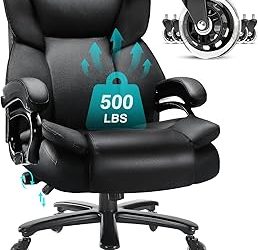
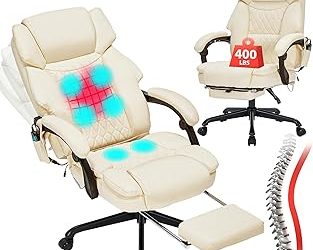
GTPLAYER Big and Tall Gaming Chair (400 lbs)
The 3D saddle-shaped cushion is the standout here — it dips slightly under the sit bones and relieves the outer hip rather than squeezing it, which is rare in this category. Pocket-spring lumbar support keeps the pelvis from rolling back, and the footrest is genuinely useful for offloading pressure during long stretches.
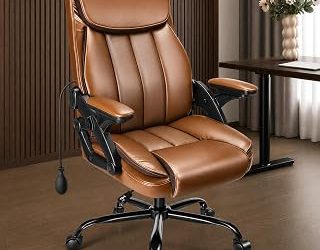
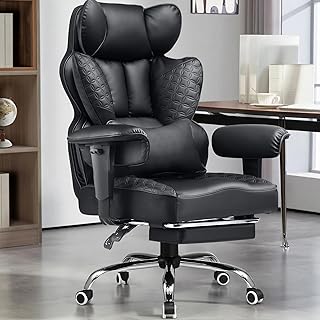
CIOMAN 500 lbs Big and Tall Executive Chair
The inflatable lumbar support is the smartest feature in this roundup, letting you tune curve depth by the pump rather than accepting a fixed shape. Its wide cushion and rocking function suit heavier users and anyone whose hips protest at holding one fixed angle for hours.
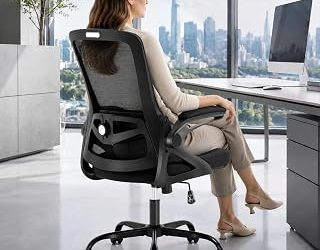
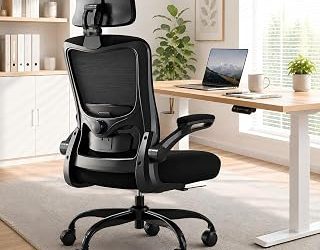
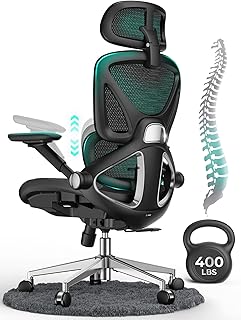
Ergonomic Mesh Office Chair with 4D Arms
Breathable mesh and a three-level tilt backrest make this the best pick for warm rooms and all-day desk work, with a 400 lb frame underneath. The 4D flip-up arms let you clear a desk edge or console lip, which matters more than it sounds when you’re leaning in and out of a work surface.
Ergonomic Office Chair, White/Gold
Virgin foam holds its shape better than shredded or reclaimed fill, and the 2D lumbar plus 3D headrest cover both ends of the spine. Choose it if the chair sits in a visible, styled room where a black mesh tower would break the palette.
Lexeme X Large Memory Foam Seat Cushion
A coccyx cutout redistributes weight forward onto the thighs and off the tailbone, which eases sciatic and hip pressure on a chair you otherwise like. Pair it with the included lumbar pillow before replacing a serviceable seat.
Frequently Asked Questions
Can a chair actually cause hip pain?
Yes. Compressed foam and narrow seats put sustained pressure on the hip joint and surrounding tendons, while a backward-tilted pelvis shortens the hip flexors. Both produce pain that eases within days of correcting the seat.
Is a cushion enough, or do I need a new chair?
If your chair’s adjustments still work and only the seat has gone flat, a dense memory foam cushion is a reasonable fix. If the lumbar support is fixed at the wrong height or the frame flexes, replace the chair.
What seat height should I use?
Set it so your hips are one to two inches above your knees with feet flat. If your feet dangle at that height, add a footrest rather than lowering the seat.
Does mesh or foam work better for hip pain?
Foam seats generally distribute pressure more predictably; mesh seats vary widely by tension. Mesh backrests, though, are excellent for heat and are worth having either way.
Final Thoughts
For most people working long, still hours, the CIOMAN executive chair offers the most adaptable support thanks to its inflatable lumbar and generous seat, while the GTPLAYER’s saddle cushion and footrest suit anyone who needs to actively shift load off a sore hip. If your existing chair is otherwise sound, start with the Lexeme cushion and spend the difference elsewhere.