Key takeaways
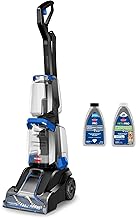
- Whole-rug jobs: an upright extractor. The BISSELL TurboClean with the OXY formula covers broad area rugs efficiently and includes a urine-specific solution, which matters if pets have claimed a corner. The Hoover PowerDash Pet is the lighter option, and its HeatForce drying feature genuinely shortens the vulnerable damp window.
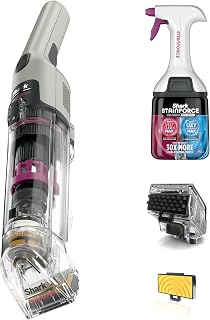
- Spot and edge work: a portable. The Shark StainStriker PX221 ships with 3.5-inch and crevice tools that reach rug borders and upholstery seams, and it self-cleans so the hose doesn’t sour. The cordless Shark StainForce HX095 is what I grab for fast response — no outlet hunting when someone knocks over a drink mid-dinner party.
- Frequent messes: a high-suction spot cleaner like the 18Kpa H6 with dual tanks keeps dirty and clean water separated, so you aren’t recycling soil back into the fibers.
What's inside
Most people judge a rug by how it feels underfoot. I judge it by how it handles light. Wool pile, viscose blends, and flatweave cotton all behave like soft diffusers — they scatter a lamp’s output back into the room, and the color they bounce becomes part of your ambience whether you planned it or not. When a rug loads up with soil, that scatter goes flat and gray, and the whole space reads dimmer even though nothing about your fixtures has changed. I’ve walked into living rooms where the client wanted brighter bulbs, and the actual fix was a proper rug cleaning.
So this guide treats rug care as a surface-optics problem as much as a hygiene one. Below you’ll find how to inspect a rug using light instead of guesswork, how to choose between an upright extractor and a handheld spot machine, the wet-cleaning sequence that avoids watermarks and wicking, and the drying discipline that determines whether the fibers stand back up or dry matted. A few tools I keep in rotation are included as starting points.
As an Amazon Associate we earn from qualifying purchases.




Start With Raking Light, Not a Best Guess
Before any water touches the rug, kill the overheads and put a single light source low and nearly parallel to the floor — a work lamp, a phone torch propped on a book, whatever’s close. This is raking light, and it does something ceiling fixtures never will: it throws long shadows off every crushed tuft, embedded crumb, and dried spill ring. You’ll suddenly see traffic lanes as darker corridors and old spots as slightly glossy patches where residue has stiffened the pile. Photograph what you find. That image is your before-and-after reference, and it will stop you from over-wetting areas that were never dirty.
Dry Soil Comes Out First — Always
Grit is abrasive and, once wet, it turns into mud that migrates deeper into the foundation. Vacuum slowly in one direction, then rotate ninety degrees and repeat, because pile leans and a single pass only lifts debris from one side of each fiber. On fringed or hand-knotted pieces, skip the beater bar and use suction alone. For lightweight machine-woven rugs like the CHAMPLANT washable vintage rug, you have a shortcut most rugs don’t offer: thin construction means it goes in a washing machine, which handles the dry-soil and wet-clean stages in one go. If a rug is washable, that’s usually the cleanest path — literally and logistically.
Choose the Machine by Coverage, Not by Power Claims
Two very different jobs get lumped together. Whole-rug restoration means uniform extraction across every square inch; spot work means aggressive, localized attention.
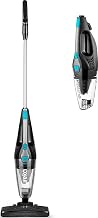
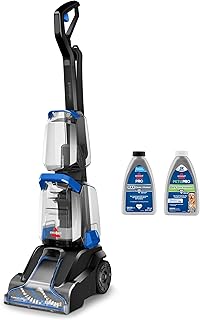
- Whole-rug jobs: an upright extractor. The BISSELL TurboClean with the OXY formula covers broad area rugs efficiently and includes a urine-specific solution, which matters if pets have claimed a corner. The Hoover PowerDash Pet is the lighter option, and its HeatForce drying feature genuinely shortens the vulnerable damp window.
- Spot and edge work: a portable. The Shark StainStriker PX221 ships with 3.5-inch and crevice tools that reach rug borders and upholstery seams, and it self-cleans so the hose doesn’t sour. The cordless Shark StainForce HX095 is what I grab for fast response — no outlet hunting when someone knocks over a drink mid-dinner party.
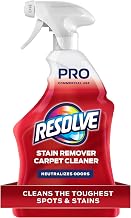
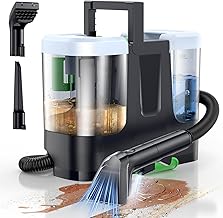
- Frequent messes: a high-suction spot cleaner like the 18Kpa H6 with dual tanks keeps dirty and clean water separated, so you aren’t recycling soil back into the fibers.
Wet-Clean in Sections, and Extract More Than You Inject
Work in roughly three-foot bands with a dry towel or plastic sheet under the rug to protect your floor. One wet pass, then two or three dry suction passes — extraction is where the cleaning actually happens. If a section still looks dull, let it dry fully and reassess under raking light rather than soaking it again. Over-wetting causes wicking: soil from the backing travels upward as moisture evaporates, and a spot you removed reappears the next morning as a faint halo.
Drying Decides How the Rug Reflects Light
A rug that dries slowly and flat will look duller than it did before you cleaned it, because compressed fibers reflect light at inconsistent angles. Move air across the surface, not just at it — a box fan aimed low, a dehumidifier if you’re in humid months, and windows open when the outside air is drier than the inside. Once the pile is barely damp, brush it in the direction of the nap with a soft brush or a rug rake. That grooming step realigns the fibers so they catch light uniformly, and it is the single most visible difference between an amateur result and a professional one.
Tips
- Blot spills outward from the edge toward the center; the reverse spreads the stain’s perimeter and makes the ring harder to hide.
- Test any solution on a hidden corner and check it dry, under lamplight — some formulas leave a slight sheen that only shows at an angle.
- Rotate rugs 180 degrees twice a year so sun fading and foot traffic distribute evenly instead of carving a bright stripe.
- Never machine-wash wool, silk, viscose, or jute, and never put a rug pad through a dryer. Heat destroys both.
Frequently Asked Questions
How often should an area rug be deep cleaned?
Every 12 to 18 months for most households, and every 6 to 9 months in entryways or homes with pets and children. Vacuum weekly regardless; consistent dry removal extends the interval between wet cleanings considerably.
Can I use a carpet extractor on any area rug?
No. Machine-woven synthetics and most wool pile handle extraction well. Viscose, rayon, silk, and jute do not — they distort, yellow, or lose strength when saturated. Check the care label, and when it’s unclear, hire a specialist rather than experiment.
Why did the stain come back after it dried?
That’s wicking. Residue in the backing traveled up with the evaporating moisture. Re-treat with minimal liquid, extract thoroughly, then dry with forced air and a weighted towel over the spot to intercept the returning soil.
Do I need a separate machine for pet accidents?
Not separate, but enzyme-based formulas matter more than the machine. Products marketed as urine eliminators break down the compounds causing odor. Standard detergent masks the smell temporarily while leaving the source in the fibers.
Conclusion
Clean rugs are a lighting decision disguised as a chore. Inspect under raking light, remove dry soil thoroughly, match your machine to the coverage you actually need, extract more moisture than you introduce, and dry with real airflow before grooming the nap back into alignment. Do that, and the rug returns light to your room the way it did on day one — which is worth considerably more than a brighter bulb.