Key takeaways
- Seat height range: Measure your desk surface and subtract roughly 11 inches for comfortable clearance. Most standing desks land between 38 and 48 inches, which means you want a chair reaching at least 30 inches at the top of its stroke rather than one that tops out at 26.
- Footrest ring geometry: A ring that adjusts independently of the seat is worth far more than a fixed one. Look for at least 5 inches of travel so your knees sit near 90 degrees instead of dangling, which is where most tall-chair fatigue actually starts.
- Back material and heat: Sitting high often means sitting closer to warm afternoon window light. Mesh sheds that heat; bonded leather traps it and looks glossier under a bright lamp, which can throw reflections into your peripheral vision.
- Flip-up arms: These let you tuck fully under the desk and keep your forearms inside your task lamp’s throw. If you sketch, edit, or draft, arms that lift clear of the surface prevent that constant elbow-shadow across your work.
- Base and caster quality: Higher seating means a longer lever, so a wide five-star base with a weighted rating above 250 pounds matters more here than on a standard chair. Nylon casters roll quietly on hard floors; ask about rubber if you’re on tile.
What's inside
Raise a desk to standing height and you change more than your posture. You change where light lands. The monitor that sat below your window now sits in front of it, your keyboard hands fall into the shadow of the shelf above, and the ceiling fixture that used to graze the top of your head starts glaring straight into your eyes. Most people blame the desk. The real gap is usually the chair, because a standard task chair leaves you perched too low to meet the new work surface and too high to sit properly, so you spend the day drifting between two badly lit heights.
A drafting chair fixes that by letting you park at counter height with your feet supported and your eyes level with the screen, which in turn puts your face out of overhead glare and your hands inside the useful pool of your desk lamp. This guide looks at six tall office chairs through that lens: seat range, footrest ring quality, back breathability, and how each one behaves in a room where light comes from a window, a lamp, or a screen rather than a photo studio.
As an Amazon Associate we earn from qualifying purchases.




How to Choose a Chair Standing Desk (2026)
- Seat height range: Measure your desk surface and subtract roughly 11 inches for comfortable clearance. Most standing desks land between 38 and 48 inches, which means you want a chair reaching at least 30 inches at the top of its stroke rather than one that tops out at 26.
- Footrest ring geometry: A ring that adjusts independently of the seat is worth far more than a fixed one. Look for at least 5 inches of travel so your knees sit near 90 degrees instead of dangling, which is where most tall-chair fatigue actually starts.
- Back material and heat: Sitting high often means sitting closer to warm afternoon window light. Mesh sheds that heat; bonded leather traps it and looks glossier under a bright lamp, which can throw reflections into your peripheral vision.
- Flip-up arms: These let you tuck fully under the desk and keep your forearms inside your task lamp’s throw. If you sketch, edit, or draft, arms that lift clear of the surface prevent that constant elbow-shadow across your work.
- Base and caster quality: Higher seating means a longer lever, so a wide five-star base with a weighted rating above 250 pounds matters more here than on a standard chair. Nylon casters roll quietly on hard floors; ask about rubber if you’re on tile.
The Best Chair Standing Desk (2026)s Reviewed
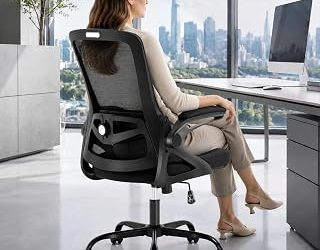
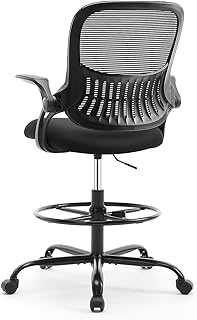
Drafting Chair with Flip-up Armrests and Adjustable Footrest Ring
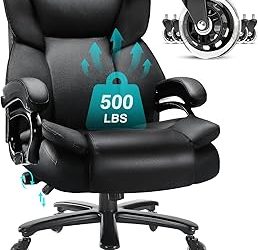
This one gets the fundamentals right: genuine lumbar shaping, arms that fold away cleanly, and a footrest ring you can set independently of the seat. It’s the safest all-round pick for anyone pairing a chair with a full-height standing desk for the first time.
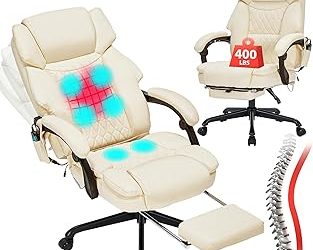
High Executive Leather Drafting Chair
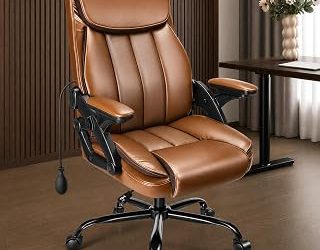
The leather upholstery reads as more formal on camera, which matters if your desk sits in a shared or video-facing corner of the home. Be aware that a smooth finish picks up highlights from window light, so position it out of direct sun if you dislike glare in frame.
Armless High Back Drafting Stool
Losing the armrests buys you a genuinely compact footprint and total freedom to swing in from any angle, which suits tight nooks and side-lit corners. The high back still gives real support, though you’ll want the ring set precisely since there’s no arm to lean into.
Sweetcrispy Tall Drafting Chair
A well-judged balance of padded comfort, counter-height adjustment, and flip-up arms at an accessible price. The 360-degree swivel is smooth enough for the constant micro-turns you make when you’re reaching between a lamp, a laptop, and a notebook.
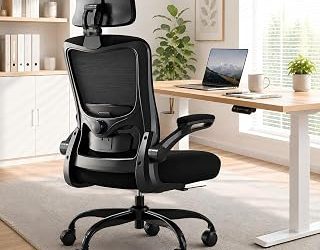
Drafting Chair with 22″–30″ Seat Height and 7″ Footrest Ring
The standout spec here is that footrest travel: 7 inches of lift covers almost any leg length, and the 30-inch top seat height clears genuinely tall surfaces. Breathable mesh keeps the backrest cool through long afternoon sessions near a bright window.
Frequently Asked Questions
How high should my chair be for a standing desk?
Set the seat so your elbows rest at roughly desk height with shoulders relaxed, then bring the footrest ring up to support your feet. For a 42-inch surface, most people land somewhere between 28 and 31 inches of seat height.
Do I still need to stand if I have a drafting chair?
Yes. The chair’s job is to give you a supported alternative to standing, not to replace it. Alternating every 30 to 45 minutes remains the most useful habit.
Mesh or leather for a home office?
Mesh for warm rooms, sunny windows, or long sessions. Leather for cooler spaces and a more finished look, accepting that it runs hotter and reflects more light.
Will a tall chair feel unstable?
Not with a wide five-star base and quality gas lift. Check the weight rating and avoid narrow-base stools, which can feel tippy when you lean to reach a lamp or shelf.
Final Thoughts
For most home setups, the Drafting Chair with 22″–30″ Seat Height and 7″ Footrest Ring offers the widest fit range and the coolest back for sun-facing desks, while the Drafting Chair with Flip-up Armrests and Adjustable Footrest Ring is the steadiest all-rounder. If your corner is tight or awkwardly lit, the Armless Drafting Stool gives you freedom of approach without sacrificing back support.