Key takeaways
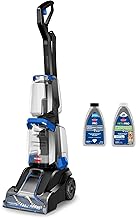
- Oxygen-based formulas, such as the Pro Max Clean and Protect solution bundled with the BISSELL TurboClean Upright, work well on organic discoloration — coffee, wine, food, general traffic dulling.
- Enzyme products break down protein and urine, which is why an Oxy Urine Eliminator belongs in any pet household.
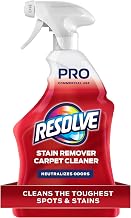
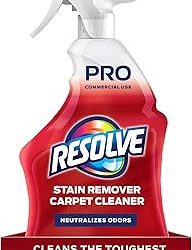
- Resolve Professional Strength Spot and Stain is the pre-treatment I keep at hand for set-in marks that need dwell time before extraction.
- Skip dish soap and homemade mixes entirely; residual surfactant leaves a tacky film that attracts soil and permanently deadens pile reflectance.
What's inside
Most people evaluate a carpet by looking straight down at it. I evaluate one by watching what happens when a 2700K lamp rakes across it at ankle height. Cut pile has a nap, and nap behaves like thousands of tiny reflectors — brush it one way and the floor reads warm and deep, brush it the other and it goes pale and silvery. That directional shimmer is a real part of a room’s ambience, and it is the first thing that soil destroys. Ground-in grit coats each fiber tip in a dull, light-absorbing film, so the pile stops returning light and starts swallowing it. The room does not look dirty so much as it looks flat, and no amount of lumens will fix a floor that has quietly become a matte surface.
That is the lens I bring to carpet cleaning gear: a good machine restores reflectance and pile direction, not just spot-free appearance. Below you will find the picks I keep coming back to, followed by what actually separates a full-size extractor from a handheld spotter, how to read your own carpet’s construction before you buy, why drying speed matters more than suction numbers, and how to finish a clean so the floor looks intentional under lamplight rather than merely damp and neutral.
As an Amazon Associate we earn from qualifying purchases.


Decide Whether You Need an Extractor, a Spotter, or Both
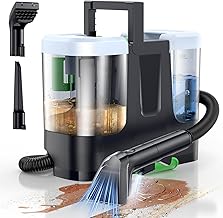
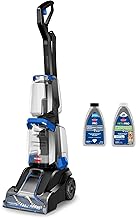
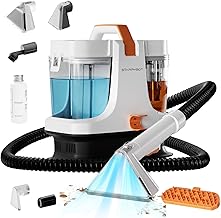
These are two different tools solving two different problems. A full-size upright extractor like the BISSELL ProHeat 2X Revolution Pet Pro Plus or the Hoover PowerScrub Deluxe exists to renew whole rooms — it agitates the entire pile in overlapping passes, which is what evens out the nap and brings back that directional sheen across a large field of view. A portable spotter like the BISSELL Little Green or the Starrybot Upholstery Cleaner exists to intercept accidents before they oxidize into permanent color shifts. Households with pets or small children realistically need one of each, because the spotter handles the Tuesday-night emergency and the upright handles the seasonal reset. If budget forces a single purchase, buy for your most frequent problem, not your worst-case one.
Read Your Carpet Before You Read Spec Sheets
Fiber and construction determine what a machine can safely do. Nylon and polyester cut pile tolerate aggressive brush agitation and are where machines with counter-rotating brushes, such as the ProHeat’s dual DirtLifter design, genuinely shine. Loop pile — Berber especially — is a different animal: stiff brushing can fuzz the loops and leave a permanent haze that catches light unevenly, so favor gentler agitation and more dwell time. Wool wants cool water and mild pH, never hot extraction. Always test in a closet corner, and view the test patch under the same lamp you live with, not overhead daylight, since color shifts read very differently under warm light.
Prioritize Drying Time Over Raw Suction Claims
A carpet that stays saturated for a day is worse than one that was never cleaned. Slow drying wicks dissolved soil back to the fiber tips, leaving faint gray rings, and it raises local humidity enough to dull adjacent wood and leather. This is why heated-airflow features like Hoover’s HeatForce and warm-water systems on the BISSELL uprights matter in practice. Whatever machine you own, finish with two or three suction-only passes, run a fan at floor level, and crack a window. Target four to six hours to touch-dry. If you can smell dampness after eight, you used too much solution.
Match the Chemistry to the Stain, Not the Brand
- Oxygen-based formulas, such as the Pro Max Clean and Protect solution bundled with the BISSELL TurboClean Upright, work well on organic discoloration — coffee, wine, food, general traffic dulling.
- Enzyme products break down protein and urine, which is why an Oxy Urine Eliminator belongs in any pet household.
- Resolve Professional Strength Spot and Stain is the pre-treatment I keep at hand for set-in marks that need dwell time before extraction.
- Skip dish soap and homemade mixes entirely; residual surfactant leaves a tacky film that attracts soil and permanently deadens pile reflectance.
Tips
- Dry-vacuum thoroughly in two directions first. Wet extraction on loose grit makes mud, not progress.
- Finish every room with straight passes toward the main light source so the nap lies uniformly and the floor reads deep instead of patchy.
- Rinse your machine’s recovery tank and brush roll immediately after use; dried residue causes odor and streaking on the next job.
- Keep a spotter charged and staged where spills happen. Response time within the first ten minutes does more than any formula.
Frequently Asked Questions
How often should carpet be deep cleaned?
Every twelve to eighteen months for average traffic, every six to nine for pets, kids, or entryway rooms. Do it before soil becomes visible, since by then the fiber wear is already underway.
Is hot water always better?
No. Heat helps on synthetic fibers and greasy soil but can set protein stains and shrink or distort wool. When in doubt, use warm rather than hot.
Do portable spot cleaners replace a full-size machine?
Not for whole rooms. Portables excel on upholstery, stairs, car interiors, and isolated accidents, but they cannot deliver the even, overlapping agitation a room-wide refresh requires.
Why do stains reappear a few days later?
That is wicking — residual moisture pulls soil from the backing back to the surface. Reduce solution volume, extract more thoroughly, and accelerate drying with airflow.
Conclusion
Choose your carpet cleaner the way you would choose a lamp: by what it does to the surface you actually see. A capable upright restores pile and reflectance across a room, a portable spotter protects that finish between deep cleans, and the right chemistry keeps residue from quietly flattening everything you just worked on. Get those three right, dry the floor fast, and your carpet goes back to being a soft, light-catching foundation rather than a dark spot in an otherwise well-lit room.