Key takeaways
- Vacuum thoroughly first, in two directions. Extraction turns dry soil into slurry if you skip this.
- Blot new spills toward the center, never outward, and never scrub — abraded fiber tips scatter light permanently.
- Pretest any solution in a closet corner, especially on wool and natural-fiber blends.
- After drying, groom the pile in one consistent direction with a carpet rake so the nap lays uniformly and reflects light evenly.
What's inside
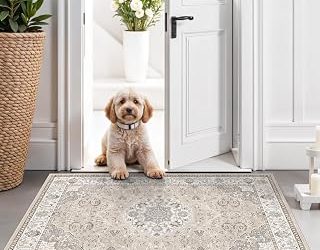
Most people judge a carpet by how it looks when they walk in the door at noon. I judge it at 7pm, with two lamps on and a dimmer at 40 percent — because that’s when a floor stops being decor and starts being an optical instrument. Carpet pile is one of the largest diffuse reflectors in a room. It bounces warm light back up onto sofa legs, coffee table edges, and the lower half of every wall. When the fibers are matted flat and coated in fine soil, that bounce dies. The room reads heavier, colors go muddy, and no amount of bulb-swapping fixes it. Clients ask me to add a floor lamp; what they usually need is a clean floor.
So this guide comes at carpet cleaners from an angle you won’t see in a spec sheet: how a machine affects the way your rooms behave under light. You’ll learn how to tell whether you need a full-size extractor or a handheld, what suction and brush geometry actually accomplish inside the pile, why drying time matters more than most buyers realize, and how to build a small kit that keeps a floor looking intentional between deep cleans. Below are the machines and solutions I keep recommending to clients and use in my own place.
As an Amazon Associate we earn from qualifying purchases.



Start By Diagnosing Your Floor, Not Your Machine
Kneel down and look across the pile at a low angle with a lamp behind it. Three problems show up under raking light, and each points to different hardware. Traffic lanes that look darker than the surrounding field are crushed fibers, not necessarily dirt — those need agitation and heat to stand back up. A general grayish veil across the whole room is embedded particulate, which needs hot water extraction with real recovery suction. Discrete spots that catch light differently than the field are protein or dye stains sitting in the fiber, and those respond to targeted chemistry long before they respond to a big machine. Knowing which you have keeps you from buying an upright for what is honestly a bottle-and-brush job.
Full-Size Extractors: For Rooms Where Light Travels
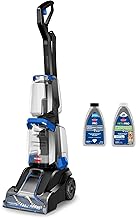
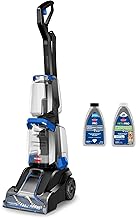
Open-plan spaces, living rooms with big lamp arrays, anywhere the floor is feeding light back into the room — that’s upright territory, because uniformity is the goal. Patchy cleaning is visible under raking light in a way it never is overhead. The Hoover PowerScrub Deluxe uses counter-rotating SpinScrub brushes that groom pile in multiple directions, which is exactly what you want for standing crushed fibers back up, and its HeatForce drying shortens the damp window. The BISSELL ProHeat 2X Revolution Pet Pro Plus runs dual DirtLifter brush rolls and adds heated cleaning, with a hose and tools for stairs and upholstery. If your square footage is modest and you want something lighter to haul out monthly, the BISSELL TurboClean Upright is the leaner option and ships with an OXY formula plus a urine eliminator.
Portables: The Precision Tool
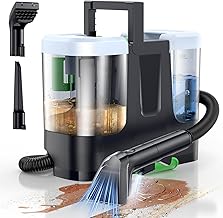
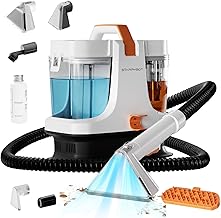
A handheld extractor is what I actually reach for most, because ambience problems are usually local — one chair arm, one rug corner under a reading lamp where a glass tipped. The BISSELL Little Green is the long-standing benchmark here, with specialty tools that handle upholstery, stair edges, and car interiors. The Starrybot Upholstery Cleaner brings 18Kpa suction in a portable body, which matters more than most buyers think: extraction power, not spray volume, determines how much moisture and dissolved soil actually leaves the fiber. Weak recovery means you’ve relocated the stain into the backing, where it wicks back up over the following day.
Drying Time Is An Aesthetic Specification
Over-wetting is the single most common self-inflicted damage I see. Saturated pile dries unevenly, leaving faint tide lines that read as shadows under directional lamplight — and it invites wicking, where soil migrates back to the surface as water evaporates upward. Machines with heated airflow help. So does technique: two dry recovery passes for every wet pass, and airflow across the room afterward. Plan to clean in daylight so the floor has hours to dry before your evening lighting reveals the results.
Chemistry Belongs In The Kit
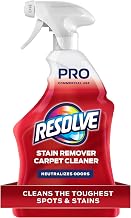
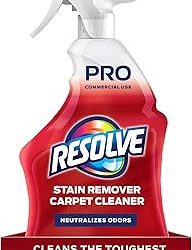
No machine substitutes for a bottle by the door. Resolve Professional Strength Spot and Stain treats fresh incidents in the sixty seconds when they’re still liftable, which prevents most of the spots you’d otherwise be extracting. Pair your machine with the manufacturer’s own formula — Hoover Carpet Cleaner Solution for Hoover units, the included Pro Max Clean & Protect for BISSELL — because tank chemistry is tuned to each pump and brush system.
Tips
- Vacuum thoroughly first, in two directions. Extraction turns dry soil into slurry if you skip this.
- Blot new spills toward the center, never outward, and never scrub — abraded fiber tips scatter light permanently.
- Pretest any solution in a closet corner, especially on wool and natural-fiber blends.
- After drying, groom the pile in one consistent direction with a carpet rake so the nap lays uniformly and reflects light evenly.
Frequently Asked Questions
How often should carpet be deep cleaned?
Every 12 to 18 months for average households, and every 6 to 9 months with pets, kids, or a light-colored floor where soiling shows early. Spot-treat continuously in between.
Is a portable machine enough on its own?
For apartments with mostly hard floors, area rugs, and upholstery, yes. For wall-to-wall carpet across several rooms, a portable is a companion to an upright, not a replacement.
Does hot water actually clean better?
Heat improves surfactant performance and helps relax crushed fibers, so it makes a visible difference on traffic lanes. Skip it on wool and check your carpet’s care guidance first.
Why do stains come back a day later?
That’s wicking. Soil left in the backing rises as moisture evaporates. Re-extract the area and use less water on the next pass.
Conclusion
Choose based on how your rooms are used and lit rather than on peak specification numbers: an upright with real agitation and heated drying for open living spaces, a strong-suction portable for upholstery and localized rescue work, and a spot treatment kept somewhere you’ll actually reach for it. Get those three right and your floor goes back to doing its quiet job — throwing warm light back up into the room instead of swallowing it.