Key takeaways
- Residue behavior: Rinse-free formulas that dry without tack are worth prioritizing. Sticky residue attracts dust, and dust reads as a dull matte patch the moment low light crosses it.
- Fiber compatibility: Check for wool and stain-resistant nylon safety. Oxygen boosters and high-pH degreasers can strip factory treatments, and bleached fibers scatter light in a way no amount of rearranged furniture will hide.
- Applicator design: Brushes and sponge heads let you work with the pile direction rather than against it. Crushed or swirled nap creates permanent tonal shifts under directional lighting, even after the stain itself is gone.
- Extraction versus surface treatment: Sprays lift what sits in the top of the fiber. Anything soaked into backing or padding needs suction, or it wicks back up and returns as a halo.
- Coverage and volume: A 32-ounce trigger bottle suits spot work. Traffic lanes and open-plan rooms that sit in full daylight need gallon-scale product, since patchy cleaning is more visible than uniform soil.
What's inside
Spend enough years aiming light at floors and you learn something uncomfortable: a grazing beam is an honest witness. Wall washers, low-mounted uplights, and late-afternoon sun through a west window all rake across carpet at a shallow angle, and that angle is exactly what reveals a stain you thought had faded. Pile that has been scrubbed flat reflects differently than the fibers around it. A ring of residue picks up warm light and turns amber. The mark you dabbed at last spring becomes a shadow with a shape.
This guide approaches stain removal the way a lighting designer approaches a room finish: what matters is how the surface behaves under raking light once it dries, not whether the spot vanished while it was still wet. Below are six formulas and tools that leave pile texture intact, avoid the sticky film that collects grit and dulls a room’s glow, and hold up in the high-traffic zones where sightlines and light both concentrate.
As an Amazon Associate we earn from qualifying purchases.


How to Choose a Carpet Cleaner For Stains (2026)
- Residue behavior: Rinse-free formulas that dry without tack are worth prioritizing. Sticky residue attracts dust, and dust reads as a dull matte patch the moment low light crosses it.
- Fiber compatibility: Check for wool and stain-resistant nylon safety. Oxygen boosters and high-pH degreasers can strip factory treatments, and bleached fibers scatter light in a way no amount of rearranged furniture will hide.
- Applicator design: Brushes and sponge heads let you work with the pile direction rather than against it. Crushed or swirled nap creates permanent tonal shifts under directional lighting, even after the stain itself is gone.
- Extraction versus surface treatment: Sprays lift what sits in the top of the fiber. Anything soaked into backing or padding needs suction, or it wicks back up and returns as a halo.
- Coverage and volume: A 32-ounce trigger bottle suits spot work. Traffic lanes and open-plan rooms that sit in full daylight need gallon-scale product, since patchy cleaning is more visible than uniform soil.
The Best Carpet Cleaner For Stains (2026)s Reviewed
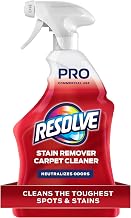
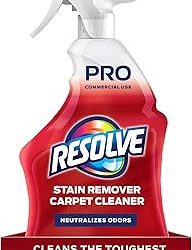
Resolve Professional Strength Spot and Stain
The dependable first response for household spills, with enough surfactant strength to break down food, drink, and traffic soil without a lengthy dwell time. Blot rather than scrub and the treated area dries close to the surrounding sheen, which is the whole game on light-colored loop pile.
FOLEX Instant Carpet Spot Remover
A rinse-free formula that earns its reputation on pet accidents, grease, red wine, and makeup, and it dries without the tacky film that later reads as a dark patch under lamplight. The included reusable cloth encourages blotting technique, which protects pile geometry more than any additive can.
Zep High Traffic Carpet Cleaner
Built for the corridors and doorway paths where soil accumulates evenly and dulls an entire floor plane. The penetrating formula and gallon size let you treat a full lane in one pass, restoring the consistent light response that spot-cleaning alone tends to break up.
Carbona 2-in-1 Oxy-Powered Carpet Cleaner
The dual sponge-and-bristle cap makes this the most controlled option for small, stubborn marks on plush carpet, letting you work oxygen action into a defined area and then relift the nap. Test on an offcut first, since oxy chemistry can lighten deeply saturated dyes.
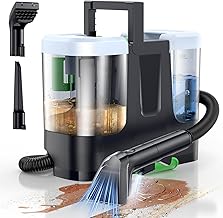
BISSELL Little Green Portable Cleaner, 1400B
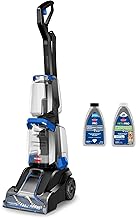
When a spill has reached the backing, extraction is the only path that prevents wicking, and this compact machine handles carpet, upholstery, stair treads, and car interiors with its specialty tools. It is the piece worth owning if you have ever watched a “solved” stain reappear as a pale ring three days later.
Frequently Asked Questions
Why does a stain look worse after it dries?
Two causes. Residual cleaner draws soil back to the surface, and moisture wicking from the padding carries dissolved material upward. Both show up under raking light before they are obvious under overhead fixtures.
Should I scrub a set-in stain?
No. Scrubbing distorts and frays the fiber tips, creating a texture change that persists after the color is gone. Apply, dwell, then blot with steady pressure and work inward from the edges.
Do I need a machine, or is a spray enough?
Sprays handle fresh, shallow spills well. Reach for extraction on pet urine, large volumes, or anything that has soaked through, since those saturate below the pile.
How do I check my work?
Once fully dry, crouch to floor level with a flashlight held low and sweep the beam across the area. Shallow-angle light exposes sheen and texture differences that direct overhead light conceals.
Final Thoughts
For everyday spills, FOLEX is the safest bet on finished carpet because it dries clean and leaves nothing behind to catch light or grit. Pair it with the BISSELL Little Green for anything that has reached the backing, and keep Zep High Traffic on hand for restoring even tone across doorways and lanes where soil and sunlight both collect.