3 Best Light Up Tracing Pads for Drawing (November 2026)
LED light up tracing pads compared by brightness, working area, and power: an ultra-thin A4 pad, a brighter acrylic board, and a rechargeable cordless model.
A light up tracing pad is a flat panel of even LED light that shines through paper, turning a faint original into something you can actually follow with a pencil. The idea is simple, but the pads on sale differ in ways that decide whether tracing feels effortless or frustrating: how bright the panel gets, whether the light is even across the whole surface, how large the working area really is, and whether the pad is tethered to a USB cable or free to work anywhere. This guide compares three A4-class pads whose listings state those details clearly.
The three picks split by priority. One is an exceptionally thin pad from an established drawing-tablet maker, built for slipping into a portfolio. One is a brighter acrylic board aimed at tattoo transfer, diamond painting, and other work where the original sits under thicker material. The third adds a built-in rechargeable battery, which sounds like a small thing until you have traced at a kitchen table, in a classroom, or anywhere the nearest socket is already spoken for. Brightness figures below are the listings’ own, stated in lux.
Quick Picks
As an Amazon Associate we earn from qualifying purchases.
Product
Best for
Key spec from title
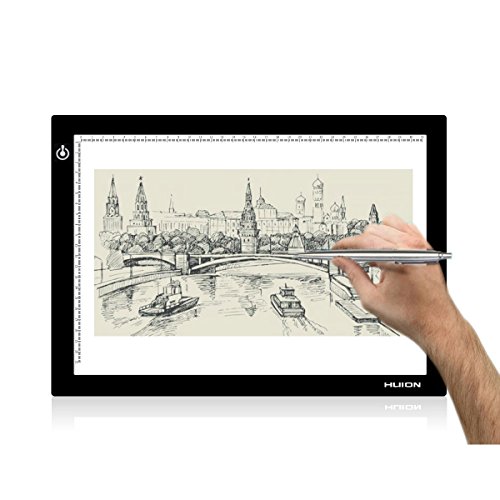
HUION L4S LED Light Pad
Slimmest carry and storage
A4 ultra-thin USB powered adjustable light pad
LitEnergy A4 LED Copy Board
Maximum brightness for thick originals
Adjustable USB power LED trace light pad, acrylic panel
LitEnergy Rechargeable Light Tracing Box
Working away from a socket
Rechargeable battery powered A4 LED trace light pad
How to Choose
Brightness, stated in lux, is the headline spec
Brightness decides what you can trace through. A single sheet of printer paper needs very little light, but tracing through watercolour paper, card, or a tattoo stencil stack needs a panel that can push far more light through the sandwich. Listings state brightness in lux, and the spread is wide — the pads in this guide range from a stated eleven hundred lux to several thousand — so compare the figure rather than assuming all LED pads are equal. Adjustable brightness matters almost as much as the maximum, because full power against thin paper in a dark room is genuinely uncomfortable, and a pad you can dim is a pad you will use for longer sessions.
Check the working area, not the outer dimensions
Manufacturers quote the whole panel size, but you trace on the illuminated area inside the frame, and the two numbers differ by the width of the border. An A4 working area fits a standard letter or A4 sheet with the drawing fully lit, which covers most sketching, calligraphy practice, and stencil work. If you regularly trace larger originals, you need the next size class up, not wishful thinking. Also note the printed scale markings many pads carry along the edges: they help align a sheet squarely, which sounds trivial until you have tried to keep a long straight architectural line honest across a page.
Decide between USB power and a built-in battery
Most tracing pads run from USB, which is convenient at a desk — any laptop port, power bank, or phone charger will do — but ties the pad to a cable’s length from a power source. A rechargeable model with an internal lithium battery cuts that cord entirely and makes the pad a genuinely portable tool for classes, tattoo studios, and travel. The trade-offs are thickness and routine: battery pads are a little thicker, and they join the list of devices that must be charged before the day they are needed. Decide by where the tracing actually happens in your life, not by which spec sounds more modern.
Thickness, weight, and surface material shape daily use
These pads are carried, stored in drawers, and leaned on for hours, so the physical details matter. The thinnest models are only a few millimetres deep and slide into a laptop sleeve or portfolio, while acrylic-panel boards trade a little of that slimness for a rigid, glass-like working surface that resists flexing under hand pressure. Weight follows the same pattern. None of this affects the light itself, but it decides whether the pad lives on your desk ready for use or in a cupboard being forgotten, and for a tool bought for a hobby, that is often the difference that counts.
The 3 Best Options
HUION L4S LED Light Pad
Top Pick
HUION L4S LED Light Pad
Best for: Artists and students who carry their kit and want the slimmest A4 tracing pad from an established drawing brand.
Huion is best known for drawing tablets, and the L4S applies the same design instincts to a light box: it is strikingly thin at just over five millimetres, light enough to carry with a sketchbook, and powered over USB. The listing states a brightness of eleven hundred lux with adjustable output, and an active area that fits A4 work, which makes it a pad for paper-based tracing — sketches, animation sheets, calligraphy guides, sewing and quilting patterns — rather than for forcing light through heavy card. For artists whose tracing happens at a desk or studio table with a laptop nearby, the slimness is the whole point: it stores in almost no space and disappears under the work.
LitEnergy A4 LED Copy Board Light Tracing Box
Runner-Up
LitEnergy A4 LED Copy Board Light Tracing Box
Best for: Tattoo artists, diamond painters, and anyone tracing through thicker paper or stencil material who needs maximum light.
This LitEnergy board is the brightness pick. Its listing states an output in the three to four thousand lux range — several times the Huion’s figure — behind an acrylic panel, with adjustable brightness so the power can be dialled back for ordinary paper. The working area is A4 within a compact frame, and the stated uses in the listing run to the demanding end of tracing: tattoo transferring, streaming, sketching, animation, stenciling, and diamond art painting, all jobs where the original or the canvas sits between the light and your eyes and eats brightness. It runs on USB power, so it belongs at a workstation, studio desk, or craft table with power in reach.
The rechargeable LitEnergy answers the one situation USB pads cannot: tracing where there is no socket. The listing describes an A4 pad with a built-in lithium battery alongside USB power, in a body eight millimetres thick — still slim, though not as wafer-thin as the Huion — with adjustable brightness for drawing, sketching, animation, and stenciling. In practice the battery changes where tracing happens: a classroom table, a client’s home for a tattoo stencil check, a craft fair demonstration, or the sofa. It also removes the cable that otherwise drags across wet ink and watercolour washes, a small daily mercy that desk-bound specifications never capture.
Which One Fits Your Situation
Tracing sketches and patterns at a desk
Choose the HUION L4S. Ordinary paper is an easy load for its stated brightness, and everything else about it suits desk life: it is thin enough to live under a keyboard tray or in a shallow drawer, light enough to move one-handed, and powered by the laptop that is already there. Sewing and quilting patterns, calligraphy guidelines, and animation clean-up work all sit comfortably in its range. Buyers whose paper is thin and whose desk has power will never feel the absence of the brighter or battery models.
Tattoo stencils and diamond painting
Choose the brighter LitEnergy A4 board. These jobs share one demand: light must survive passing through stencil material or a printed canvas and still outline the design clearly enough to work for hours. The stated three to four thousand lux is the specification that matters, and the acrylic panel gives a firm, flat surface for transfer work. Set the brightness for the material in front of you rather than leaving it at maximum, because eye fatigue over a long session is real even when the image is beautifully clear.
Classes, workshops, and working at other people’s tables
Choose the rechargeable LitEnergy. A teacher moving between classrooms, an art tutor visiting students, or a crafter demonstrating at a fair cannot count on a free socket, and a battery pad simply works wherever it is set down. The same freedom suits home users whose tracing happens at a kitchen table far from an outlet. Charge it with the rest of your kit the night before, and its slightly greater thickness is the only compromise you will ever notice.
Long sessions in a dim room
Any of the three will serve, provided you use the brightness adjustment rather than the maximum. In low ambient light, a pad at full power shining through thin paper is hard on the eyes, and the comfortable setting is usually well below the ceiling of every model here. The Huion’s lower maximum becomes a non-issue in this setting, while the brighter boards earn their keep by offering headroom you will use only occasionally. Position the pad so its light does not reflect off a glossy desk surface into your eyes.
Common Mistakes
Comparing outer dimensions instead of the illuminated working area, then finding the lit surface is smaller than the sheets you trace.
Buying the brightest pad for thin paper and running it at maximum, which causes eye strain that shorter, dimmer sessions would avoid.
Assuming a USB pad can work anywhere, then discovering the cable will not reach a socket at the table where you actually draw.
Placing heavy books or leaning body weight on an ultra-thin pad, which can flex the panel and damage the light layer.
Tracing through paper far thicker than the pad’s brightness can handle, instead of photocopying the original onto thinner stock first.
Frequently Asked Questions
What brightness do I actually need for tracing?
For a single sheet of ordinary paper, even the lower stated figures in this guide are plenty, and you will likely dim the pad for comfort. The higher figures earn their place when the light must pass through more: watercolour paper, card, stencil stacks, or a diamond painting canvas. Match the pad to the thickest material you use regularly, because that is the job where a dim pad simply fails, while excess brightness for thin paper can always be turned down.
Can a tracing pad damage my eyes?
These pads are diffused LED panels, designed to spread light evenly rather than beam it, and they are used indirectly — you look at paper lit from beneath, not into the LEDs. Used sensibly, with the brightness set for the material and the room rather than left at maximum, they are comfortable for long sessions. If you feel strain, the usual causes are too much brightness for thin paper in a dark room, or glare reflecting off a glossy surface, both of which are easy to correct.
Is a rechargeable pad better than a USB one?
Neither is better in general; they suit different rooms. A USB pad is thinner, never needs charging, and is ideal at a desk with power in reach. A rechargeable pad works anywhere, including classrooms, clients’ homes, and kitchen tables, at the cost of a little thickness and a charging routine. Most buyers should choose by location: if your tracing always happens in one powered spot, USB is simpler, and if it moves around, the battery earns its place immediately.
What else are light pads used for besides drawing?
The listings for these pads name a wide range: tattoo transferring, diamond art painting, quilting and sewing patterns, calligraphy practice, animation, stenciling, and scrapbooking. Beyond the listings, the same even light serves for sorting photographic negatives and slides, checking banknotes and documents, and viewing X-ray-style images in crafts. Any task that benefits from seeing through a sheet — aligning layers, spotting a faint line, checking a watermark — is a natural job for a pad like these.
H
Home Beautiful Design Editorial Team
We compare specs, materials and verified owner reviews before a product earns a spot. Rankings are never paid.
Affiliate disclosure. As an Amazon Associate we earn from qualifying purchases at no extra cost to you. Prices accurate as of the date shown.
Four mini arcade cabinets with light-up marquees compared: Arcade1Up Pac-Man Countercade and Numskull Quarter Arcades replicas with LED backlit marquees.
Compare the best material for bathtubs with four real tubs in acrylic, cast iron, stone resin and copper, plus heat, weight and care notes to choose well.
Find the best bathroom countertop storage ideas for a tidy vanity, from tiered shelves and makeup trays to vanity sets and hair-tool holders for daily use.
The best magnifying lamps for console repair work bring clear lenses, bright LED light and steady arms to soldering, inspection and fine board work at home.
Find the best lightweight work boots for concrete floors, with cushioning, arch support, shock absorption and slip-resistant grip for long shifts all day.
Find the best video lights for interviews under 300 dollars, with soft bi-color and RGB LED panel kits compared on color accuracy, diffusion, stands, and power options.
Compare the best portable video lights for interviews, from compact USB panels to full two-light kits with stands, batteries and app control for any room.
Choose the best hunting bow sight light with rechargeable power, three brightness levels and universal thread fittings for clear pins at dawn and dusk.
Looking for the best waterproof led strip lights outdoor blue battery powered? Compare blue, battery-powered strips for patios, decks, gardens, and boats.