The best magnifying lamps for console repair work bring clear lenses, bright LED light and steady arms to soldering, inspection and fine board work at home.
The best magnifying lamps for console repair work make small, crowded circuit boards readable again. Game consoles pack tiny solder joints, fine ribbon cables, small screws, surface-mount parts and printed labels into a tight space, and a normal desk lamp leaves much of that detail in shadow. A magnifying lamp solves two problems at once: it enlarges the work and it puts bright, even light exactly where the lens is pointing, so both hands stay free for a soldering iron, tweezers and a spudger.
OUR TOP PICK
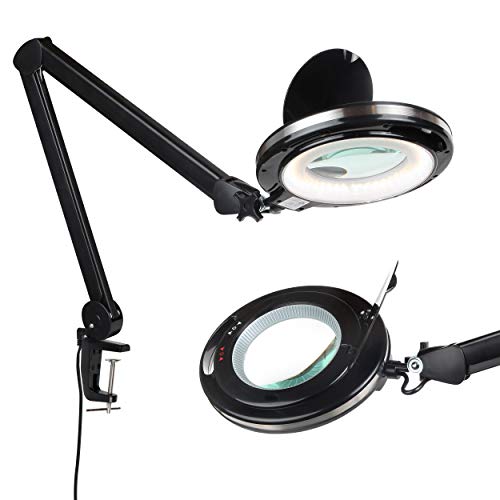
BoliOptics Professional LED Magnifying Lamp (B0764NP6W3)
The quick answer is to start with a clamp-on lamp that has a real glass lens at 5 diopters, which gives about 2.25x magnification, a daylight LED ring, dimming and a spring arm that holds its position. That combination suits most console work, from cleaning a fan and replacing a thermal pad to reflowing a charging port and tracing a damaged trace. Higher magnification has a place for very small joints, but it also narrows the field of view and shortens the working distance, so it is better as a second option than as a first lamp. The four lamps below fit that brief in different ways.
Quick Picks
Our Short List of 3
Editor’s Choice
BoliOptics Professional LED Magnifying Lamp (B0764NP6W3)
Magnification is the first choice to get right, because it decides how much room remains between the lens and the board. A 5-diopter lens, about 2.25x, is a practical starting point for console repair. It enlarges solder joints, chip markings and connector pins enough to work with confidence, while leaving enough space underneath for a soldering iron, tweezers and a helping hand. A 3-diopter lens, about 1.75x, gives a wider view and more room, which suits inspection, cleaning and general disassembly. A higher listed magnification, such as the 10x figure on the HITTI lamp below, enlarges a smaller area and brings the lens closer to the work, which can help with a single tiny joint but can feel cramped for a full board. Look for the diopter figure as well as the magnification figure, because diopter is the more consistent way to compare lenses. If a listing gives only a large magnification number with no diopter figure, treat the number with care and check the lens size and the stated working distance before deciding.
Lens Material and Lens Size
A real glass lens is worth seeking out for repair work. Glass resists scratching, holds its shape under heat from a nearby soldering iron and gives a clearer, less distorted view across the centre of the lens than a thin plastic sheet. Acrylic lenses are lighter and less likely to break if a lamp is knocked over, but they can scratch more easily and can distort near the edges. Lens size matters just as much as lens material. A 5-inch lens shows more of a console board at once than a 3-inch lens, so there is less need to keep moving the lamp while tracing a fault across a board. A smaller lens can still work well for a single connector or a single joint, and it keeps the lamp head lighter and easier to position. A dust cover protects the lens when the lamp is not in use.
Light Brightness, Colour and Shadows
Console boards are dark, glossy and full of small shadows cast by capacitors, shields and connectors, so the light matters as much as the lens. A ring of LEDs around the lens gives even light from several directions and reduces the hard shadow that a single bulb throws across a joint. Brightness is usually given in lumens, and a lamp in the region of 800 to 1200 lumens is bright enough for most bench work without washing out the board. Dimming is more useful than it first sounds, because a very bright light can create glare on solder and on the metal shields inside a console. Stepless dimming, or several brightness levels, lets the light be turned down for a shiny board and turned up for reading faint printing on a dark board. Colour temperature also matters. Daylight white light, around 5600K to 6000K, makes solder joints, copper traces and coloured wires easier to tell apart. A lamp with several colour modes, including a warmer setting, is easier on the eyes during a long session and can reduce glare on some surfaces.
Arm Reach, Stability and Mounting
A magnifying lamp is only useful if it stays where it is put. A spring arm or a gooseneck arm should hold the lens steady over the board while both hands are busy, without drifting down or swinging back. Check the stated arm reach against the size of the bench. A reach of about 30 inches or more lets the lamp be clamped at the back of a bench and still reach the centre of a large console board. A shorter arm can work on a small desk, but it may need to be clamped closer to the work and can get in the way of tools. A clamp mount saves bench space and keeps the lamp firmly attached to a desk or workbench, and it is the usual choice for a dedicated repair bench. A heavy base is a better choice when the bench edge is too thick for a clamp, when the lamp needs to move between rooms, or when the bench surface cannot be clamped. The Dylviw lamp below includes both a stand and a clamp, which covers both situations. Before ordering, measure the thickness of the bench edge and compare it with the clamp opening.
Hands-Free Use and Tool Clearance
Console repair is a two-handed job, so the lamp should not need a third hand. A lamp that can be positioned with one hand and then stays put leaves the other hand free for the board. The lens should sit high enough above the board for a soldering iron to pass underneath at a comfortable angle, and wide enough for tweezers to reach a part without bumping the lens frame. A lens that sits too low forces the iron into a steep angle and makes it harder to see the joint. A lens that is too small forces constant repositioning. Think about the other tools on the bench as well. A hot air station, a solder spool, a parts tray and a screw organiser all take space, so a clamp-on lamp that hangs over the board from behind often works better than a base lamp that sits beside the board and takes up bench space. Controls on the lamp head are easier to adjust mid-repair than controls on a distant base.
The Best Magnifying Lamps for Console Repair Work Reviewed
BoliOptics Professional LED Magnifying Lamp (B0764NP6W3)
Top Pick
BoliOptics Professional LED Magnifying Lamp (B0764NP6W3)
The BoliOptics Professional LED Magnifying Lamp is a strong first choice for a dedicated console repair bench, thanks to its large glass lens and its bright daylight LED ring. The 5-inch genuine diopter glass lens gives 5 diopters of magnification, about 2.25x, which is the level most repairers reach for first. It enlarges solder joints and chip markings clearly while leaving a workable gap underneath for a soldering iron and tweezers. The ring of 60 SMD LEDs is rated at 1200 lumens in daylight white light from 5600K to 6000K, so dark boards are lit evenly and coloured wires and copper traces are easier to tell apart. Four brightness levels let the light be turned down when solder glare becomes a problem.
The 34-inch spring arm mounts with a table clamp, and the lamp head can be swung into position over a console board and left there. A dust cover lid protects the lens when the lamp is folded away. The lamp suits someone who repairs consoles regularly and wants a bright, steady, bench-mounted lamp with a large lens. Someone who needs a portable lamp, or who works in a very small space with no clampable bench edge, should skip this lamp and look for a model with a heavy base instead.
The Brightech LightView Pro Magnifying Desk Lamp is a clamp-on lamp with a 2.25x diopter glass lens that suits everyday console work. The 4.5-inch lens is large enough to show a useful area of a board at once, and the glass construction gives a clear view with less distortion than a plastic lens. The built-in 9W LED light is dimmable and its colour temperature can be adjusted, so the light can be set to a cooler daylight tone for inspecting solder and a warmer tone for longer sessions. The gooseneck swing arm lets the lens be adjusted up and down and held at an angle, which helps when a board needs to be viewed from the side or when a connector is tucked under a shield.
The clamp mounts to a desk or workbench and takes up little bench space. The lamp is plug-operated and the controls sit on the lamp head, within easy reach during a repair. It suits someone who wants a straightforward, well-established clamp lamp for regular console repairs and who values a glass lens and adjustable light. Someone who needs a very long arm reach for a deep bench, or who needs a heavy base because the bench cannot be clamped, should skip this lamp and consider a base model or a lamp with a longer arm.
The HITTI Magnifying Glass with Light is the strongest magnification option in this roundup, and it is the pick for very small work. The listing gives a magnification of 10x with a 4.2-inch real glass lens, which is a much larger figure than the 2.25x figure on the lamps above. That figure should be read with care, because different makers measure magnification in different ways, and a very high figure usually means a smaller field of view and a shorter working distance. Even with that note, the lamp is useful for a single tiny joint, a small surface-mount part or a fine crack in a trace, where a standard lens does not enlarge the detail enough.
The lamp is rated at 1800 lumens with stepless dimming and three colour modes, so the light can be tuned to the board and to the task. The clamp mount and adjustable arm hold the lens over the work, and the glass lens gives a clear view. It suits someone who already has a standard 5-diopter lamp and wants a stronger lens for close inspection, or someone whose console work often involves very small parts. Someone who is buying a first and only magnifying lamp should skip this as a first purchase and choose a 5-diopter lamp instead, because the stronger lens can feel cramped for general board work and for jobs that need room for tools underneath.
The Dylviw LED Magnifier Desk Lamp is the most flexible mounting option in this roundup, because it comes with both a stand and a clamp. That makes it a good choice for a bench that changes shape, for a shared workspace, or for someone who is not yet sure whether a clamp or a base will work better. The 5-diopter glass lens gives about 2.25x magnification, the level that suits most console repair, and the adjustable swivel arm lets the lens be positioned over a board and held there. Three colour modes and stepless dimming let the light be adjusted for different boards and for different times of day, and the LED light is made for close work, repair and precision soldering.
The lamp is listed for electronics repair and precision soldering, as well as for crafts and reading, so its light and lens are aimed at the kind of close, detailed work that console repair involves. It suits someone who wants one lamp that can move between a repair bench and another desk, or someone whose bench edge cannot always be clamped. It also suits a first-time buyer who wants a 5-diopter glass lens without committing to a single mounting style. Someone who needs the brightest light in this roundup, or the largest lens, should skip this lamp and look at the BoliOptics or HITTI models, which list higher lumen figures and, in the BoliOptics case, a larger lens.
Measure the bench before ordering. Check the thickness of the bench edge against the clamp opening, check the arm reach against the distance from the clamp point to the centre of the work area, and check that there is an outlet within reach of the power cord. Confirm the lens size and the diopter figure, not just the headline magnification, and confirm whether the lens is glass or acrylic. Glass suits a soldering bench better, while acrylic is lighter and less likely to break if the lamp is knocked.
Check the light as well as the lens. Look for a daylight colour temperature, dimming or several brightness levels, and a ring of LEDs rather than a single bulb, because even light reduces shadows on a crowded board. A handheld console needs less reach and a smaller lens than a full-size home console, and a board with many small surface-mount parts benefits from a larger lens and a brighter light.
FAQ
What magnification is best for console repair work?
A 5-diopter lens, about 2.25x, is the best starting point for most console repair work. It enlarges solder joints, chip markings and connector pins clearly while leaving enough room underneath for a soldering iron and tweezers. A 3-diopter lens, about 1.75x, gives a wider view and more working room for inspection and cleaning. Higher magnification helps with a single tiny joint, but it narrows the field of view, so it works better as a second lamp.
Is a glass lens better than an acrylic lens for soldering?
A glass lens is usually the better choice for a soldering bench. Glass resists scratching, holds its shape under heat and gives a clearer view across the centre of the lens. Acrylic is lighter and less likely to break if the lamp falls, but it can scratch more easily and can distort near the edges.
Do I need a clamp mount or a heavy base?
A clamp mount is the usual choice for a dedicated repair bench, because it saves bench space and holds the lamp firmly. A heavy base is better when the bench edge is too thick for a clamp, when the lamp needs to move between rooms, or when the bench surface cannot be clamped. A lamp that includes both a stand and a clamp, such as the Dylviw model above, covers both situations and suits a bench that changes shape.
What colour temperature is best for inspecting a console board?
Daylight white light, around 5600K to 6000K, is the best choice for inspecting a console board, because it makes solder joints, copper traces and coloured wires easier to tell apart. A lamp with several colour modes is useful, because a warmer setting can reduce glare on shiny solder and can feel easier on the eyes during a long repair session.
Can one magnifying lamp cover all console repair jobs?
One good 5-diopter lamp can cover most console repair jobs, from cleaning and inspection to soldering and port replacement. It will not cover every job equally well. Very small surface-mount work may need a stronger lens, and a very large board may need a larger lens or a longer arm. Many repairers start with one 5-diopter clamp lamp and add a stronger lens later, once they know which jobs need more magnification.
Bottom Line
The best magnifying lamps for console repair work combine a clear glass lens, bright and even LED light, a steady arm and a mount that fits the bench. For most people, the BoliOptics lamp is the strongest all-round choice, with its large 5-inch glass lens, bright daylight LEDs and long clamp arm. The Brightech LightView Pro is a solid everyday clamp lamp. The HITTI lamp adds stronger magnification for very small joints, and the Dylviw lamp adds flexible mounting. Choose the 5-diopter lens first, check the clamp and arm reach against the bench, and keep the lens covered when it is not in use.
Disclosure: As an Amazon Associate, we may earn from qualifying purchases.
H
Home Beautiful Design Editorial Team
We compare specs, materials and verified owner reviews before a product earns a spot. Rankings are never paid.
Affiliate disclosure. As an Amazon Associate we earn from qualifying purchases at no extra cost to you. Prices accurate as of the date shown.
Four mini arcade cabinets with light-up marquees compared: Arcade1Up Pac-Man Countercade and Numskull Quarter Arcades replicas with LED backlit marquees.
Compare the best material for bathtubs with four real tubs in acrylic, cast iron, stone resin and copper, plus heat, weight and care notes to choose well.
Find the best bathroom countertop storage ideas for a tidy vanity, from tiered shelves and makeup trays to vanity sets and hair-tool holders for daily use.
Find the best lightweight work boots for concrete floors, with cushioning, arch support, shock absorption and slip-resistant grip for long shifts all day.
Find the best video lights for interviews under 300 dollars, with soft bi-color and RGB LED panel kits compared on color accuracy, diffusion, stands, and power options.
Compare the best portable video lights for interviews, from compact USB panels to full two-light kits with stands, batteries and app control for any room.
LED light up tracing pads compared by brightness, working area, and power: an ultra-thin A4 pad, a brighter acrylic board, and a rechargeable cordless model.
Choose the best hunting bow sight light with rechargeable power, three brightness levels and universal thread fittings for clear pins at dawn and dusk.
Looking for the best waterproof led strip lights outdoor blue battery powered? Compare blue, battery-powered strips for patios, decks, gardens, and boats.

 HITTI 10X Magnifying Glass with Light10X 9.06 INCH Base & Clamp10 x 10 x 2.7 inches5 poundsCheck on Amazon
 LED Magnifying Desk Lamp with Stand and ClampStand and Clamp15 x 1.5 x 15 inches2.5 poundsCheck on Amazon