Best Video Lights for Interviews Under 300 Dollars: Soft, Accurate Two-Light Kits
Find the best video lights for interviews under 300 dollars, with soft bi-color and RGB LED panel kits compared on color accuracy, diffusion, stands, and power options.
As an Amazon Associate we earn from qualifying purchases.
An interview lives or dies on faces. Viewers forgive a plain background, a simple chair, and even a modest camera, but they notice harsh shadows under the eyes, shiny foreheads, and skin tones that drift orange or green. Good interview lighting solves those problems before recording starts: it puts a large, soft source close to the subject, adds a gentler second source to lift the shadow side, and renders color accurately enough that skin looks like skin without heavy correction later.
OUR TOP PICK
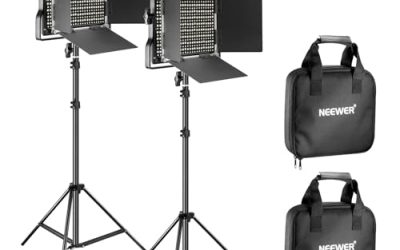
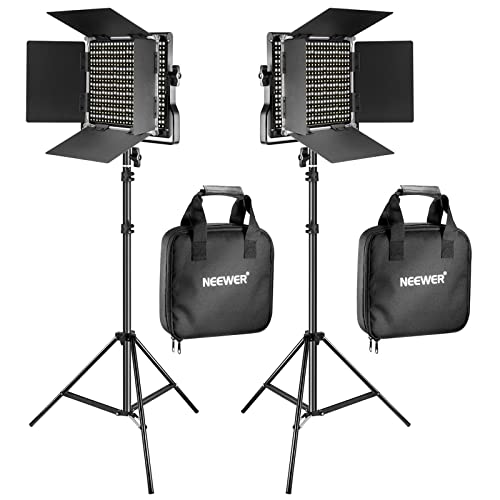
NEEWER 2 Pack Bi Color 660 LED Video Light and Stand Kit
A complete interview setup no longer requires studio fixtures. Modern LED panel kits bundle two lights, stands, diffusers or barn doors, and cases into one box positioned for this budget segment. This guide compares five two-light LED panel kits sold on Amazon US: a classic high-output bi-color pair, an app-controlled pair, a slim battery-powered pair for small rooms, a soft edge-lit pair, and an RGB pair for interviews that also need a colored background accent.
Because this is a budget-segment guide, it compares kits on published specifications and positioning rather than on any current asking figure. Listings and bundles change, so confirm the exact contents on the product page before ordering.
Disclosure: This article contains affiliate links. If you buy through a link on this page, the site may earn a commission at no additional cost to you.
Quick Picks
Best all-round interview kit: NEEWER 2 Pack Bi Color 660 LED Video Light and Stand Kit — Two 40W panels with 660 LEDs each, a 3200K to 5600K range, CRI 96+, barn doors, diffusers, and stands for a classic key-and-fill setup.
Best for app control and wide color range: GVM 2 Pack LED Video Lighting Kit — Bi-color panels spanning 2300K to 6800K with CRI 97+ and TLCI 97, app control, digital displays, and barn doors.
Best for small rooms and travel: NEEWER 13 Inch LED Video Light Panel Kit, NL-192AI, 2 Pack — Ultra-thin panels with built-in batteries, a 3200K to 5600K range, and CRI 97+ in a case that suits location interviews.
Best soft light for faces: RALENO 13 Inch Edge-Lit LED Video Light Panel Kit, 2 Pack — Edge-lit panels with layered diffusion, a 2500K to 6500K range, CRI 95+, built-in batteries, and tall stands.
Best when the background matters too: GVM RGB LED Video Light, 800D, 2 Pack — Bi-color white light plus full RGB color, app control, and CRI 97, so one kit covers the subject and the backdrop.
1. NEEWER 2 Pack Bi Color 660 LED Video Light and Stand Kit
Top Pick
1. NEEWER 2 Pack Bi Color 660 LED Video Light and Stand Kit
Panel output: 40W per light, 660 LEDs per panel
Color temperature: 3200K to 5600K, stepless adjustment
This long-running NEEWER kit is the straightforward answer for a dedicated interview corner. Each panel carries 660 LEDs, split evenly between warm and cool emitters, and produces a 40W output with a stated maximum illuminance of 3300 lux at one meter. Two panels mean you can run one as the key at a forty-five degree angle and the second, dimmed down, as fill, which is the foundation of almost every flattering interview look. The metal housing dissipates heat without a fan, so the kit stays quiet around sensitive microphones.
Color control covers the situations interviews actually happen in. The 3200K to 5600K range matches warm practical lamps at one end and window daylight at the other, and CRI 96+ helps keep skin tones and clothing colors faithful. Barn doors shape spill off the background, soft diffusers take the edge off the bare LEDs, and the U bracket lets each panel tilt on its stand. Power comes from the included AC adapters, or from NP-F style batteries bought separately when a wall outlet is out of reach.
GVM widens the formula with a broader color temperature span and phone-based control. These panels adjust from 2300K to 6800K, which reaches further into warm candlelit tones and cooler daylight than most bi-color kits, and they carry CRI 97+ and TLCI 97 figures aimed at both photography and broadcast-style video. A digital display on each panel shows your settings, and the companion app lets you fine-tune brightness or temperature from behind the camera instead of walking over to the stand mid-conversation.
For interviews, that remote control matters. Once a guest is seated, every trip to adjust a light breaks the flow; changing the fill level from your chair keeps the conversation intact. Barn doors keep light off the backdrop, and the kit includes stands and power supplies. The lights can also run from NP-F style batteries purchased separately, which suits pop-up spaces in offices and event rooms.
Not every interview happens in a studio. The NL-192AI kit is built for the spare bedroom, the hotel room, and the borrowed office: each 13 inch panel is about a centimeter thick, weighs a little over a pound, and carries its own built-in battery, so the pair can be running minutes after you arrive. The listing describes up to ninety minutes of continuous light from the internal battery, with an included adapter for longer sessions and quick charging.
Each panel uses 192 LEDs, half warm and half cool, for a 3200K to 5600K range and CRI 97+ color. Output is rated at 2400 lux at half a meter, well matched to a single-person interview with the key panel just out of frame. An LCD screen shows temperature, brightness, and battery, and the aluminum stands extend to about seventy inches while folding down for the included case.
RALENO takes a different route to softness. Instead of pointing LEDs straight at your guest, these 13 inch panels are edge-lit, with the light guided through layered diffusion, which produces an even, low-glare glow that is forgiving on skin and comfortable for a guest who has to sit under the lights for a long conversation. There are no visible individual hot spots, and the look is close to a much larger soft source.
The bi-color range runs from 2500K to 6500K, with CRI 95+ for dependable color. Each panel includes a built-in 8000mAh battery described as providing around ninety to one hundred minutes of use, plus charging hardware for plugged-in sessions. The aluminum stands adjust from roughly twenty-seven to seventy-five inches, tall enough to place a key light above eye level and angle it down slightly, the classic interview position.
Some interviews are also set design: a podcast corner or a branded backdrop. The GVM 800D pair handles both jobs. In white mode the panels work as conventional bi-color lights, adjustable from 3200K to 5600K with CRI 97 accuracy, and in RGB mode they add full color and scene effects, so the second panel can wash the background with a brand color that separates the subject from the wall.
App control over Bluetooth lets you set the key light and the background light from one phone. The kit includes stands and diffusers, with AC power at home and NP-F style battery support on location.
Start with softness, not raw brightness. A large panel placed close to your guest produces softer shadows than a small bright panel across the room. Edge-lit designs and included diffusers help, and moving any panel closer, just outside the frame, is the cheapest quality upgrade available. If a kit lists barn doors, treat them as spill control rather than softening; diffusion does the softening.
Match color temperature to the room. Interviews mix window light, ceiling fixtures, and practical lamps. A bi-color panel lets you blend with what is already there instead of fighting it. A standard 3200K to 5600K range covers most homes and offices, while wider ranges such as 2300K to 6800K or 2500K to 6500K help in very warm or very cool spaces. Set the camera white balance to the same value as the key light for the most natural skin.
Take color accuracy seriously. CRI in the mid to high nineties is the working standard for faces on camera, and TLCI figures matter when the footage goes straight to broadcast or client delivery. Lower accuracy lights can tint skin green or magenta in ways that are slow to fix, so this specification is worth prioritizing over extra brightness you may never use.
Plan the two-light arrangement. A key light at forty-five degrees to one side and slightly above eye level, plus a dimmer fill from the opposite side, flatters almost everyone. Every kit here includes two panels and stands, which is exactly that arrangement in a box. A third light for the background is a luxury; the RGB kit folds that job into its second panel.
Decide how you will power the session. Built-in batteries, as in the NEEWER NL-192AI and RALENO kits, make location interviews tidy and fast. Panels that rely on AC adapters with optional NP-F batteries, such as the NEEWER 660 and both GVM kits, run indefinitely at a desk or studio corner. For long recording days, plugged-in power removes runtime anxiety entirely.
Check the quiet details. Fanless panels protect your audio, and stands that reach at least sixty inches let you place lights above eye level. Finally, confirm the exact contents of the variant you select, since stands, bags, and battery inclusions differ between versions of the same kit family.
FAQs
How many lights do I need for a seated interview?
Two lights cover the classic setup: a soft key on one side of the face and a gentler fill on the other. A single panel can work for a solo talking head if it is large, close, and diffused, but a two-panel kit gives you control over shadows and is the better starting point.
What color temperature works best for interviews?
Match the dominant light in the room. Use the warmer end of a bi-color panel under tungsten household lamps, the middle range in mixed rooms, and the daylight end near windows. Then set the camera white balance to the same value as your key light so skin tones stay natural.
Why does CRI matter for faces?
CRI describes how accurately a light renders colors compared with a reference source. Figures in the mid to high nineties help skin, clothing, and set colors record faithfully, reducing correction work afterward and avoiding the green or magenta casts associated with lower accuracy lighting.
Are battery-powered panels practical for interviews?
Yes, for typical session lengths. The battery kits in this guide describe roughly ninety minutes of continuous light, which covers most interviews, and both can also run from their included adapters for longer days. Battery operation mainly buys freedom from cables and outlet placement.
How close should the key light be to my guest?
As close as the frame allows, usually just outside the shot at roughly a meter from the subject for panels of this size. Closer placement makes the source effectively larger and softer. Raise it slightly above eye level and angle it downward for natural modeling and a clean catchlight.
Do I need RGB for an interview?
No. White bi-color light is the interview essential. RGB earns its place when the same kit also lights a background, a podcast set, or branded content, which is why it appears here as a specialized pick rather than the default recommendation.
Conclusion
For most people building an interview setup in this budget segment, the NEEWER 660 two-pack remains the dependable template: strong, accurate, quiet panels with stands, barn doors, and diffusers in one box. Choose the GVM bi-color kit when app control and the widest white range would make your sessions smoother, the NEEWER NL-192AI when interviews happen in small or changing spaces and built-in batteries keep setup fast, the RALENO kit when soft, guest-friendly light is the priority, and the GVM 800D when your background deserves as much attention as your subject. Any of these five kits, placed close and matched to the room, will make faces look the way your guests hoped they would.
H
Home Beautiful Design Editorial Team
We compare specs, materials and verified owner reviews before a product earns a spot. Rankings are never paid.
Affiliate disclosure. As an Amazon Associate we earn from qualifying purchases at no extra cost to you. Prices accurate as of the date shown.
Four mini arcade cabinets with light-up marquees compared: Arcade1Up Pac-Man Countercade and Numskull Quarter Arcades replicas with LED backlit marquees.
Compare the best material for bathtubs with four real tubs in acrylic, cast iron, stone resin and copper, plus heat, weight and care notes to choose well.
Find the best bathroom countertop storage ideas for a tidy vanity, from tiered shelves and makeup trays to vanity sets and hair-tool holders for daily use.
The best magnifying lamps for console repair work bring clear lenses, bright LED light and steady arms to soldering, inspection and fine board work at home.
Find the best lightweight work boots for concrete floors, with cushioning, arch support, shock absorption and slip-resistant grip for long shifts all day.
Compare the best portable video lights for interviews, from compact USB panels to full two-light kits with stands, batteries and app control for any room.
LED light up tracing pads compared by brightness, working area, and power: an ultra-thin A4 pad, a brighter acrylic board, and a rechargeable cordless model.
Choose the best hunting bow sight light with rechargeable power, three brightness levels and universal thread fittings for clear pins at dawn and dusk.
Looking for the best waterproof led strip lights outdoor blue battery powered? Compare blue, battery-powered strips for patios, decks, gardens, and boats.



 4. RALENO 13 Inch Edge-Lit LED Video Light Panel Kit, 2 Pack
 5. GVM RGB LED Video Light, 800D, 2 Pack