Our Top Picks
 INSINKERATOR BADGER 5 Garbage Disposal with Cord0.5 HP6.31 x 6.31 x 11.5 inches5 poundsCheck on Amazon
 INSINKERATOR BADGER 1 Garbage Disposal with Cord1/3 HP6.31 x 6.31 x 11.38 inches5 poundsCheck on Amazon
If you are shopping for a disposal because of what it sends into the drain, the key question is whether your home is on a municipal sewer or a septic system: sewer households can choose almost any continuous-feed model such as the InSinkErator Evolution series or Waste King Legend, while septic households should look at septic-oriented options such as the InSinkErator Evolution Septic Assist, which the maker pairs with a bio-cartridge, and should confirm local rules first. This guide covers how disposals affect household wastewater, which current models are designed with drain and septic use in mind, and what to ask before installing one.
Wastewater-Conscious Disposals at a Glance
| Model family | Best for | Key stated features | Limits |
|---|---|---|---|
| InSinkErator Evolution Septic Assist | Septic households where local rules allow disposals | Maker lists a bio-charge cartridge that adds enzymes and multi-stage grinding | Cartridge must be replaced as directed; confirm septic tank capacity |
| InSinkErator Evolution Excel / Essential XTR | Sewer-connected homes wanting fine grinding and low noise | Maker lists multi-stage grinding and sound insulation | Not specifically septic-oriented; check your system |
| InSinkErator Badger 5 | Light use in a sewer-connected home | Maker lists a simple grinding design | Coarser grind than multi-stage units |
| Waste King Legend series | Value-focused homes with sewer service | Maker lists high-horsepower models with grinding stages | Not designed specifically for septic use unless the maker states so |
| Moen GX series | Buyers who want a Moen sink system | Maker lists multiple HP options | Check septic notes in the model manual |
| Batch-feed models (various makers) | Households that want control and safety | Run only when the stopper is in place | Slower use |
Because specifications change and not every maker designs for septic systems, read the manual for each model and check local requirements before buying.
INSINKERATOR BADGER 5 Garbage Disposal with Cord, 1/2 HP Continuous Feed | BADGER Series, LIFT AND LATCH Technology, Power Cord Included, Septic Safe, Compact Disposer
Chosen because it specifies 1/2 HP Continuous Feed and BADGER Series.
View on Amazon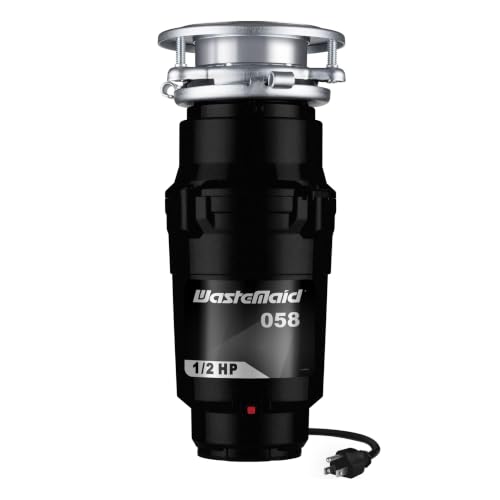
Waste Maid Garbage Disposal, Anti-Jam, Continuous Feed, 1/2 HP Economy | Quiet Stainless Steel Food Waste Grinding System with Power Cord, Fast Swap 3-Bolt Mount, 8-Yr Warranty 10-US-WM-058-3B
Chosen because it specifies Anti-Jam and Continuous Feed.
View on AmazonINSINKERATOR BADGER 1 Garbage Disposal with Cord, 1/3 HP Continuous Feed | BADGER Series, LIFT AND LATCH Technology, Power Cord Included, Septic Safe, Compact Disposer
Chosen because it specifies 1/3 HP Continuous Feed and BADGER Series.
View on Amazon
INSINKERATOR BADGER 5 Garbage Disposal, 1/2 HP Continuous Feed, BGR 5 | BADGER Series, LIFT AND LATCH Technology, Septic Safe, Compact Food Waste Disposer
Chosen because it specifies 1/2 HP Continuous Feed and BGR 5.
View on AmazonHow a Disposal Affects Your Wastewater
A disposal grinds food into small particles that flow down the drain. In a sewer-connected home, those solids go to a municipal treatment plant, and most municipalities allow disposals though some limit them. In a septic home, the same solids enter the tank, where they add to the sludge and scum layers and increase the need for pumping. That is why septic households should talk to a septic professional and local authority before installing one.
The finer the grind, the less likely particles are to cause clogs in household pipes, which is why multi-stage grinding is often described by makers as a benefit. It does not remove the effect on a septic tank, though, because the food waste still adds load.
Sewer vs Septic: What to Know
Sewer-connected homes
Most standard disposals are acceptable. Check with the local water authority, as a few areas restrict their use. Run cold water during and after use to push waste through the pipes, and avoid grease that can build up in lines.
Septic homes
Some septic professionals advise against disposals or advise a larger tank and more frequent pumping if one is installed. Some manufacturers, including InSinkErator, offer septic-oriented models that use an enzyme cartridge. Makers describe these as designed to work with septic systems, but they do not remove the need to follow local rules or the advice of a septic service provider. If you do add a disposal, expect to pump the tank more often, and discuss the schedule with a professional.
Features That Matter for Drain Health
- Grinding stages: multi-stage designs produce finer particles, which may lower clogging risk in pipes.
- Motor power: 3/4 to 1 HP helps grind fibrous waste more fully than a 1/3 or 1/2 HP motor.
- Corrosion-resistant components: stainless steel grinding parts last longer, according to makers.
- Anti-jam design: reverse-rotation or similar features help clear jams without opening the unit.
- Bio-cartridge compatibility: septic-oriented models use cartridges that add enzymes; read the instructions for replacement intervals.
Pick X If…
| Pick this | If you… |
|---|---|
| Evolution Septic Assist | have a septic system, have confirmed local rules allow a disposal and have spoken to a septic professional |
| Evolution Excel or Essential XTR | are on city sewer and want fine grinding with low noise |
| Badger 5 | are on city sewer and want an inexpensive replacement |
| Waste King Legend | are on city sewer and want power at a value tier |
| Batch-feed model | want a safety stopper and controlled operation |
| No disposal | have a small or old septic system, or your local authority discourages disposals |
Budget Tiers
Budget tier
Entry units such as the Badger family offer basic grinding with simple construction. They work in sewer-connected homes with light use, but the coarser grind may leave more particles in the drain.
Mid-range tier
Mid-range models add multi-stage grinding, more power and insulation. They suit most households and are where septic-oriented cartridge models often sit.
Premium tier
Premium units add more horsepower, better corrosion resistance and longer warranties. They suit heavy use and families who cook often.
Installation and Plumbing Notes
- Existing flange: many replacement disposals use a standard three-bolt mount; matching your current mount makes installation easier.
- Drain line: a disposal drains through a trap and a drain line of adequate slope. Slow drains before installation may indicate a pipe issue that a disposal will not fix.
- Dishwasher inlet: remove the knockout plug as the instructions direct if you connect a dishwasher.
- Power: follow the manual for a switched outlet or hardwire connection. Hire a qualified electrician if you are not experienced with household wiring.
- Local codes: some areas require permits or specific installation methods. A licensed plumber can advise.
Care to Protect Your Pipes
- Run cold water before, during and for about fifteen seconds after grinding, or as the maker advises.
- Feed waste gradually rather than in large batches.
- Avoid grease, oil, fat, bones, pits, starchy waste in large quantities, and non-food items.
- Clean the unit periodically using methods the maker allows, such as citrus peels or ice cubes, and avoid harsh chemicals.
- If odors develop, check the splash guard and drain connections before reaching for chemical cleaners.
Safety Notes
- Never put your hand in a disposal. Cut power at the switch and breaker before clearing a jam, and use tongs or the supplied wrench.
- Do not use chemical drain cleaners unless the maker states they are safe for the model, because they can damage seals and pose a hazard.
- If the unit leaks or trips a breaker, stop using it and call a plumber or electrician.
Alternatives
Composting
Diverts food waste from the drain entirely. Countertop and outdoor compost systems need space and a routine but avoid the question of drain load.
Municipal food waste pickup
Some areas offer organic waste collection, which can replace the disposal for septic households.
Sink strainers and scraping plates
The simplest way to reduce what reaches your drain is to scrape plates into a bin before washing.
Frequently Asked Questions
Can I use a garbage disposal with a septic tank?
Sometimes, but it depends on your tank size, local rules and the advice of a septic professional. Septic-oriented models from makers such as InSinkErator exist, but food waste still adds to the tank’s load, so expect more frequent pumping.
Do disposals harm municipal wastewater systems?
Most municipalities allow disposals and treat the ground food waste at their plants. A few areas limit them or ask residents to compost instead, so check your local utility.
What is a bio-cartridge in a septic disposal?
It is a replaceable cartridge that the maker says releases enzymes to help break down food waste in the septic system. Follow the replacement schedule in the manual and talk to a septic professional about its role.
Will a disposal clog my pipes?
Misuse, such as grinding grease or large amounts of starchy waste, can lead to clogs. Using cold water and avoiding problem foods lowers the risk, and a finer grind from a multi-stage unit helps.
Is it better to get a higher horsepower disposal?
More horsepower grinds tougher waste more completely and strains less. For small households with light use, a 3/4 HP unit is often sufficient.
Should I pour grease down the sink if I have a disposal?
No. Grease can cool and solidify in pipes and cause blockages, with or without a disposal. Pour cooled grease into a container and put it in the trash.
More from Amazon
Programs that pair well with the guide above. Offers and eligibility are set by Amazon and may change.
Collect the home and kitchen items you want in one registry that guests can shop from.
Create a wedding registrySet up recurring deliveries of everyday items on eligible products. Terms and savings are set by Amazon.
Explore Subscribe & SaveFree shipping on eligible items, Prime Video and more. Eligible new members can start with a free trial.
Start a Prime free trialAudiobooks and podcasts to listen to on the go. Eligible new members can start with a free trial.
Try Audible freeAs an Amazon Associate we earn from qualifying purchases.