Our Top Picks
 eclife 36" Bathroom Vanities Sink Combo with Painted36" Single18.1 x 36 x 33.7 inches120 PoundsCheck on Amazon
 eclife 30" Bathroom Vanities Sink Combo with Painted30" Single18 x 30 x 34 inches100 poundsCheck on Amazon
The best paint for a bathroom vanity is a cabinet-grade waterborne alkyd or urethane enamel in satin or semi-gloss: Benjamin Moore Advance and Sherwin-Williams Emerald Urethane Trim Enamel are the two products most roundups rank at the top, while Rust-Oleum’s cabinet kits are the common budget and beginner route. Ordinary wall paint, even labeled for bathrooms, is generally described as too soft for a surface that is touched, wiped and splashed daily, and preparation matters as much as the product.
Vanity Paints at a Glance
| Product | Type | Best for | Details as reported | Limits |
|---|---|---|---|---|
| Benjamin Moore Advance | Waterborne alkyd | Smooth, hard finish on wood vanities | Reviewers say it levels like oil paint and cleans up with water; ranked best overall by several sources | Longer cure and recoat times than some rivals |
| Sherwin-Williams Emerald Urethane Trim Enamel | Water-based urethane enamel | Humidity, block and wear resistance | Sources report a faster recoat time and strong durability | Higher tier; one source suggests a bonding or stain-blocking primer first |
| Rust-Oleum cabinet transformation kit | Primer, color and topcoat system | Beginners and budget refreshes | Kit approach reduces product choices | Limited color range; follow the kit’s cure times |
| Rust-Oleum bathroom cabinet and wood paint | Specialty enamel | Quick, simple updates | Marketed for bathroom use | Check surface compatibility on the label |
Rankings differ by source. One cabinet shop calls Advance the highest rated, while another roundup places Emerald Urethane first. Both are widely used by painters, so choose by your tolerance for dry time, your sprayer or brush setup and your tier.
eclife 36" Bathroom Vanities Sink Combo with Painted Surface, Modern Drawered Cabinet W/Decorative Wave Lines, Undermount Black White Sink, Matte Black Faucet Drain, Black
Chosen because it specifies Modern Drawered Cabinet W/Decorative Wave Lines and Undermount Black White Sink.
View on Amazoneclife 30" Bathroom Vanities Sink Combo with Painted Surface, Modern Drawered Cabinet W/Decorative Wave Lines, Undermount Single White Sink, Matte Black Faucet Drain, Black
Chosen because it specifies Modern Drawered Cabinet W/Decorative Wave Lines and Undermount Single White Sink.
View on Amazon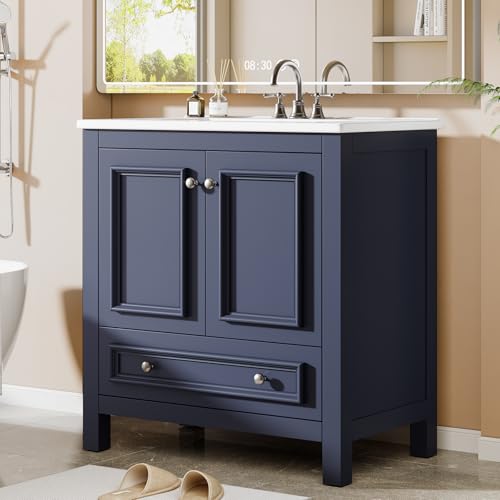
Tribesigns 30" Bathroom Vanity with Sink, Freestanding Bathroom Vanities Cabinet with Ceramic Basin Combo, Bathroom Sink Cabinet with 2 Doors and 1 Drawer, Solid Wooden Frame (Navy Blue, 30 INCH)
Chosen because it specifies Bathroom Sink Cabinet with 2 Doors and 1 Drawer and Solid Wooden Frame (Navy Blue.
View on AmazonWhy Vanities Need a Different Paint
A vanity faces steam, splashes from toothpaste and soap, hot hair tools and constant door and drawer contact. Wall paint is designed to be flexible and breathable, and it can stay soft or tacky and chip at edges. Cabinet enamels cure to a harder film. Water-based alkyds and urethane enamels aim to deliver the look of traditional oil enamel without the strong solvent smell and with soap-and-water cleanup.
Prep: The Step That Decides the Result
- Remove doors, drawers and hardware. Label them so they go back in the right place.
- Clean thoroughly. Use a degreaser that the paint maker approves; hair products and soap film prevent adhesion.
- Repair and sand. Fill dings, then scuff-sand to dull the old finish. Wear a dust mask rated for sanding and ventilate. If the existing finish is old, pre-1978 paint may contain lead, so test it or follow EPA lead-safe practices before sanding.
- Prime. Use a bonding primer if the vanity is glossy, laminate or thermofoil, and a stain-blocking primer for bare or tannin-rich wood. Follow the maker’s list of compatible primers.
- Paint thin coats. Two thin coats outperform one thick coat, with light sanding between coats as the label allows.
- Cure. Dry to the touch is not fully cured. Many cabinet paints take days or weeks to reach full hardness, so be gentle with the surface, avoid heavy cleaning and keep rubber mats and towels off it initially.
Surface Compatibility
- Solid wood: the easiest surface; most cabinet paints are designed for it.
- MDF or engineered wood: seal edges well with primer because exposed edges absorb moisture.
- Laminate and thermofoil: need a bonding primer and sometimes an adhesion-specific system; thermofoil is hard to paint and can peel if heat damaged. Check the maker’s guidance.
- Stone or ceramic countertops: mask thoroughly; most vanity paints are not for countertops. Special countertop kits exist but follow their own rules.
Sheen, Color and Application
Satin and semi-gloss are the usual recommendation: higher sheens resist moisture and are easier to wipe, but they highlight imperfections. Matte cabinet finishes are available but can be harder to keep clean. Dark colors show dust and water spots more, while light colors reveal dirt and fingerprints.
For application, a high-quality synthetic brush with a fine foam or microfiber roller gives a smooth finish. A paint sprayer gives the best result but requires masking, ventilation and practice. Maintain the temperature and humidity range given on the label, since cold or damp rooms slow curing and cause tackiness.
Safety and Ventilation
- Open windows and run the exhaust fan while painting and curing.
- Even low-odor paints and primers release some fumes, so use a respirator if the label advises it.
- Keep children and pets away from the area while painting and drying.
- Dispose of rags and leftover paint according to local rules; oil-based rags can self-heat, so follow label disposal directions.
Budget Tiers
| Tier | Typical choice | Trade-off |
|---|---|---|
| Budget | Rust-Oleum kit with primer, color and topcoat | Easy, but limited colors and more coats |
| Mid-range | Benjamin Moore Advance with a separate bonding primer | Excellent leveling; long cure time |
| Premium | Sherwin-Williams Emerald Urethane with professional spray application | Higher material cost; best finish with proper equipment |
Pick X If…
| Pick this | If you… |
|---|---|
| Benjamin Moore Advance | want the smoothest brushed finish and can wait out the cure |
| Sherwin-Williams Emerald Urethane | want faster recoats and strong humidity and block resistance |
| Rust-Oleum cabinet kit | are painting a vanity for the first time on a budget |
| A professional refinisher | have thermofoil, a lead-paint risk, or want a spray finish |
| Replacement doors | have damaged or swollen panels that paint will not fix |
Care After Painting
Wipe up water promptly, clean with a mild soap and soft cloth, and avoid abrasives. Hang towels away from freshly painted surfaces during the cure period. Replace worn door bumpers to reduce chips. Run the bathroom fan during and after showers to limit humidity, which is the main enemy of any painted finish. Touch up small chips with the same product when they appear.
Common Problems and How Painters Avoid Them
Most failed vanity paint jobs trace back to a few predictable causes. Peeling usually means the surface was not degreased or not primed, so the new film never bonded. Tackiness that lasts for weeks usually means thick coats, cold temperature or high humidity slowed curing. Brush marks appear when the paint is overworked after it starts to set, which is why many painters work in sections and keep a wet edge, and why the leveling quality of waterborne alkyds is praised.
Yellowing is another worry, especially with white paint. Alkyd-based products can warm slightly over time in low light, while urethane-acrylic enamels are often marketed as less prone to it. Maker data sheets state the resin type and any yellowing behavior, so compare them if you are painting a pale color. Tannin bleed, where brown stains seep from oak or cedar, is addressed with a stain-blocking primer before color goes on.
Finally, plan the timeline. Between cleaning, priming, two color coats and cure time, a vanity refresh often takes a week or more before the surface is ready for normal use. Rushing the reinstallation of doors can leave marks where the paint touches the frame, so wait until the maker’s recommended time, or use small bumpers to keep surfaces apart during the cure.
Choosing Hardware and Finishing Touches
A repaint is the ideal moment to update pulls, knobs and hinges. Fill old screw holes if the new hardware spacing differs, and prime the repair before color. Soft-close hinge kits can be added to existing doors, and felt or rubber bumpers protect the new finish from knocking against the frame. Wait for the full cure before closing doors tightly against each other, and consider a clear protective topcoat only if the paint maker lists a compatible one, since mismatched topcoats can yellow or cloud the color.
Alternatives to Consider
- Cabinet-specific paints from other makers that use similar water-based alkyd or urethane technology.
- Peel-and-stick or refinishing kits for quick looks, though durability varies.
- New doors and drawer fronts on the existing cabinet box, which refreshes style without a full replacement.
Frequently Asked Questions
What is the best finish for a painted bathroom vanity?
Satin or semi-gloss cabinet enamel is the usual choice because it resists moisture and wipes clean. Matte is available but may be harder to keep clean.
Do I need primer on a bathroom vanity?
In most cases yes. A bonding primer helps paint stick to glossy, laminate or previously finished surfaces, and a stain-blocking primer helps with bare wood. Follow the paint maker’s primer recommendations.
How long does vanity paint take to cure?
Dry to the touch is faster than full cure. Many cabinet enamels take days to weeks to harden fully, so treat the surface gently and follow the label.
Can I paint a laminate or thermofoil vanity?
It is possible with the right bonding primer and a compatible paint, but thermofoil and heat-damaged surfaces are risky and can peel. A professional can advise on whether replacement doors are a better option.
Is it safe to sand an old vanity?
Older paint can contain lead, particularly in homes built before 1978. Use a lead test kit and follow EPA safe-work practices, or hire a certified professional before sanding or scraping.
Is regular bathroom wall paint good enough for a vanity?
Reviewers and painters generally say no. Wall paints are softer and can scuff or stay tacky on frequently touched surfaces. Cabinet-grade enamel is designed for hard wear.