Our Top Picks
 RockDove Men's Original Two-Tone Memory Foam Slipper11-1211 x 5.5 x 4.3 inches0.75 poundsCheck on Amazon
For people who want contoured arch support in a slipper, Vionic styles such as the Gemma Mule and Relax are the default recommendation in podiatry-style roundups; OOFOS recovery slippers such as the OOcoozie suit people who want deep cushioning after long days on their feet; Orthofeet suits swollen or sensitive feet that need extra depth, a seamless interior or a removable insole; and the Kuru Draft 2 and Orthofeet Charlotte appear in Forbes Vetted’s plantar fasciitis picks. None of these replace medical care, and anyone with ongoing foot pain, diabetes or circulation problems should talk to a doctor or podiatrist first.
Best Orthopedic Slippers at a Glance
| Slipper | Best for | Key stated traits | Limits |
|---|---|---|---|
| Vionic Gemma Mule / Gemma II / Relax II | Built-in arch contour, deep heel cup | MindBodyGreen names the Gemma Mule its best podiatrist-designed pick; a podiatry guide notes a fixed-contour EVA footbed that is not removable | Cannot swap in a custom orthotic |
| OOFOS OOcoozie (Thermo Mule) | Cushioned recovery after long days | Michigan Foot Doctors ranks it best overall for plantar fasciitis; one source notes the maker makes no arch-support claim for the Thermo Mule, only cushioning | Soft foam is not the same as structured support |
| Orthofeet (Charlotte, Lorin Leather) | Swollen or sensitive feet, removable footbed | Seamless, extra-depth interior per reviewers; Forbes Vetted picked the Charlotte; another review named the Lorin Leather best overall | Premium tier |
| Kuru Draft 2 | Heel-focused comfort | Forbes ranked it best overall for plantar fasciitis | Check fit and width options with the maker |
What “Orthopedic” Means in a Slipper
The term is used loosely. In practice it describes slippers with features such as a contoured footbed under the arch, a deep heel cup, a firm midsole that resists twisting, and a sole that does not slip. It does not mean the slipper is a medical device. Prescription orthotics and medical footwear are prescribed by a professional, and a slipper marketed as orthopedic should be judged as comfort footwear with support features.

ERGOfoot House Slippers With Arch Support, Orthopedic Slippers for Plantar Fasciitis Pain Relief, Comfy Wool Felt Clog, Non-Slip Indoor Outdoor House Shoes for Women and Men/Grey, W8/M7
Chosen because it specifies Orthopedic Slippers for Plantar Fasciitis Pain Relief and Comfy Wool Felt Clog.
View on Amazon
EverFoams Womens Fuzzy Open-toe Slippers Indoor Cool Gray,7-8 US | Machine-washable, Gifts, Memory Foam, Anti-slip Sole, Lightweight, Indoor and Outdoor, Cozy
Chosen because it specifies 7-8 US and Machine-washable.
View on Amazon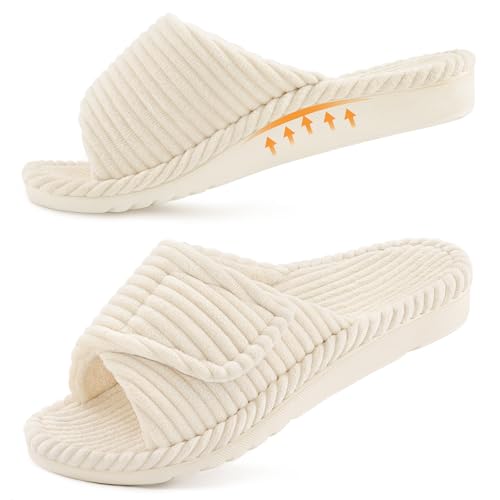
Litfun Orthopedic Slippers for Women Arch Support House Shoes | Adjustable Memory Foam Slippers for Plantar Fasciitis, Open Toe Bedroom Indoor Shoes, Beige 39
Chosen because it specifies Adjustable Memory Foam Slippers for Plantar Fasciitis and Open Toe Bedroom Indoor Shoes.
View on AmazonRockDove Men's Original Two-Tone Memory Foam Slipper, 11-12, Dark Grey/Blue | Slip-on, Indoor/Outdoor, Non-Slip, Machine Washable, Lightweight, Skin-Friendly, Gift-Ready
Chosen because it specifies 11-12 and Dark Grey/Blue.
View on AmazonKey Features to Compare
Arch contour
Fixed contour footbeds, such as Vionic’s molded EVA, provide a set shape for people who like that feel. Some may find it too pronounced at first, so reviewers suggest wearing them for short periods initially.
Cushioning versus support
Soft foam such as OOFOS’s absorbs impact and feels gentle after a long day, but it is not the same as structured arch support. Decide whether you want a pillowy feel, a supportive feel or both.
Removable insole
If you wear custom orthotics or want to swap footbeds, look for a removable insole as in some Orthofeet models. Non-removable footbeds in Vionic styles mean no orthotic can be added.
Depth and width
Extra-depth interiors accommodate swelling, bunions or bandages. Reviewers note Orthofeet’s seamless interior and extra depth for sensitive or swollen feet.
Outsole grip
A textured rubber or EVA sole reduces slipping on tile and hardwood. Indoor-outdoor soles allow short trips outside.
Closure and heel
Mules slip on easily but offer less hold. Closed-heel slippers with adjustable straps stay on more securely and can be safer for unsteady walkers.
Who Should Be Careful
- People with diabetes, neuropathy or reduced sensation should have footwear advice from a doctor or podiatrist, since seams and pressure points may go unnoticed.
- Persistent heel or arch pain, swelling, numbness or pain that wakes you at night should be evaluated by a healthcare professional rather than treated with slippers alone.
- Older adults and those with balance problems should look for closed heels and grippy soles, and take care on stairs.
- If you are prescribed orthotics, ask your clinician whether they can be used in a given slipper.
Fit and Sizing
- Fit slippers with the socks you wear indoors.
- Leave space at the toes; the heel should sit in the cup without lifting.
- Check the maker’s width options, since Orthofeet and Kuru offer widths on some styles.
- A break-in period is common with contoured footbeds; build up wearing time gradually.
- Replace when the footbed is flattened, because worn support stops doing its job.
Care
Follow the care tag. Many EVA and foam slippers wipe clean with mild soap and water and air dry away from heat, while leather and fabric models have their own instructions. Heat can warp foam and molded footbeds, so avoid dryers and radiators.
Budget Tiers
- Budget: Generic memory foam slippers marketed as supportive, which give cushioning but little structure.
- Mid-range: Vionic and OOFOS, the names that recur in podiatry-oriented roundups.
- Premium: Orthofeet and Kuru, with extra depth, widths and leather options.
Pick X If… Decision Table
| Pick this | If you… |
|---|---|
| Vionic Gemma Mule or Relax | want molded arch contour with minimal adjusting |
| OOFOS OOcoozie | want soft recovery cushioning at home |
| Orthofeet Charlotte or Lorin Leather | need extra depth, a seamless interior or a removable footbed |
| Kuru Draft 2 | want a heel-focused comfort slipper |
Alternatives
- Supportive sandals or slides: Contoured sandals worn indoors give support in warm weather.
- Indoor shoes with arch support: A pair of supportive sneakers kept for indoor use gives the most structure.
- Prescription orthotics in a roomy slipper: Ask a clinician about suitable styles.
- Standard slippers plus cushioned insoles: A budget route, provided the slipper has enough depth.
Choosing by Situation
Long days on hard floors
Cushioning and a contoured footbed reduce impact. OOFOS is recommended in podiatry roundups for home recovery after long walks or standing, and Vionic is the pick for a defined arch shape.
Swollen or sensitive feet
Seamless interiors and extra depth reduce rubbing. Orthofeet is the name reviewers connect with these needs, along with adjustable closures on some models. Persistent swelling should be discussed with a doctor.
Morning heel discomfort
Many people with heel pain step out of bed onto bare floors. Reviewers suggest keeping supportive slippers by the bed so the feet are supported from the first step. This is general comfort advice, not treatment, and a podiatrist can advise on causes.
Men’s and women’s sizing
Vionic, OOFOS and Orthofeet publish sizing charts, and some models use different conversions between men’s and women’s sizes, so read the chart and the maker’s conversion notes before ordering. Michigan Foot Doctors publishes a separate men’s orthotic slipper guide for readers who want more options.
Outdoor use
Some orthopedic slippers are for indoors only. If you want to step outside, confirm the maker describes the outsole as suitable for it, and avoid wet pavement in foam-soled models that can lose grip.
Common Mistakes
- Expecting a slipper to treat a foot condition rather than add comfort.
- Choosing a mule when you need a secure closed heel.
- Skipping the break-in period and wearing contoured footbeds for hours on day one.
- Continuing to wear slippers with flattened footbeds.
Where the Sources Differ
Podiatry-style roundups do not agree on one best slipper. One calls Vionic the default recommendation, another ranks OOFOS first for plantar fasciitis, and Forbes Vetted favors Kuru and Orthofeet. The differences come from priorities: fixed arch contour, soft cushioning or adjustable fit. A search for Archies slippers returned no usable review coverage, so that brand is not assessed here.
Quick Buying Checklist
- Decide whether you need firm arch support, soft cushioning or both.
- Check for a removable insole if you use custom orthotics.
- Look for a closed heel or strap if balance is a concern.
- Read the width and depth options the maker offers, especially if your feet swell during the day.
- Confirm the outsole is suitable for the floors you walk on, and for outdoors if needed.
- Ask a doctor or podiatrist about any persistent pain rather than relying on footwear alone.
Because comfort is personal, buy from sellers with a clear return policy so you can swap sizes or styles if the first pair does not suit your feet.
Frequently Asked Questions
Are orthopedic slippers good for plantar fasciitis?
Podiatry-focused roundups list Vionic, OOFOS, Orthofeet and Kuru for comfort with plantar fasciitis. Slippers are comfort footwear, so see a doctor or podiatrist for diagnosis and treatment.
What is the difference between Vionic and OOFOS?
Vionic uses a molded arch contour that is not removable, whereas OOFOS focuses on soft cushioning, and one source notes the maker makes no arch-support claim for the OOcoozie Thermo Mule.
Can I use my own orthotics in slippers?
Only in slippers with a removable insole and enough depth, such as certain Orthofeet models. Ask your clinician before swapping footbeds.
Should I wear supportive slippers all day at home?
Many people do, especially on hard floors. If you find new support uncomfortable, build up wear time gradually and consult a professional if pain continues.
How do I know if a slipper has enough arch support?
Look for a visible contour under the arch, a deep heel cup, and a footbed that does not collapse when pressed. Comfort over a few days of wear is a practical test.
How often should I replace orthopedic slippers?
When the footbed flattens, the sole smooths out or the heel cup deforms. That is often within a year or two of daily use, depending on the model.