Key takeaways
- Memory foam contours around you and holds the shape. It’s the strongest option for genuine pressure relief at the shoulder, and the best choice if you’re waking with a dead arm.
- Fibre-filled pillow tops add plush loft and a floating, buoyant feel with far less hug. The BEDLORE Viscose Bamboo Pillow Top, the Niagara Sleep Solution Ultra Soft & Cooling Topper, and the Ultra Soft & Cooling Mattress Topper in Full all sit in this camp — good if your mattress is already supportive and you want cushioning without the sinking sensation.
What's inside
I spend my working life adjusting the things people feel but rarely name — the height of a wall sconce, the warmth of a bulb, how long a room takes to fade to dark. Bedrooms are the hardest brief I get, because everything in them has to cooperate with sleep rather than perform for a camera. And after a decade of dimming rooms down for clients, I’ve learned that the mattress is doing the same job my fixtures are: it either lets the body settle or it keeps registering as information. A topper that fights your shoulder all night is the tactile equivalent of a cold 5000K downlight over the headboard. Technically fine. Quietly ruining everything.
Side sleepers feel this more than anyone, because sleeping on your side loads two narrow points — shoulder and hip — while leaving the waist and knees unsupported. Get it wrong and you wake with a numb arm, a stiff lower back, and no idea why. This guide covers how thickness and density actually change the feel, why foam and pillow-top toppers suit different bodies, what to do about heat, and how to keep the whole thing from sliding around by 3 a.m. Below are the toppers I’d point a client toward first.
As an Amazon Associate we earn from qualifying purchases.



Why Side Sleeping Needs A Softer Surface Than You Think
On your back, weight spreads across a wide area. On your side, it concentrates into roughly two contact zones, and the pressure per square inch climbs steeply. A surface that’s too firm stops the shoulder from sinking, which tilts the spine out of neutral and leaves the ribcage carrying load it wasn’t built to carry. The fix isn’t a mushy bed — it’s a surface with enough give at the top to let the shoulder and hip drop in, and enough structure underneath to hold the waist. Think of it as a gradient rather than a single setting: soft at the point of contact, progressively supportive below.
Thickness And Density: The Two Dials Worth Learning
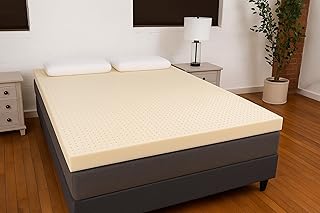
Thickness sets how deep you can sink; density sets whether you keep sinking. Two inches rarely gives a side sleeper enough travel to relieve the shoulder, and four inches can feel unmoored on an already-soft mattress. Three inches is the reliable middle, which is why the PerleCare 3 Inch Gel Memory Foam Topper, the ViscoSoft 3 Inch Memory Foam Topper and the VALUXE 3 Inch Gel Memory Foam Topper all land there. Density is the part shoppers skip. Low-density foam feels lovely for a fortnight, then develops a permanent trough where your hip lives. ViscoSoft’s high-density ventilated build and VALUXE’s high-density core are aimed squarely at that failure mode.
Foam Or Pillow Top: Two Different Sensations
These aren’t better-and-worse, they’re different instruments.
- Memory foam contours around you and holds the shape. It’s the strongest option for genuine pressure relief at the shoulder, and the best choice if you’re waking with a dead arm.
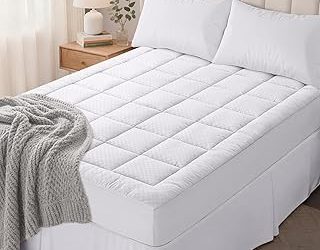
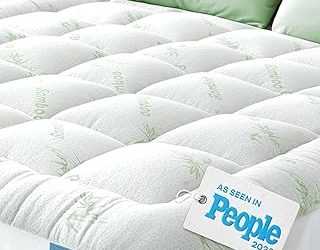
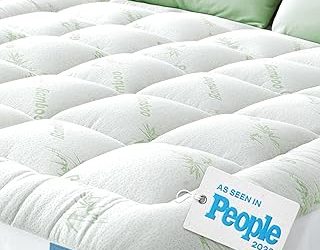
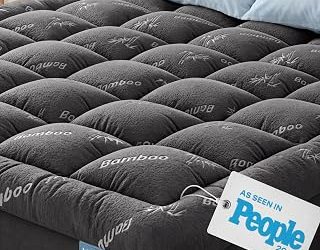
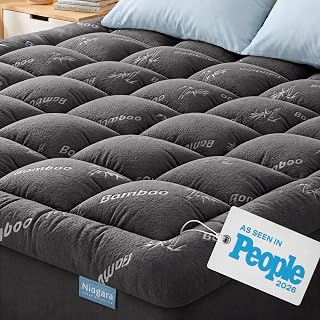
- Fibre-filled pillow tops add plush loft and a floating, buoyant feel with far less hug. The BEDLORE Viscose Bamboo Pillow Top, the Niagara Sleep Solution Ultra Soft & Cooling Topper, and the Ultra Soft & Cooling Mattress Topper in Full all sit in this camp — good if your mattress is already supportive and you want cushioning without the sinking sensation.
Heat Is The Variable Everyone Underestimates
Core body temperature has to fall for sleep to consolidate — the same reason I put bedrooms on warm dimming curves instead of bright white light. Memory foam is dense and traps heat by nature, so look for the countermeasures: gel infusion in the PerleCare and VALUXE, ventilation channels in the ViscoSoft, and breathable rayon or viscose-from-bamboo covers, which BEDLORE, Niagara and VALUXE all use. If you run hot and don’t need deep contouring, a bamboo-cover pillow top will almost always sleep cooler than any foam.
Fit, Grip, And Whether You Can Wash It
A topper that shifts in the night undoes its own work. Check pocket depth against your mattress plus any existing pad — BEDLORE’s stretchable pockets handle 6″ to 18″, and Niagara’s deep pocket reaches 20″, which matters if you’ve got a pillow-top mattress already. Foam toppers usually rely on non-slip backing, as PerleCare does, so pair them with a fitted sheet pulled taut. Removable, washable covers on the PerleCare, ViscoSoft and VALUXE are worth insisting on; foam itself can’t go in a machine.
Tips
- Unbox foam toppers 48 hours before you plan to sleep on them, in a ventilated room — they need time to expand fully and off-gas.
- Rotate the topper end-to-end every couple of months to spread wear away from your hip.
- Use a thin, breathable sheet over foam. Heavy jersey sheets cancel out gel and ventilation almost entirely.
- If your mattress already sags, a topper will follow the dip. Fix the base first, or you’re padding a problem rather than solving it.
Frequently Asked Questions
How thick should a side sleeper’s topper be?
Three inches suits most side sleepers. Go to two inches only if your mattress is already soft, and consider four only on a genuinely firm base where you need more travel at the shoulder.
Will a topper fix shoulder pain?
Often, if the pain comes from pressure rather than injury. A contouring topper lets the shoulder sink instead of bearing weight. Pair it with a pillow tall enough to fill the gap between ear and mattress.
Do gel and bamboo covers really sleep cooler?
Modestly, yes. Gel and ventilation slow heat buildup rather than actively cooling, while rayon-from-bamboo covers move moisture well. Combined, the difference is noticeable — just not dramatic.
How long should one last?
Two to four years for foam, depending on density. Fibre pillow tops compress sooner but can often be revived with a tumble on low heat.
Conclusion
Choose the way you’d choose a lamp for a bedside table: match it to what’s already in the room. A firm mattress and a sore shoulder call for three inches of high-density gel foam. A supportive mattress that simply feels austere wants a bamboo-covered pillow top. Get thickness, density and heat management right, and the bed stops asking for your attention — which is the whole point.