Upgrading your bathroom lighting often comes down to one fundamental choice: color temperature. When evaluating warm white vs cool white led vanity lights, you are balancing ambient relaxation against functional task illumination. The light framing your bathroom mirror impacts how accurately you apply makeup, how cleanly you shave, and how comfortably your eyes adjust during an early morning or late-night routine.
Color temperature is measured on the Kelvin (K) scale. Warm white typically spans 2700K to 3000K, emitting a soft, yellowish glow reminiscent of traditional incandescent bulbs. Cool white ranges from 4000K to 6500K, producing a crisp, bluish-white light that mirrors direct daylight. As bathroom design trends evolve in 2026, homeowners increasingly pair specific bulb profiles—such as standard E26 screw-in bulbs like the TJOY 6 Pack A19 LED Light Bulbs, Soft Warm White 2700K, 60 Watt Eq,E26 Base ($9.99)—with modern linear vanity fixtures to achieve their desired look and functionality.
Our top picks


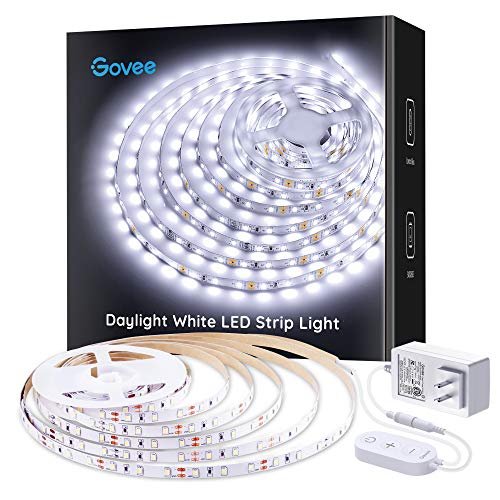 Govee Cool White LED Strip Lights 16.4ft
- Bright LEDs: With 300 LEDs and 6500K color…
- Dimmable Lighting: 6 levels of brightness allows you…
- Set up in Minutes: Simply stick the LED…
As an Amazon Associate we earn from qualifying purchases at no extra cost to you.
Quick Verdict
Choose warm white (2700K–3000K) if your priority is creating a cozy, spa-like sanctuary that renders skin tones softly and eases eye strain during evening routines. It is ideal for traditional, rustic, or earth-toned bathrooms.
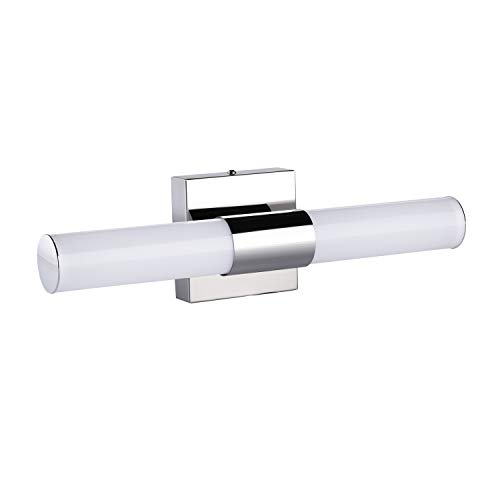
Choose cool white (4000K–6000K) if you require high-contrast, precise task lighting for grooming, makeup application, or sharp morning visibility. It pairs best with modern, minimalist, or white-tiled spaces. Integrated linear fixtures like the TRLIFE LED Vanity Light, Dimmable 8W 6000K Cool White Bathroom Vanity Light Fixture Over Mirror (15.7in) ($26.99) offer a sleek way to introduce cool white task light directly above your mirror.
Side by Side
| Feature | Warm White LED Vanity Lights | Cool White LED Vanity Lights |
|---|---|---|
| Kelvin Range | 2700K – 3000K | 4000K – 6500K |
| Visual Comfort | High; soft on sensitive or tired eyes | Moderate; sharp and energizing, can cause glare |
| Task Precision | Moderate; softens fine details and contours | High; highlights precise lines, textures, and colors |
| Impact on Decor | Enhances warm woods, gold/brass hardware, beige tile | Enhances white porcelain, chrome hardware, gray marble |
| Energy Efficiency | 8W–10W per bulb (60W equivalent) | 8W–10W per bulb (60W equivalent) |
| Average Fixture Price | $15 – $60 | $18 – $65 |
| Maintenance Needed | Low; long-life LED technology (15,000+ hours) | Low; long-life LED technology (15,000+ hours) |
| Space Suitability | Master bathrooms, powder rooms, cozy guest baths | Modern master baths, windowless rooms, makeup stations |
| Resale Appeal | Broad traditional appeal; universally inviting | High contemporary appeal; highly functional |
| Best For | Relaxation, unwinding, soft ambient lighting | Precision grooming, shaving, detailed cosmetics |
Where Warm White Wins
Warm white vanity lights excel at creating an inviting, low-stress environment. At 2700K to 3000K, the light spectrum contains more red and orange wavelengths. This softer illumination flatters human skin tones by minimizing the appearance of blemishes, fine lines, and dark circles under the eyes. If your morning routine is relaxed, or if you frequently take late-night baths to unwind, warm white prevents the harsh visual shock often caused by high-Kelvin lighting.
From an interior design perspective, warm light complements traditional, transitional, and mid-century modern aesthetic choices. It brings out the rich undertones in natural wood vanity cabinets, brushed brass or bronze faucets, and warm-toned travertine or terracotta tiles. For households replacing bulbs across multiple fixtures, stock packs such as the TJOY 24 Pack A19 LED Light Bulbs Soft Warm White 2700K, 60 Watt Equivalent ($20.99) offer an affordable way to keep warm illumination consistent across adjacent hallways and powder rooms.
Where Cool White Led Vanity Lights Wins
When analyzing warm white vs cool white led vanity lights from a functional task standpoint, cool white emerges as the clear winner for accuracy. Operating between 4000K and 6500K, cool white closely simulates bright midday sun or crisp daylight. This neutral-to-bluish spectrum renders contrast exceptionally well, making fine hairs visible during shaving and ensuring cosmetic colors—such as foundation, concealer, and eye shadow—are applied evenly without color distortion.
Cool white vanity lighting also breathes life into compact or windowless bathrooms. Small powder rooms without natural light can feel dingy under muted tones; a cool white light source bounces off glass, chrome, and white subway tile to create an expansive, ultra-clean feel. Beyond overhead or sconce fixtures, accent lighting options like the Govee Cool White LED Strip Lights 16.4ft with Control Box, 6500K, Dimmable ($16.99) allow you to add perimeter lighting behind floating mirrors or underneath floating vanities, providing sharp directional clarity where standard fixtures fall short.
Cost Over 5 Years
When calculating ownership costs, color temperature itself does not alter energy consumption; an 8-watt warm white LED consumes the exact same amount of electricity as an 8-watt cool white LED. However, structural choices—such as opting for replacement bulbs versus integrated LED fixtures—do impact your long-term expense profile.
- Initial Hardware Purchase: Standard light fixtures using replaceable E26 LED bulbs cost roughly $20 to $40 for the fixture, plus $1.50 to $3.00 per bulb. Integrated LED bar fixtures average $25 to $60 up front.
- Electricity Consumption: Assuming a typical 3-bulb vanity fixture drawing 24 watts total, used for 1.5 hours per day at an average utility rate of $0.16 per kWh:
- Daily usage: 0.036 kWh ($0.0058)
- Annual energy cost: ~$2.10
- 5-Year energy cost: ~$10.50
- Replacement & Maintenance: Quality LED bulbs last between 15,000 and 25,000 hours. Over 5 years (under 3,000 operating hours), zero bulb replacements are generally needed unless a driver fails premature. Replacement multi-packs run between $10 and $21.
- Total 5-Year Cost per Fixture: Expect to spend between **$35 and $80 total** (including fixture purchase, bulbs, and electricity) over a 5-year period for either color profile.
Which One for Your Home
Small Apartment
In smaller apartments, a single bathroom light source often serves as both general room lighting and dedicated task lighting. If your apartment bathroom lacks windows, a cool white bulb (4000K–5000K) or dimmable integrated bar helps illuminate tight corners and keeps the space looking bright. However, if the room is directly connected to a main studio living space, a 3000K warm white setup prevents harsh light spills into your sleeping area late at night.
Family with Kids/Pets
For family bathrooms that see high traffic throughout the day, warm white (2700K–3000K) is generally preferred. Kids washing hands before bed benefit from lower Kelvin lighting, which supports natural melatonin production before sleep. Additionally, standard fixture housings paired with durable, shatter-resistant A19 LED bulbs hold up well against splashes, humidity, and accidental bumps from toys or bath gear.
Rental Property
Landlords and renters benefit most from standard E26 socket fixtures. Installing neutral-to-warm 2700K bulbs provides broad tenant appeal, creating a clean yet comfortable first impression during showings. Screw-in bulbs allow tenants to easily swap out lighting to their personal preference without requiring rewiring or fixture replacement.
Long-Term Home
In a long-term primary residence, the ideal solution is layered lighting. Combine a primary cool white (4000K–6000K) task light fixture above or flanking the mirror for morning grooming with warm white (2700K) dimmable recessed lights or under-cabinet accent strips for evening baths. If you prefer a single fixture setup, install a color-tunable or dimmable vanity light that allows you to shift from cool white in the morning to warm white at night.
FAQ
Can I mix warm white and cool white in the same bathroom?
It is generally best to avoid mixing different color temperatures within the same visual line of sight, as the contrast between yellow and blue light can look uncoordinated. However, you can mix them if they operate on separate switches for distinct purposes—such as using cool white fixtures exclusively for vanity task lighting and warm white lights for overhead or ambient tub lighting.
What Kelvin temperature is best for applying makeup at a vanity?
For high accuracy, 4000K to 5000K with a high Color Rendering Index (CRI of 90 or above) is recommended for makeup application. This range closely mimics daylight, preventing makeup from appearing too dark outdoors or miscolored under neutral indoor lighting.
Are cool white LED vanity lights too harsh for night use?
Cool white LEDs above 5000K emit significant blue light spectrum, which can feel harsh to unadjusted eyes late at night and interfere with your circadian rhythm. Installing a dimmer switch or using secondary nightlights helps mitigate this issue.
Do cool white LEDs consume more electricity than warm white LEDs?
No. Electricity consumption is determined by the wattage of the light fixture, not the color temperature. An 8-watt warm white LED bulb uses the exact same amount of energy as an 8-watt cool white LED bulb.