Key takeaways
- Species and rot resistance: Western red cedar and redwood carry natural oils that fight decay without chemical treatment, making them the safest bet for damp, shaded corners. Acacia and eucalyptus are denser and handle scuffing better; pine and poplar are perfectly serviceable but expect to reseal annually.
- How the finish handles light: Unstained or natural-finish wood has high reflectance and will visibly warm under 2200K–2700K bulbs, pushing amber into the whole seating area. Dark walnut and espresso stains swallow that glow, so plan on a lantern or path light per chair to keep faces lit rather than silhouetted.
- Joinery over thickness: Look for mortise-and-tenon or through-bolted joints with stainless or coated hardware. Wood swells and shrinks across seasons, and a chair held together with bare steel screws will streak, weep rust, and loosen by its second summer.
- Slat spacing and back curvature: Roughly half an inch between slats sheds water and dries fast. A contoured back with a slight recline is what separates a chair you linger in from one you politely abandon after ten minutes.
- Folding versus fixed: Folding frames earn their keep on small decks and in garages over winter, at some cost in rigidity. Fixed frames feel more planted and photograph better as a permanent anchor in a lit outdoor room.
What's inside
Wood choice is the decision most Adirondack buyers make last and regret first. From a lighting-and-ambience standpoint, the species you sit on determines how your yard reads after sundown: pale cedar bounces warm string-light glow back into the seating circle, while a darker stained hardwood absorbs it and quietly recedes into the hedge line. Add the practical layer — western red cedar resists rot but dents, acacia and eucalyptus take a beating but need oiling, poplar and pine are budget-friendly but thirsty for sealant — and the aisle starts to feel like a materials-science exam rather than a furniture purchase.
This guide sorts it out from both angles. Below you will find how the major woods behave under weather and under light, what to look for in joinery and finish, and reviews of the folding and fixed-frame chairs worth your money in 2026, including one faux-wood option for people who want the silhouette without the seasonal maintenance ritual.
As an Amazon Associate we earn from qualifying purchases.




How to Choose a Wood For Adirondack Chair (2026)
- Species and rot resistance: Western red cedar and redwood carry natural oils that fight decay without chemical treatment, making them the safest bet for damp, shaded corners. Acacia and eucalyptus are denser and handle scuffing better; pine and poplar are perfectly serviceable but expect to reseal annually.
- How the finish handles light: Unstained or natural-finish wood has high reflectance and will visibly warm under 2200K–2700K bulbs, pushing amber into the whole seating area. Dark walnut and espresso stains swallow that glow, so plan on a lantern or path light per chair to keep faces lit rather than silhouetted.
- Joinery over thickness: Look for mortise-and-tenon or through-bolted joints with stainless or coated hardware. Wood swells and shrinks across seasons, and a chair held together with bare steel screws will streak, weep rust, and loosen by its second summer.
- Slat spacing and back curvature: Roughly half an inch between slats sheds water and dries fast. A contoured back with a slight recline is what separates a chair you linger in from one you politely abandon after ten minutes.
- Folding versus fixed: Folding frames earn their keep on small decks and in garages over winter, at some cost in rigidity. Fixed frames feel more planted and photograph better as a permanent anchor in a lit outdoor room.
The Best Wood For Adirondack Chair (2026)s Reviewed
Casafield Folding Cedar Adirondack Chair
Cedar is the reference species for outdoor seating, and this one delivers the payoff on both fronts: it shrugs off moisture without treatment and its pale grain acts like a soft reflector beside a fire pit, lifting ambient light instead of eating it. Partial pre-assembly keeps setup to a short session with a screwdriver.
Shine Company Westport Adirondack Chair
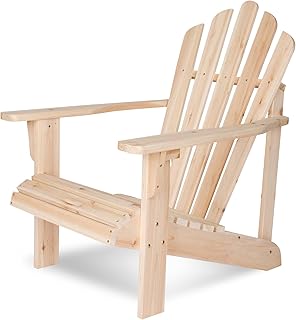
The Westport is the classic profile executed properly, with the back and seat arriving pre-assembled so the fussy alignment work is already done. Its fixed frame reads as architecture rather than furniture, which makes it an excellent visual anchor for uplighting or a nearby lantern.
Christopher Knight Home Hanlee Folding Adirondack
The natural-stained finish sits in a useful middle register — warm enough to glow under low-Kelvin bulbs, dark enough to hide pollen and dust between cleanings. Sold as a twin set, it is the practical pick when you want a matched pair flanking a lit walkway.
VINGLI Folding Adirondack Chair
A 350-pound capacity and weather-resistant natural finish make this the most reassuring folder here for mixed indoor-outdoor use. The wider slats catch more light across their faces, giving the chair a brighter presence in the frame than narrower-slatted competitors.
Outdoor Folding Adirondack Chair Set of 2, Light Brown
Solid wood construction with a pre-assembled backrest gets a pair of ergonomic chairs onto a porch in one afternoon. The light brown tone is the diplomat of the group, holding its own against both cool moonlight and warm filament bulbs without going orange.
Frequently Asked Questions
Is cedar really better than pine?
For longevity outdoors, yes. Cedar’s natural oils resist rot and insects without treatment, while pine depends entirely on the integrity of its sealant. Pine remains a fair choice if you enjoy annual maintenance or keep chairs under cover.
How often should I reseal or oil a wood Adirondack chair?
Plan on a light coat every twelve to eighteen months for cedar left natural, and annually for softwoods in full sun or heavy rainfall. Watch the end grain on the legs — that is where water enters first.
What about the Lifetime faux-wood option?
The Lifetime Faux-Wood Adirondack in UV-protected polystyrene skips sealing entirely and holds a 300-pound capacity. Its matte surface diffuses light more evenly than real wood, though it lacks the depth and grain shadow that make timber interesting at low light levels.
Should I bring wooden chairs inside for winter?
Storing them dry meaningfully extends their life, which is the strongest practical argument for a folding frame. If storage is not an option, elevate the legs off wet ground and use a breathable cover rather than sealed plastic.
Final Thoughts
For most yards, the Casafield folding cedar chair is the best balance of rot resistance, light-friendly tone, and easy off-season storage. If you want a permanent fixture that holds its shape and its shadow, the Shine Company Westport is the stronger buy, while the Lifetime faux-wood model is the honest answer for anyone who would rather spend evenings in the chair than maintaining it.