Key takeaways
- Measure the open depth, not the closed depth: Manufacturers list wall clearance, but the seat travels forward. Tape the fully extended footprint on the floor and check it against your lamp positions, coffee table, and any floor uplight before you commit.
- Match upholstery to your color temperature: Chenille and woven fabrics diffuse light and hold their tone under warm 2700K bulbs. Velvet shifts noticeably with viewing angle, going darker where the pile lays away from the source. Leather reflects, so it will pick up specular highlights from any exposed filament nearby.
- Prioritize adjustable headrests for screen work: A fixed headrest sets your eyeline once. An independently powered headrest lets you drop your sightline below a bright window or a ceiling fixture, which matters more for comfort than most people expect.
- Treat USB ports and outlets as part of the lighting plan: Built-in power lets you run a low-output reading light, a bias light behind a TV, or a rechargeable table lamp without a cord crossing the walkway. Check output ratings if you plan to power anything beyond a phone.
- Decide between manual and power early: Power units need a nearby receptacle and won’t move easily once cabled. Manual mechanisms give you freedom to reposition the sofa seasonally as daylight angles change.
What's inside
Push a recliner against the wall and you learn something a floor plan never tells you: the sofa’s real footprint is the one it claims when it’s open. Traditional recliners need 12 to 18 inches of clearance behind them, which means the piece floats out into the room and drags every lighting decision with it. Your sconces end up behind the headrest. The table lamp you sized for a seated reader now sits eight inches too far forward, throwing a hot spot on the wall instead of a soft pool on the page. The whole layered scheme collapses into a single overhead source doing all the work badly.
Wall hugger recliners solve this by moving the seat forward on its own frame rather than tilting the back into the wall. Three or four inches of clearance is typical. That small margin is what lets a room keep its perimeter lighting intact — cove washes, picture lights, plug-in sconces at 40 inches on center — while still reclining fully. This guide looks at the strongest options for 2026 across RV, living room, and home theater use, with attention to how each one behaves under real light: upholstery reflectance, headrest geometry, integrated power, and glare control near a screen.
As an Amazon Associate we earn from qualifying purchases.


🛒 Best Price Today on Amazon
Prime members get fast, free shipping on everything above, plus member-only deals. New members get a 30-day free trial — cancel anytime.
How to Choose a/an Wall Hugger Reclining Sofa (2026)
- Measure the open depth, not the closed depth: Manufacturers list wall clearance, but the seat travels forward. Tape the fully extended footprint on the floor and check it against your lamp positions, coffee table, and any floor uplight before you commit.
- Match upholstery to your color temperature: Chenille and woven fabrics diffuse light and hold their tone under warm 2700K bulbs. Velvet shifts noticeably with viewing angle, going darker where the pile lays away from the source. Leather reflects, so it will pick up specular highlights from any exposed filament nearby.
- Prioritize adjustable headrests for screen work: A fixed headrest sets your eyeline once. An independently powered headrest lets you drop your sightline below a bright window or a ceiling fixture, which matters more for comfort than most people expect.
- Treat USB ports and outlets as part of the lighting plan: Built-in power lets you run a low-output reading light, a bias light behind a TV, or a rechargeable table lamp without a cord crossing the walkway. Check output ratings if you plan to power anything beyond a phone.
- Decide between manual and power early: Power units need a nearby receptacle and won’t move easily once cabled. Manual mechanisms give you freedom to reposition the sofa seasonally as daylight angles change.
The Best Wall Hugger Reclining Sofa (2026)s Reviewed
RV Wall Hugger Reclining Loveseat with USB and Cup Holders
The 150-degree recline range and velvet upholstery make this a strong pick for narrow coaches where every inch behind the seat is cabinetry. Expect the velvet to read a shade deeper under directional light, so pair it with a diffused source rather than a bare bulb.
Ashley Draycoll Wall Hugger Reclining Couch, Slate
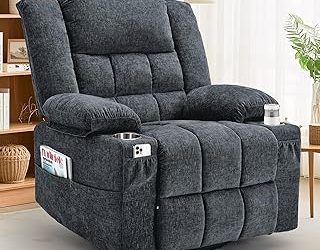
Textured chenille in slate gray is about as forgiving as upholstery gets — it scatters light evenly and hides the shadow lines that catch on smoother fabrics. The attached bustle back keeps the silhouette low enough that wall art and picture lights stay visible above it.
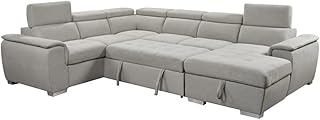
KEIKI 113″ L-Shaped Leather Reclining Sofa with Right Chaise
Genuine leather plus independent backrest and footrest adjustment makes this the most configurable option here, and the L-shape works well when you need to define a seating zone without blocking a window. Be aware that leather will mirror any unshielded fixture in your peripheral vision.
RecPro Charles 80″ RV Wall Hugger Reclining Sofa, Oatmeal
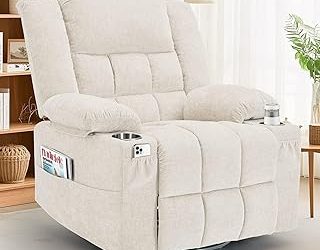
The oatmeal cloth is genuinely useful in small spaces because it acts as a secondary reflector, bouncing light back into a room that usually has limited window area. Build quality is aimed squarely at RV duty cycles rather than occasional use.
Zero Wall Hugger Power Reclining Sofa with Drop-Down Table
Adjustable headrests and a drop-down table with outlets make this the most theater-ready piece on the list — you can run a bias light and keep drinks off the floor. Plan your receptacle location before delivery, since the power cable limits repositioning.
Frequently Asked Questions
How much clearance does a wall hugger recliner actually need?
Most require three to six inches. Manual models sit at the lower end; power units with independent headrests often need slightly more to accommodate the motor housing.
Will a wall hugger recliner block my wall sconces?
Rarely, if the sconces are mounted at 60 inches or higher. Below that, measure your seat back height first — bustle-back designs run taller than flat-back profiles.
Are RV models suitable for home use?
Yes, and they’re often the better choice in small apartments or media rooms because they’re engineered for tight clearances and lighter frames.
Do integrated USB ports draw power when the sofa isn’t in use?
Standby draw is minimal, typically under a watt. If you’re powering ambient lighting from those ports, factor the load into your circuit rather than the sofa.
Final Thoughts
For most living rooms, the Ashley Draycoll strikes the best balance between light-friendly chenille and a restrained profile that keeps your wall treatment visible. Home theater builds should look hard at the Zero power reclining sofa for its headrest adjustment and drop-down outlets, while the RecPro Charles remains the sensible choice for RV interiors where reflected light does real work.