Key takeaways
- Sunrise duration: A 30-minute fade is the practical minimum for a gradual routine. A 20-minute cycle feels quicker, while 45–90 minutes can suit people who are difficult to wake or who want a less abrupt transition.
- Maximum brightness: Look for approximately 200–300 lux at the stated measuring position. The light will be substantially dimmer across a large bedroom or several feet away.
- Color range: Warm amber or red-orange light is more comfortable before waking. Cooler white light can make the final part of the sunrise feel more alerting, but it may be unpleasant for a partner.
- Sound alarms: Nature sounds, radio, white noise, and a conventional buzzer serve different needs. A sound alarm is important if curtains, an eye mask, or a dark room reduce the visual effect.
- Controls: Physical buttons are dependable at 6 a.m. App control is more flexible for schedules, weekday settings, and sound libraries, but it can depend on Wi-Fi or a phone.
- Power backup: Many lamps retain clock settings during a brief outage but cannot produce the full sunrise without mains power. Check this distinction before relying on one as your only alarm.
The best wake up lights for most bedrooms are the Lumie Bodyclock Shine 300 for a reliable sunrise and strong sound options, the Philips SmartSleep Wake-Up Light HF3520/60 for the brightest traditional lamp, and the Hatch Restore 3 for app-based routines and sleep sounds.
What to compare before buying a sunrise alarm
A wake up light is only useful if it becomes bright enough to compete with your bedroom’s existing darkness, starts early enough for your body to respond gradually, and wakes you without forcing you to reach across the bed. Compare the following specifications rather than choosing by appearance alone.

Odokee Sunrise Alarm Clock White Noise Machine: Natural Wake Up Light
Included for 'Best Wake Up Lights for Natural Morning Routines' as a relevant option in this category; details come from the product listing.
View on Amazon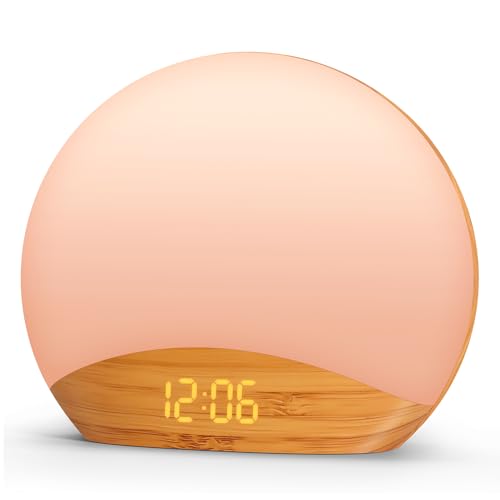
REACHER Wood Grain Sunrise Alarm Clock and Sound Machine Nightlight
Included for 'Best Wake Up Lights for Natural Morning Routines' as a relevant option in this category; details come from the product listing.
View on Amazon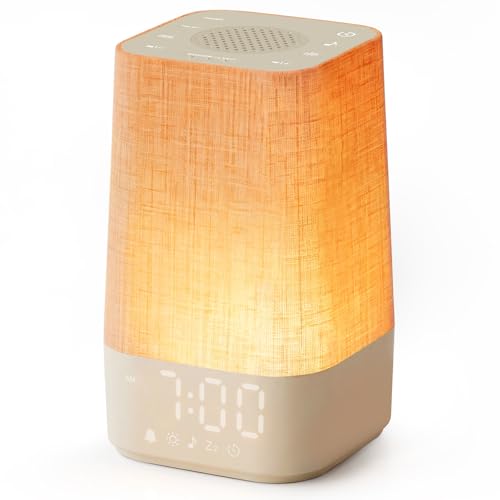
Sunrise Alarm Clock with Sound Machine, Gentle Wake Up Light for Bedroom
Included for 'Best Wake Up Lights for Natural Morning Routines' because the listing specifies Gentle Wake Up Light for Bedroom, details this guide uses to compare options.
View on Amazon
Philips SmartSleep Wake-up Light, Colored Sunrise and Sunset Simulation, 5 Natural Sounds, FM Radio & Reading Lamp, Tap Snooze, HF3520/60
Included for 'Best Wake Up Lights for Natural Morning Routines' because the listing specifies Colored Sunrise and Sunset Simulation and 5 Natural Sounds, details this guide uses to compare options.
View on Amazon- Sunrise duration: A 30-minute fade is the practical minimum for a gradual routine. A 20-minute cycle feels quicker, while 45–90 minutes can suit people who are difficult to wake or who want a less abrupt transition.
- Maximum brightness: Look for approximately 200–300 lux at the stated measuring position. The light will be substantially dimmer across a large bedroom or several feet away.
- Color range: Warm amber or red-orange light is more comfortable before waking. Cooler white light can make the final part of the sunrise feel more alerting, but it may be unpleasant for a partner.
- Sound alarms: Nature sounds, radio, white noise, and a conventional buzzer serve different needs. A sound alarm is important if curtains, an eye mask, or a dark room reduce the visual effect.
- Controls: Physical buttons are dependable at 6 a.m. App control is more flexible for schedules, weekday settings, and sound libraries, but it can depend on Wi-Fi or a phone.
- Power backup: Many lamps retain clock settings during a brief outage but cannot produce the full sunrise without mains power. Check this distinction before relying on one as your only alarm.
Best wake up lights by bedroom and routine
| Product or type | Sunrise and brightness | Color and sound | Controls and backup | Best fit |
|---|---|---|---|---|
| Philips SmartSleep Wake-Up Light HF3520/60 | 30-minute sunrise; up to about 300 lux; multiple brightness levels | Colored sunrise plus warm-to-white light; natural sounds and FM radio | Physical controls; clock memory backup, but sunrise operation requires mains power | Dark bedrooms and people who prefer a bright, self-contained lamp |
| Lumie Bodyclock Shine 300 | Adjustable sunrise and sunset, commonly set from 20–45 minutes; up to about 250 lux | Warm colored sunrise, white reading light, multiple alarm sounds | On-device controls; retains settings during short power interruptions, with limited or no full-light backup | Best all-round traditional sunrise alarm without requiring an app |
| Hatch Restore 3 | App-configured sunrise, typically up to 30 minutes; brightness is designed for bedside use rather than room illumination | Adjustable warm light, soundscapes, white noise, and guided audio | Phone and Wi-Fi setup; no dependable battery-powered sunrise during an outage | People who want a complete sleep-and-wake routine in one app |
| Basic 20–30-minute sunrise alarm | Often 100–200 lux; brightness and measurement methods vary widely | Usually warm white with a few nature sounds | Button controls; backup may preserve the clock only | Guest rooms, occasional use, and lower budgets |
Specifications can vary by regional model and firmware, so confirm the exact version before purchase. The lux figures above are useful for comparing categories, not a guarantee of the light reaching your eyes from every bedside position.
Best overall: Lumie Bodyclock Shine 300
The Lumie Bodyclock Shine 300 is the strongest general recommendation when you want a purpose-built alarm rather than a smart speaker with a light attached. Its adjustable sunrise and sunset sequences give you more control than a fixed 20-minute lamp, while the physical buttons remain usable without opening a phone. The warm-to-brighter transition is suitable for a bedroom shared with a partner, and its sound choices provide a second wake-up channel.
Choose it for a typical 10-by-12-foot bedroom when the lamp will sit on a nightstand roughly 2–3 feet from your pillow. It is less convincing if you expect one small bedside lamp to illuminate the entire room like a ceiling fixture. In a room with blackout curtains, position the lamp on the same side as your face and avoid placing it behind a tall headboard.
Best for a very dark bedroom: Philips SmartSleep HF3520/60
The Philips SmartSleep Wake-Up Light HF3520/60 is the better choice when maximum brightness matters more than smart-home integration. Its colored sunrise, warm reading light, natural sounds, and FM radio make it a self-contained bedside device. The approximately 300-lux maximum is among the more useful levels in this category, although distance and angle still matter.
It suits basement bedrooms, north-facing rooms, and people who keep blackout shades closed. Set the sunrise for 30 minutes initially; if you still wake to the sound alarm, move it closer before increasing the sound volume. The lamp’s broad face needs a reasonably clear nightstand, so leave at least 4 inches of free space in front of it and avoid covering its ventilation or controls with books.
Best for app routines: Hatch Restore 3
The Hatch Restore 3 makes sense if your goal is a repeatable evening-to-morning routine rather than a single bright alarm. The app can coordinate dimming, bedtime audio, white noise, a sunrise, and a final sound alarm. That is particularly convenient for changing weekday and weekend schedules or for households already using sleep audio.
The trade-off is dependence on electronics. Setup generally requires a phone and wireless network, and a power interruption can disable the light and sound even if the clock settings are retained. Some content and advanced routines may also depend on the product’s current subscription structure. Choose this model only if you are comfortable keeping a phone or tablet available for configuration.
How bedroom light levels change the choice
Blackout or windowless bedroom
Choose a lamp rated around 250–300 lux, use the full 30-minute sunrise, and keep the device within approximately 2–3 feet of the pillow. A built-in sound alarm is valuable because the visual cue has to do all the work. If you wear an eye mask, prioritize sound quality over color effects.
Average bedroom with curtains
Most midrange sunrise alarms will work if they face the bed. Start with a 30-minute cycle and a moderate final brightness. If morning daylight enters before the alarm, the difference between a 150-lux and 300-lux lamp may matter less than having pleasant sounds and easy controls.
Bright bedroom or thin curtains
Sunrise lamps are least noticeable when daylight already fills the room. Use one as a pre-alarm and retain a conventional sound alarm as backup. A 45-minute fade, warmer evening sunset, or app-based routine may add more value than chasing the highest advertised brightness.
Decision matrix for common situations
| Your situation | What to prioritize | Best direction |
|---|---|---|
| Small apartment or narrow nightstand | Compact footprint, front-facing controls, short cord path | A compact basic model or Lumie; measure the nightstand before ordering |
| Children, pets, or frequent spills | Stable base, simple buttons, no exposed glass, easy-to-clean surface | A sturdy non-smart lamp with a protected LED face |
| Renter who moves often | Lightweight construction, universal outlet compatibility, no wall mounting | Lumie or Philips; retain the packaging for future moves |
| Partner sleeps later | Warm low-level light, gradual fade, controllable sound volume | Hatch Restore 3 or a lamp with separate light and sound settings |
| Heavy sleeper | High brightness, multiple sounds, physical alarm backup | Philips HF3520/60 with the sound alarm enabled |
Placement, moving, and durability details
Measure the complete nightstand, not just its top surface. Reserve about 4–6 inches of unobstructed space in front of the lamp so its light is not blocked by a phone dock, tissue box, or tall water bottle. Keep the cable away from a pet’s reach and allow enough slack to move the nightstand for cleaning. A bedside table around 24–28 inches high usually places the lamp near mattress level, which is preferable to putting it on a low shelf or on the floor.
These products are generally light enough to move alone, but their broad lamp faces and power adapters can catch on packing materials. The parts most likely to show wear are the buttons, cable strain relief, and glossy plastic surface—not the LED itself. Do not place a lamp under a duvet or inside a closed cubby, and wipe the diffuser with a dry or barely damp cloth rather than spraying cleaner directly onto it.
How to set up a natural morning routine
- Place the lamp facing the pillow, about 2–3 feet away and slightly above mattress height.
- Set a 30-minute sunrise and a quiet natural sound for the final few minutes.
- Use the same wake time on most days so the light becomes a predictable cue.
- After several mornings, adjust brightness, duration, and sound separately rather than changing everything at once.
- Keep a separate phone or conventional alarm for the first week, especially if the lamp has no full battery backup.
In general, expect to spend about $50–$100 for a basic sunrise alarm, $100–$200 for a brighter branded model such as Philips or Lumie, and roughly $150–$250 for a smart sleep system, depending on subscriptions and regional pricing. For the best wake up lights, brightness and dependable controls matter more than extra sound effects: choose Philips for a dark room, Lumie for balanced everyday use, and Hatch for a connected routine.