Key takeaways
- Caster Quality and Locking Mechanism: Look for 360° swivel casters rated for at least 150% of the chest’s total loaded weight. Single-wheel locking per caster is the minimum; dual-locking designs (wheel and swivel lock together) keep the unit planted during heavy torque work like breaker-bar use.
- Drawer Glide Rating and Depth: Ball-bearing slides rated to 100 lbs per drawer are the baseline for professional use. Deeper drawers suit power tools, while shallower ones keep wrenches and sockets from burying themselves. Match the layout to how you actually organize.
- Structural Steel Gauge and Load Capacity: Thicker gauge steel (18-gauge or lower number) translates to fewer dents over time. Pay attention to the overall load rating versus the chest’s own weight — a 60-lb empty chest rated for 800 lbs of storage is more useful than a 120-lb unit rated for 900 lbs.
- Portability Versus Stability: A telescoping handle and modular stacking system (like DeWalt TSTAK or Craftsman VersaStack) add genuine flexibility if you move tools between jobsites. Fixed-height chests with wider footprints sacrifice portability but gain benchtop stability.
- Surface Finish and Drawer Protection: Powder-coated exteriors resist shop humidity far better than painted finishes. Inside, pre-cut anti-scratch liners and waterproof tops protect both the chest and your tools from corrosion and marring during daily use.
What's inside
Most people who shop for a rolling tool chest end up overwhelmed by sheer volume — dozens of near-identical listings, inconsistent weight ratings, and no real way to judge drawer glide quality from a product photo. The result is either buyer’s remorse or a second purchase six months later.
This guide cuts through that noise. We evaluated six serious contenders on build integrity, mobility, storage logic, and real-world workshop usability so you can pick the right rolling tool chest for your space in 2026 without the guesswork.
As an Amazon Associate we earn from qualifying purchases.


How to Choose a Tool Chest On Wheels (2026)
- Caster Quality and Locking Mechanism: Look for 360° swivel casters rated for at least 150% of the chest’s total loaded weight. Single-wheel locking per caster is the minimum; dual-locking designs (wheel and swivel lock together) keep the unit planted during heavy torque work like breaker-bar use.
- Drawer Glide Rating and Depth: Ball-bearing slides rated to 100 lbs per drawer are the baseline for professional use. Deeper drawers suit power tools, while shallower ones keep wrenches and sockets from burying themselves. Match the layout to how you actually organize.
- Structural Steel Gauge and Load Capacity: Thicker gauge steel (18-gauge or lower number) translates to fewer dents over time. Pay attention to the overall load rating versus the chest’s own weight — a 60-lb empty chest rated for 800 lbs of storage is more useful than a 120-lb unit rated for 900 lbs.
- Portability Versus Stability: A telescoping handle and modular stacking system (like DeWalt TSTAK or Craftsman VersaStack) add genuine flexibility if you move tools between jobsites. Fixed-height chests with wider footprints sacrifice portability but gain benchtop stability.
- Surface Finish and Drawer Protection: Powder-coated exteriors resist shop humidity far better than painted finishes. Inside, pre-cut anti-scratch liners and waterproof tops protect both the chest and your tools from corrosion and marring during daily use.
The Best Tool Chest On Wheels (2026) Reviewed
DEWALT TSTAK Rolling Tool Box
DEWALT’s modular approach shines here — the telescoping handle and interlocking TSTAK system let you stack and unstack configurations as your tool load changes. It’s the strongest pick for anyone who hauls tools between locations regularly rather than parking a chest in one spot permanently.
CRAFTSMAN VERSASTACK 30-Gallon Rolling Chest
With 30 gallons of interior volume and quick-access lid design, this VERSASTACK unit bridges the gap between a portable toolbox and a full rolling cabinet. The deep-storage tub underneath handles bulky items like circular saws and drills without forcing you to dig.
7-Drawer Rolling Tool Chest with Locking Casters
This mid-range option punches above its price with thoughtful details: a special link buckle system for vertical stacking, 360° swivel casters with a full locking system, and a waterproof top panel. The connecting rod design for stacking compartments gives it surprising expandability for a budget-conscious buyer.
Garvee 60-Inch Rolling Tool Cabinet
At 60 inches wide with a 1,750-lb load capacity, the Garvee is squarely in professional workshop territory. Ten drawers, a built-in pegboard back panel, and an integrated charging station make it less a storage unit and more a self-contained workbench. It commands floor space but rewards you with serious organization.
8-Drawers Rolling Tool Chest (Assembled)
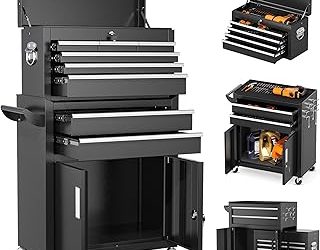
The fact that this unit ships pre-assembled eliminates the single biggest pain point with affordable rolling chests. Detachable top box, included hooks, tray dividers, and pre-installed liners mean you’re organizing from day one rather than spending an evening on setup. A smart choice for repair rooms and smaller garages.
Frequently Asked Questions
What is the ideal caster size for a loaded rolling tool chest?
For chests carrying over 300 lbs, casters at least 4 inches in diameter with polyurethane treads provide the best balance of floor protection and smooth rolling. Larger 5-inch casters are preferable on rough garage floors where smaller wheels tend to catch on cracks and debris.
Should I prioritize a keyed lock or a combination lock?
A keyed lock offers simpler, faster access in a busy shop while still deterring casual tampering. Combination locks remove key management but can slow you down and are more prone to mechanical failure in dusty or greasy environments.
How much should an empty rolling tool chest weigh?
Weight varies widely: compact modular units like the DEWALT TSTAK run under 20 lbs, while full-size steel cabinets like the Garvee 60-inch can exceed 200 lbs empty. The right weight depends entirely on whether portability or stationary durability is your priority.
Do I need drawer liners for my tool chest?
Yes — liners protect both the drawer surfaces and your tools from scratches, vibration marks, and corrosion caused by metal-on-metal contact. Most quality chests include them now, but even budget liners you add yourself pay for themselves quickly in tool preservation.
Final Thoughts
For most buyers, the DEWALT TSTAK Rolling Tool Box offers the best blend of portability and modularity. If you need serious stationary capacity, the Garvee 60-Inch Cabinet is the clear heavyweight. And for those who want organized storage without paying a premium or spending an evening on assembly, the pre-assembled 8-Drawer Rolling Tool Chest delivers exceptional out-of-box value.