Key takeaways
- Drawer Count & Depth: A chest with more drawers lets you separate metric from imperial, sockets from screwdrivers, and specialty tools from everyday carry. Aim for at least eight drawers on a mid-size unit, and look for variable depths so nothing rattles loose during repositioning.
- Load Capacity & Steel Gauge: Heavy-duty mechanics often fill cabinets well past casual estimates. Units built from 16-gauge steel and rated above 1,000 lbs of total capacity provide the structural margin that keeps drawers sliding true under full load, even after years of use.
- Work Surface Quality: The top of your tool chest doubles as an impromptu bench. Solid oak or thick hardwood tops absorb impact without marring parts, while smooth laminate surfaces reflect overhead task lighting in a way that actually improves visibility during fine assembly work.
- Locking & Mobility: Ball-bearing casters make a loaded cabinet feel light, but cheap swivel joints betray the whole system. Look for locking mechanisms on both the casters and individual drawers — especially if the chest will live in a shared shop or open garage.
- Bonus Features That Earn Their Space: Pegboards, integrated power strips, and charging stations have shifted from gimmicks to genuine workflow upgrades. A well-placed outlet eliminates cord tangles across the bench, and a pegboard keeps frequently grabbed items at arm’s reach without consuming drawer real estate.
What's inside
Walk into any working garage or repair bay and the same frustration surfaces: tools sprawl across mismatched organizers, drawers jam under uneven loads, and the one wrench you need lives somewhere between “I just had it” and “check the floor.” Without a dedicated chest, even a well-equipped mechanic loses hours each week to rummaging, re-stacking, and re-finding. The real cost isn’t the clutter itself — it’s the broken momentum every time you stop working to hunt for something that should have a home.
This guide narrows the 2026 field to six rolling tool chests worth your money, then explains exactly what separates a cabinet that earns its footprint from one that just occupies it. From gauge steel and drawer locking to workspace surface finishes that interact cleanly with overhead lighting, every pick below was evaluated for the demands of a real mechanic’s daily routine.
As an Amazon Associate we earn from qualifying purchases.




How to Choose a Tool Chest For Mechanics (2026)
- Drawer Count & Depth: A chest with more drawers lets you separate metric from imperial, sockets from screwdrivers, and specialty tools from everyday carry. Aim for at least eight drawers on a mid-size unit, and look for variable depths so nothing rattles loose during repositioning.
- Load Capacity & Steel Gauge: Heavy-duty mechanics often fill cabinets well past casual estimates. Units built from 16-gauge steel and rated above 1,000 lbs of total capacity provide the structural margin that keeps drawers sliding true under full load, even after years of use.
- Work Surface Quality: The top of your tool chest doubles as an impromptu bench. Solid oak or thick hardwood tops absorb impact without marring parts, while smooth laminate surfaces reflect overhead task lighting in a way that actually improves visibility during fine assembly work.
- Locking & Mobility: Ball-bearing casters make a loaded cabinet feel light, but cheap swivel joints betray the whole system. Look for locking mechanisms on both the casters and individual drawers — especially if the chest will live in a shared shop or open garage.
- Bonus Features That Earn Their Space: Pegboards, integrated power strips, and charging stations have shifted from gimmicks to genuine workflow upgrades. A well-placed outlet eliminates cord tangles across the bench, and a pegboard keeps frequently grabbed items at arm’s reach without consuming drawer real estate.
The Best Tool Chest For Mechanics (2026) Reviewed
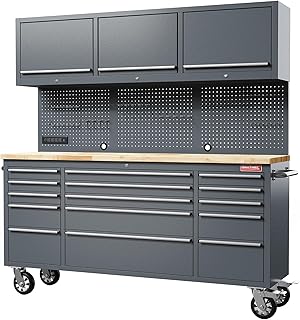
HAUTMEC 72 in Rolling Tool Chest
With 15 lockable drawers, three upper cabinets, and a solid oak work surface, the HT0428 is the closest thing on this list to a full mechanic’s workstation on wheels. Its 16-gauge steel frame stays rigid under heavy loads, and the included ETL power strip plus 51-hook pegboard means you can set it up and start working within minutes of delivery. This is the pick for anyone who wants one piece of furniture to anchor an entire bay.
Garvee 60 in Rolling Tool Chest
The Garvee splits the difference between portability and capacity: 10 drawers, a 1,750-lb load rating, and a built-in pegboard with charging station. At 60 inches it fits under standard garage ceilings without dominating the room, and the matte black finish absorbs rather than scatters overhead light — a small detail that reduces glare during long sessions under fluorescent or LED shop fixtures.
72 in Rolling Tool Chest with 15 Drawers
Standing 72 inches with a 1.2-inch solid wood top and an integrated power outlet, this chest delivers the kind of work surface thickness that resists warping even when you’re hammering out stubborn bushings. The 18-inch drawer depth accommodates bulkier pneumatic tools, and the pegboard back panel keeps sockets and wrenches visible and accessible without opening a single drawer.
8-Drawer Rolling Tool Chest (Assembled)
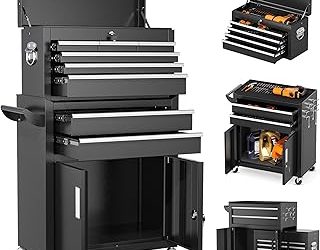
Ships fully assembled, which immediately eliminates the most common buyer complaint with rolling cabinets. The detachable top box works as a standalone portable unit for off-site jobs, while the base cart with hooks and tray dividers keeps daily-use tools organized at hip height. For mechanics who need a reliable starter chest without committing to a full-size unit, this is the smart entry point.
Garage Storage Cabinet with Pegboard
A two-pegboard setup with ten hooks gives this cabinet an edge for mechanics who think visually — you see what you need before you touch it. The included workbench liner protects both tools and drawer surfaces, and the heavy-duty casters roll smoothly across uneven concrete. It’s a compact workhorse that punches above its size in a crowded basement or small-bay workshop.
Frequently Asked Questions
What size tool chest do most home mechanics need?
A 48- to 60-inch cabinet with eight to ten drawers covers most home garages comfortably. If you’ve accumulated specialty tools over the years or share the space with another person, stepping up to a 72-inch unit prevents overcrowding without demanding a dedicated shop floor.
Are solid wood tops worth the extra cost?
Yes. Solid oak or hardwood tops resist dents, absorb vibration, and provide a flat reference surface that laminate simply can’t match long-term. From a workspace lighting perspective, wood also diffuses reflected light more evenly, reducing hot spots that strain your eyes during detailed work.
How much weight can a typical rolling tool chest hold?
Quality cabinets range from 800 to 1,800 lbs of total load capacity. Individual drawer ratings matter as much as the total — a chest rated for 1,750 lbs means nothing if each drawer only handles 50 lbs before the ball bearings start to grind.
Do I need a tool chest with a built-in power strip?
If you regularly use corded tools, chargers, or work lights at the bench, an integrated power strip eliminates extension cord clutter and keeps your workspace safer. It’s a convenience that becomes a near-necessity once you’ve used one for a few months.
Final Thoughts
For a do-it-all mechanic’s chest that covers every task from teardown to rebuild, the HAUTMEC 72 in stands alone in both build quality and features. The Garvee 60 in earns a strong recommendation for shops where floor space is limited but tool volume isn’t. And if you’re building out a garage for the first time, the 8-Drawer Rolling Tool Chest delivers reliable organization at a price that leaves room in the budget for the tools that actually go inside it.