Key takeaways
- Tone shift: Golden and tung-based formulas push the grain toward honey and read warmer under 2700K bulbs. Clear or “natural matte” oils keep the wood closer to its raw colour, which suits cooler daylight-balanced fixtures and pale stone paving.
- Sheen level: Matte finishes diffuse light evenly and hide dust. Satin and semi-gloss create specular highlights that can look striking on a dining table but distracting on a wide lounger surface facing a downlight.
- UV additives: Look for stated UV absorbers or inhibitors. Without them the surface tone flattens within a season and your furniture stops contributing any bounce to the space.
- Coverage per container: Measure your total square footage before buying. A six-piece dining set plus a bench will burn through a 16 oz bottle fast, and mixing lots mid-project risks a visible tonal seam.
- Prep included: Weathered grey teak needs cleaning and brightening before oil will take evenly. Kits that bundle those steps save you sourcing them separately and give a more uniform result.
What's inside
Anyone who has staged an outdoor space after sundown knows that teak is a light-handling material first and a seating material second. Fresh teak throws back a soft amber bounce that flatters everything near it. Six months of sun and rain later, that same bench has gone chalky grey and swallows light instead of returning it, and suddenly your carefully placed string lights and path fixtures look thin and cold. The furniture is not broken. Its surface has simply lost the oil content that let it glow.
This guide looks at teak oils through that lens: how each one affects the tone and reflectivity of the wood, how long the finish holds its warmth outdoors, and how easy it is to reapply without visible lap marks under raking evening light. Below you’ll find current picks, a short buying checklist, hands-on notes on the top five, and answers to the questions that come up most often once the can is open.
As an Amazon Associate we earn from qualifying purchases.


🛒 Best Price Today on Amazon
Prime members get fast, free shipping on everything above, plus member-only deals. New members get a 30-day free trial — cancel anytime.
How to Choose a Teak Oil For Patio Furniture (2026)
- Tone shift: Golden and tung-based formulas push the grain toward honey and read warmer under 2700K bulbs. Clear or “natural matte” oils keep the wood closer to its raw colour, which suits cooler daylight-balanced fixtures and pale stone paving.
- Sheen level: Matte finishes diffuse light evenly and hide dust. Satin and semi-gloss create specular highlights that can look striking on a dining table but distracting on a wide lounger surface facing a downlight.
- UV additives: Look for stated UV absorbers or inhibitors. Without them the surface tone flattens within a season and your furniture stops contributing any bounce to the space.
- Coverage per container: Measure your total square footage before buying. A six-piece dining set plus a bench will burn through a 16 oz bottle fast, and mixing lots mid-project risks a visible tonal seam.
- Prep included: Weathered grey teak needs cleaning and brightening before oil will take evenly. Kits that bundle those steps save you sourcing them separately and give a more uniform result.
The Best Teak Oil For Patio Furniture (2026)s Reviewed
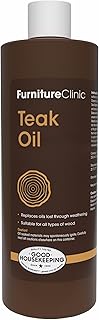
Furniture Clinic Teak Oil (17 oz)
This one lands in a genuinely matte, low-reflection finish that keeps teak looking like wood rather than plastic, which is exactly what you want on surfaces sitting under direct fixture light. Coverage from a 500 ml bottle is modest, so treat it as a two-to-four-chair solution or order accordingly.
Nordicare Teak Oil for Outdoor Furniture (84.5 oz)
The 84.5 oz jug is the practical answer for a full patio set, and buying one container means every piece cures to the same tone with no batch variation. It flows easily and self-levels well on acacia and oak too, which helps if your space mixes wood species.
Star Brite Premium Golden Teak Oil
Tung oil polymers plus UV absorbers give this the most persistent warm colour of the group, and that golden cast is a real asset if your evening scheme leans amber. It dries fast, so work in small sections and keep a wet edge to avoid streaking.
Furniture Clinic Teak Care Kit
Cleaner, brightener and oil in one box, which matters because oil applied over silvered, dirty teak absorbs unevenly and photographs blotchy under any directional light. This is the pick for a restoration job rather than routine maintenance.
Protect Aqua Teak Oil
A transparent, natural-finish oil that adds protection without shifting the wood’s colour much, useful when you’re trying to hold a light Scandinavian palette. Works equally well on indoor pieces and shower benches, so leftover product doesn’t go to waste.
Frequently Asked Questions
How often should I reapply teak oil outdoors?
Twice a year is a reasonable baseline for furniture in full sun, once a year for shaded or covered areas. Watch the surface rather than the calendar: when water stops beading and the wood looks dull in low light, it’s time.
Do I need to sand between coats?
Usually not. A light scuff with fine abrasive pads knocks back raised grain on the first coat, but for maintenance coats a clean, dry surface is enough.
Will teak oil stop my furniture going grey?
It slows the process considerably, particularly formulas with UV absorbers, but no oil freezes the colour permanently. Regular reapplication is what keeps the warm tone.
Can I use teak oil on other woods?
Yes. Acacia, eucalyptus and oak all take it well. Denser tropical hardwoods absorb less, so apply thinner coats and wipe back any excess.
Final Thoughts
For a large patio set finished in one consistent tone, the Nordicare 84.5 oz jug is the sensible buy. If you want maximum evening warmth and colour retention, Star Brite’s Golden Teak Oil delivers it, and for reviving furniture that has already gone grey, start with the Furniture Clinic Teak Care Kit and its cleaner-brightener-oil sequence.