Key takeaways
- Self-Aligning T-Square Geometry: Look for a fence head that auto-squares to the blade on every lock. Self-aligning mechanisms eliminate the micro-adjust ritual that eats into shop time and introduces inconsistency between cuts.
- Locking Stability Under Load: A fence should hold its position when you’re pushing 4/4 hardwood through at a steady feed rate. Testimonials that mention “no drift” after extended use are the ones worth trusting—cheap clamping bars flex under side pressure and punish you at the glue-up stage.
- T-Track Versatility: T-track rails on the fence face let you attach featherboards, stop blocks, and scoring jigs without clamping to the table edge. If you’re building furniture where surface quality matters, this expandability keeps workpieces pinned and your cut line clean.
- Compatibility and Retrofit Fit: Verify that bolt patterns match your specific saw model before purchasing. A premium fence on the wrong rail is just an expensive shelf ornament—measure your existing mounting holes and cross-reference manufacturer specs.
- Support Infrastructure and Accessories: Systems bundled with outfeed supports, featherboards, or extension fences often deliver better value than piecing components together separately. A fence that grows with your setup pays dividends as your projects and shop evolve.
What's inside
A wobbling fence doesn’t just waste lumber—it shatters the rhythm of a focused workshop. Whether you’re ripping walnut for a live-edge table or dimensioning plywood for built-ins, even a fraction of a degree of fence drift translates into gaps under raking light that no finish can hide. Most buyers hit the same wall: stock fences flex, wander, and lock inconsistently, leaving them sanding or recutting material that should have been right the first time.
This guide cuts through the noise. We evaluated six table saw fence systems on alignment repeatability, build quality, and compatibility across portable, contractor, and cabinet saw platforms—so you can invest once in the backbone your workshop deserves and get back to the craft that actually matters.
As an Amazon Associate we earn from qualifying purchases.


How to Choose a Table Saw Fence (2026)
- Self-Aligning T-Square Geometry: Look for a fence head that auto-squares to the blade on every lock. Self-aligning mechanisms eliminate the micro-adjust ritual that eats into shop time and introduces inconsistency between cuts.
- Locking Stability Under Load: A fence should hold its position when you’re pushing 4/4 hardwood through at a steady feed rate. Testimonials that mention “no drift” after extended use are the ones worth trusting—cheap clamping bars flex under side pressure and punish you at the glue-up stage.
- T-Track Versatility: T-track rails on the fence face let you attach featherboards, stop blocks, and scoring jigs without clamping to the table edge. If you’re building furniture where surface quality matters, this expandability keeps workpieces pinned and your cut line clean.
- Compatibility and Retrofit Fit: Verify that bolt patterns match your specific saw model before purchasing. A premium fence on the wrong rail is just an expensive shelf ornament—measure your existing mounting holes and cross-reference manufacturer specs.
- Support Infrastructure and Accessories: Systems bundled with outfeed supports, featherboards, or extension fences often deliver better value than piecing components together separately. A fence that grows with your setup pays dividends as your projects and shop evolve.
The Best Table Saw Fences (2026) Reviewed
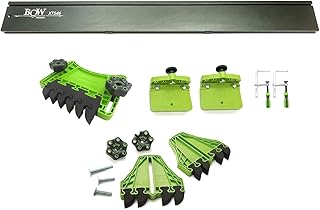
BOW Products XTENDER & Safety Kit
The most complete package in this roundup, BOW’s full kit pairs the 46-inch XT fence with dual XT Feed Supports, T-Track Clamps, and both FeatherPRO and FencePRO featherboards. In a well-lit shop where you’re constantly shifting between rip and crosscut setups, having every accessory at hand keeps the workspace fluid and your cuts predictable—this is the system that eliminates the second-guessing that leads to surface chatter under finish-coat scrutiny.
BOW Products 46″ XT XTENDER Fence System
Stripped to its core, the standalone XTENDER fence brings the same T-track versatility and feed support compatibility to portable table saws, router tables, contractor saws, and band saws. It’s an ideal upgrade for woodworkers who already own featherboards and want a single fence platform that migrates between machines without re-learning alignment on each one.
089040002702 Table Saw Rip Fence Assembly
Designed specifically for RTS10G and RTS10NS models, this OEM-style replacement restores factory-level alignment without the premium price of an aftermarket overhaul. When workshop ambience depends on equipment that just works without fuss, a direct-fit replacement like this keeps you cutting instead of troubleshooting compatibility issues.
36″ Professional Advanced Table Saw Fence
Engineered for professional cabinet and contractor saws, this self-aligning T-Square fence prioritizes safety and repeatable accuracy over accessory bells and whistles. The rigid aluminum extrusion resists deflection during heavy rips, and the T-Square head locks square with a single lever—a detail that matters when you’re running batch cuts for furniture legs or rails that must match under directed lighting.
Delta 30″ T3 Fence System
Delta’s T3 system is a proven workhorse for 30-inch rails, offering cam-action locking and micro-adjust capability that appeals to shop furniture builders who need clean rip edges for frame-and-panel construction. The T3’s low-profile design won’t cast unwanted shadows across your work surface, keeping your cut line visible and your feed rate steady.
Frequently Asked Questions
Can I use an aftermarket fence on my existing saw?
In most cases, yes—but you’ll need to verify rail width, mounting hole spacing, and fence length against your saw’s specifications. Many aftermarket systems like the BOW XTENDER are designed for universal compatibility, while others like the 089040002702 are model-specific. Always measure twice before ordering.
What is a self-aligning T-Square fence?
A self-aligning T-Square fence uses a spring-loaded or cam-actuated head that automatically squares the fence to the blade each time you lock it down. This eliminates the manual alignment step and ensures parallel accuracy even after repeated repositioning—critical for furniture-grade work.
Do featherboards really make a difference?
Absolutely. Featherboards maintain constant lateral pressure against the fence, preventing workpiece drift during ripping operations. This produces cleaner cuts with less tear-out, which directly improves the surface quality you’ll see under angled light after finishing.
How often should I check my fence alignment?
Before each session is a good habit. A quick test with a reliable square or a dial indicator against the blade confirms that your fence is tracking true. Even premium fences benefit from periodic verification, especially in shops with temperature and humidity swings.
Final Thoughts
For a complete, accessory-rich upgrade that transforms any saw into a precision cutting station, the BOW Products XTENDER & Safety Kit stands out as the top all-around pick. Woodworkers seeking a dedicated cabinet-saw fence should lean toward the 36″ Professional Advanced Table Saw Fence for its self-aligning rigidity, while the Delta T3 Fence System remains a reliable mid-range choice for 30-inch rail setups. A well-chosen fence does more than guide wood—it shapes the atmosphere of the entire shop, turning raw lumber into furniture that catches light the way it was meant to.