Key takeaways
- Motor Power & Speed: Look for at least 15 Amps and 4,000+ RPM. Anything less struggles with hardwoods and leaves burn marks that ruin a finish you spent hours sanding.
- Rip Capacity: The distance from the blade to the fence determines the widest board you can feed through. For sheet goods and large furniture panels, 30 inches or more is essential.
- Blade Size & Bevel Range: A 10-inch blade handles most furniture-scale work. A 0–45° bevel range covers compound miters without a separate miter saw.
- Portability & Stand Quality: Folding rolling stands matter if the saw lives in a shared garage or travels between job sites. Check whether the stand locks securely and rolls smoothly on rough floors.
- Safety Features & Dust Collection: A riving knife, blade guard, and push stick are non-negotiable. A dust port that actually mates with your shop vac keeps air quality pleasant during long sessions.
What's inside
Anyone who has shopped for a table saw knows the paralysis: every listing screams “most powerful” and “best value,” yet the specs blur together until you can’t tell a serious tool from a flimsy also-ran. If you build furniture, cabinetry, or even weekend weekend projects, the wrong saw wastes material, dulls blades, and kills the pleasure of working with wood that deserves better.
This guide cuts through the noise. We evaluated every current deal on portable and jobsite table saws against the criteria that actually matter to someone building things that need to look and feel right — clean rip cuts, reliable bevel angles, and a stand that doesn’t wobble when the overhead shop light catches your blade at just the wrong moment. Below you will find our curated picks, a straight-forward buying framework, and answers to the questions that keep coming up.
As an Amazon Associate we earn from qualifying purchases.



How to Choose a Table Saw Deal (2026)
- Motor Power & Speed: Look for at least 15 Amps and 4,000+ RPM. Anything less struggles with hardwoods and leaves burn marks that ruin a finish you spent hours sanding.
- Rip Capacity: The distance from the blade to the fence determines the widest board you can feed through. For sheet goods and large furniture panels, 30 inches or more is essential.
- Blade Size & Bevel Range: A 10-inch blade handles most furniture-scale work. A 0–45° bevel range covers compound miters without a separate miter saw.
- Portability & Stand Quality: Folding rolling stands matter if the saw lives in a shared garage or travels between job sites. Check whether the stand locks securely and rolls smoothly on rough floors.
- Safety Features & Dust Collection: A riving knife, blade guard, and push stick are non-negotiable. A dust port that actually mates with your shop vac keeps air quality pleasant during long sessions.
The Best Table Saw Deals (2026) Reviewed
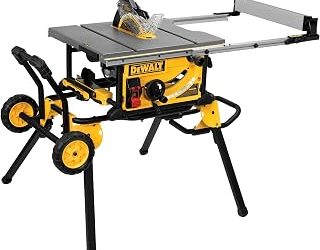
DEWALT DWE7491RS
The 10-inch DEWALT with its signature folding rolling stand remains the benchmark for serious hobbyists. Its 32½-inch rip capacity comfortably handles full sheet goods, and the rack-and-pinion fence system locks dead-straight every time — the kind of precision that makes a furniture maker’s day. The stand rolls smoothly and collapses fast, which matters when your workshop doubles as a living space.
SKIL TS6307-00
SKIL’s 15 Amp portable jobsite saw punches above its price with a surprisingly smooth fence and a compact footprint. It folds neatly onto its included stand, and the 10-inch blade spins at speeds that leave clean edges on both softwood and plywood. For a first dedicated saw or a reliable backup, it delivers where it counts without demanding premium shelf space.
DEWALT DWE7485
When square footage is tight, the compact 8¼-inch DEWALT earns its place. It rips hardwood cleanly, fits through standard doorways without negotiation, and sets up in seconds. The smaller blade diameter means thinner kerf and less waste — a detail that pays for itself over a year of furniture builds. It is the best choice for apartment workshops and apartment-bound makers.
DOVAMAN DTS10A
DOVAMAN’s 10-inch entry packs a 5,300 RPM copper motor that powers through dense stock without bogging. The extendable table on one side adds useful work surface for longer boards, and the included stand holds steady under load. It represents genuine value for makers who need full-size capability without the flagship price tag.
Generic 15 Amp 5000RPM Table Saw with Stand
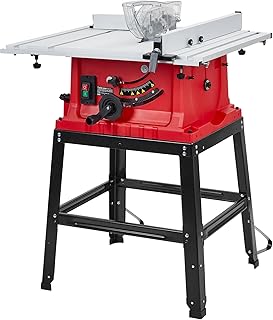
This no-frills 10-inch saw delivers 5,000 RPM and a generous 36 × 25-inch tabletop at a price that lowers the barrier to entry. The protective cover and adjustable depth add practical touches, and the bevel cut range covers standard furniture angles. It is a strong starting point for anyone testing the waters of precision woodworking.
Frequently Asked Questions
What rip capacity do I need for furniture projects?
For most furniture — desks, shelving, side tables — a 24 to 32-inch rip capacity covers the majority of cuts. If you regularly break down full 4×8 sheets, push for 32 inches or more so you can work without constantly repositioning a fence extension.
Are portable jobsite saws accurate enough for fine furniture?
Modern jobsite saws from DEWALT and SKIL hold tolerances well within what furniture work demands. A quality fence that stays parallel to the blade matters far more than raw horsepower for achieving tight joints and clean edge joints.
How important is dust collection on a table saw?
Very. Fine sawdust settles on every surface and degrades air quality in enclosed shops. A saw with a standard 2½-inch dust port lets you connect most shop vacs, keeping the workspace cleaner and your lungs happier during marathon build sessions.
Can I cut metal or plastic on a woodworking table saw?
Some listed models mention acrylic and plastic compatibility, which is possible with the right blade. Cutting metal, however, requires a dedicated metal-cutting blade and extreme caution — most furniture builders stick to wood and wood composites for safety and blade longevity.
Final Thoughts
For most home furniture makers, the DEWALT DWE7491RS sets the standard with its balance of rip capacity, build quality, and portability. The SKIL TS6307-00 offers the best value if budget is a constraint, and the compact DEWALT DWE7485 is the pick when space is the primary concern. Whatever you choose, pair it with a sharp blade, good lighting, and patience — the details that make furniture beautiful start at the saw.