Key takeaways
- Tooth Count: Higher tooth counts (60T–80T) produce smoother surfaces on dense hardwoods and reduce the post-cut sanding that dulls reflected light across your workpiece. Lower counts (32T–40T) remove material faster but leave a rougher surface better suited for dimensioning rough stock.
- Tooth Grind: Alternate Top Bevel (ATB) teeth shear cleanly across grain, which is critical when the finished edge will be visible on a cabinet door or tabletop. Flat Top Grind (FTG) rips efficiently but leaves a coarser kerf on hardwood faces.
- Blade Diameter and Arbor: Match the blade to your saw. Most jobsite and contractor table saws run 10-inch blades with a 5/8-inch arbor, while larger cabinet saws and some miter saws accept 12-inch blades with a 1-inch arbor. Always confirm your saw’s specs before ordering.
- Kerf Thickness: Full-kerf blades (about 1/8 inch) resist deflection and vibration better than thin-kerf alternatives, which matters when you need a dead-straight cut that reflects a single, unbroken line of light along an edge. Thin-kerf blades suit underpowered saws where reduced resistance helps maintain blade speed.
- Carbide Quality: Larger, sharper carbide tips stay clean longer. On hardwoods like white oak and hickory, a budget blade can dull within a few board-feet, producing friction burns that marring the surface. Investing in quality carbide pays for itself in reduced burnishing and fewer blade changes.
What's inside
Anyone who has spent an afternoon feeding figured maple or dense walnut through a table saw knows the frustration of a blade that burns, chips, or leaves a surface that scatters light unevenly across an otherwise gorgeous piece of furniture. The wrong tooth count or grind turns premium hardwood into a sanding project, and no amount of finish can fully disguise tearout once it’s there.
This guide breaks down the best table saw blades for hardwood in 2026, focusing on cut quality that lets natural grain catch and hold light the way it should. We cover tooth geometry, arbor compatibility, and real-world performance so you can match the right blade to your stock and your saw.
As an Amazon Associate we earn from qualifying purchases.


🛒 Best Price Today on Amazon
Prime members get fast, free shipping on everything above, plus member-only deals. New members get a 30-day free trial — cancel anytime.
How to Choose Table Saw Blades For Hardwood (2026)
- Tooth Count: Higher tooth counts (60T–80T) produce smoother surfaces on dense hardwoods and reduce the post-cut sanding that dulls reflected light across your workpiece. Lower counts (32T–40T) remove material faster but leave a rougher surface better suited for dimensioning rough stock.
- Tooth Grind: Alternate Top Bevel (ATB) teeth shear cleanly across grain, which is critical when the finished edge will be visible on a cabinet door or tabletop. Flat Top Grind (FTG) rips efficiently but leaves a coarser kerf on hardwood faces.
- Blade Diameter and Arbor: Match the blade to your saw. Most jobsite and contractor table saws run 10-inch blades with a 5/8-inch arbor, while larger cabinet saws and some miter saws accept 12-inch blades with a 1-inch arbor. Always confirm your saw’s specs before ordering.
- Kerf Thickness: Full-kerf blades (about 1/8 inch) resist deflection and vibration better than thin-kerf alternatives, which matters when you need a dead-straight cut that reflects a single, unbroken line of light along an edge. Thin-kerf blades suit underpowered saws where reduced resistance helps maintain blade speed.
- Carbide Quality: Larger, sharper carbide tips stay clean longer. On hardwoods like white oak and hickory, a budget blade can dull within a few board-feet, producing friction burns that marring the surface. Investing in quality carbide pays for itself in reduced burnishing and fewer blade changes.
The Best Table Saw Blades For Hardwood (2026) Reviewed
WEN BL1080 80-Tooth
The WEN BL1080 delivers ultra-fine finish cuts at a price point that makes it the first blade we recommend to anyone outfitting a home workshop. Its 80 teeth and carbide tips leave surfaces smooth enough that stain and topcoat settle evenly, preserving the way light wraps around joinery edges without micro-scratches breaking the reflection.
FOXBC 10-Inch 80-Tooth
FOXBC’s 80-tooth blade rivals more expensive options in cut quality and holds its edge impressively through long rip and crosscut sessions in cherry, walnut, and oak. The ultra-fine finish makes it a strong pick for furniture makers who finish edges without a router, since the saw-cut surface accepts finish with minimal grain raising.
SawWorks 12″ 60T ATB
For cabinet shops running larger saws, this 12-inch 60-tooth blade offers a generous arbor and enough teeth to deliver clean crosscuts across wide boards. The ATB grind handles both rip and crosscut duties in hardwood with a single blade, which is convenient when switching setups mid-project would interrupt your workflow.
8-1/4-Inch 80-Tooth Ultra-Fine Finish
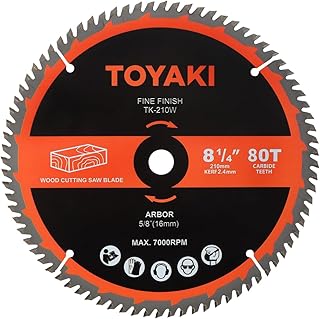
This compact 80-tooth blade fits smaller miter and table saws that can’t accept a full 10-inch diameter, making it ideal for trim carpenters and hobbyists with portable setups. Despite the smaller diameter, the high tooth count produces cuts that rival larger blades, leaving surfaces ready for a direct finish coat.
KENDO 10-Inch Set (40T + 60T)
The KENDO two-pack covers both ripping and finishing in one purchase, with the 40T blade handling aggressive hardwood rips and the 60T blade delivering clean crosscuts. This pairing makes sense for woodworkers who want dedicated blades without guessing which tooth count to grab mid-project.
Frequently Asked Questions
What tooth count is best for ripping hardwood on a table saw?
A 40-tooth blade rips hardwood efficiently while leaving a manageable surface finish. If your ripped edge will be visible on the final piece, step up to 60 teeth for a smoother result that demands less sanding before finishing.
Can I use one blade for both rip and crosscuts in hardwood?
A 60-tooth ATB blade splits the difference well enough for many home shop projects. Dedicated woodworkers will get better results by switching between a 40T rip blade and an 80T crosscut blade, but a single mid-range blade saves time and still produces good results.
Does blade quality really affect how finish looks on hardwood?
Absolutely. Dull or low-quality carbide tips tear wood fibers rather than severing them cleanly, leaving a surface that absorbs finish unevenly and shows sanding scratches under raking light. Fresh, sharp carbide produces a glass-smooth kerf that enhances grain figure.
How often should I replace my table saw blade for hardwood work?
With quality carbide and regular hardwood use, expect several hundred board-feet before noticeable dulling. Watch for burn marks on cuts, increased feed resistance, or a surface that no longer improves with light sanding — those are signs the blade needs sharpening or replacement.
Final Thoughts
For most home furniture makers, the WEN BL1080 offers the best balance of cut quality and value, while the FOXBC 80-tooth is a close second with excellent edge retention. If you run a larger cabinet saw, the SawWorks 12-inch handles wider stock with authority. Any of these blades will leave hardwood surfaces that take finish beautifully and let the grain do the talking.