Key takeaways
- Fuel Source: Electric models like the compact Lerat 500W require a reliable power outlet—great for campsites with hookups or van setups, but useless deep in the backcountry. Propane heaters run off standard canisters you can buy at any sporting goods store, making them the universal choice for true outdoor use.
- BTU Output vs. Space Size: Think of BTUs the way you’d think about lumens in a lighting fixture. A 3,800 BTU unit warms a small two-person tent comfortably; if you’re heating a six-person family shelter or a canopy-covered patio, you need 9,000 BTUs or more to move the needle without running the tank dry in an hour.
- Safety Certifications: Look for tip-over shutoff switches, oxygen depletion sensors (ODS), and overheat protection as non-negotiable features. Any propane heater meant for enclosed or semi-enclosed spaces should carry oxygen-depletion awareness, because carbon monoxide does not negotiate.
- Portability and Setup: A foldable tank holder and tool-free assembly can be the difference between a heater you actually bring on trips and one that stays in the garage. Weight under eight pounds is the sweet spot for backpackers; car campers can stretch to twelve or fifteen without complaint.
- Heat Distribution Pattern: Radiant heaters deliver focused warmth in a direct line—ideal for sitting close to. Convection-style models push warmth more evenly throughout an area. Match the pattern to how you camp: direct radiant for solo fishing trips, broader output for group gatherings.
What's inside
Nothing kills the magic of a campsite faster than biting cold creeping through your tent walls at 2 a.m. In my work designing ambience for everything from boutique lobbies to outdoor dining installations, I’ve learned one thing above all: people stay when they feel warm. That principle translates directly to camping, where the right portable heater doesn’t just raise the temperature—it lets you actually enjoy the firelight, the conversation, the stillness outside your tent instead of retreating into your sleeping bag with your teeth chattering.
This guide breaks down the five strongest camping heaters on the market right now, evaluated through the lens of output quality, heat distribution, safety engineering, and real-world usability. Whether you’re car-camping with family or hunkered down for ice fishing, you’ll find a pick here that earns its weight in your pack.
As an Amazon Associate we earn from qualifying purchases.

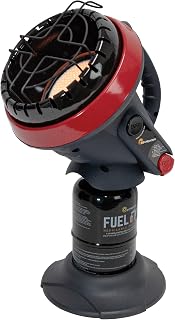


How to Choose a Space Heater For Camping (2026)
- Fuel Source: Electric models like the compact Lerat 500W require a reliable power outlet—great for campsites with hookups or van setups, but useless deep in the backcountry. Propane heaters run off standard canisters you can buy at any sporting goods store, making them the universal choice for true outdoor use.
- BTU Output vs. Space Size: Think of BTUs the way you’d think about lumens in a lighting fixture. A 3,800 BTU unit warms a small two-person tent comfortably; if you’re heating a six-person family shelter or a canopy-covered patio, you need 9,000 BTUs or more to move the needle without running the tank dry in an hour.
- Safety Certifications: Look for tip-over shutoff switches, oxygen depletion sensors (ODS), and overheat protection as non-negotiable features. Any propane heater meant for enclosed or semi-enclosed spaces should carry oxygen-depletion awareness, because carbon monoxide does not negotiate.
- Portability and Setup: A foldable tank holder and tool-free assembly can be the difference between a heater you actually bring on trips and one that stays in the garage. Weight under eight pounds is the sweet spot for backpackers; car campers can stretch to twelve or fifteen without complaint.
- Heat Distribution Pattern: Radiant heaters deliver focused warmth in a direct line—ideal for sitting close to. Convection-style models push warmth more evenly throughout an area. Match the pattern to how you camp: direct radiant for solo fishing trips, broader output for group gatherings.
The Best Space Heater For Camping (2026) Reviewed
Lerat Portable Mini Desk Heater (500W)
This compact electric unit punches above its weight for small-space warming. The built-in tip-over and overheat protection make it a solid choice for powered campsites or van-life setups where a low-watt, steady heat source pairs beautifully with the intimate glow of ambient lighting. It won’t replace a propane unit off-grid, but for table-height warmth at a pop-up campsite, it’s genuinely pleasant.
Mr. Heater Little Buddy (3,800 BTU)
The Little Buddy is the camping heater equivalent of a well-placed reading lamp—focused, reliable, and perfectly sized for what it’s designed to do. At 3,800 BTUs it warms a two-to-four-person tent without hogging floor space, and its piezo ignition means no fumbling with matches in the cold. The built-in tip-over shutoff adds a layer of confidence when you’re half-asleep.
Mr. Heater Portable Buddy (9,000 BTU)
Stepping up to the full Portable Buddy is like upgrading from a desk lamp to a proper overhead fixture. Nine thousand BTUs fill a larger tent or covered patio with genuinely enveloping warmth, and the swivel regulator accommodates one-pound or bulk tank connections. This is the unit I’d recommend for anyone who camps regularly with a group and refuses to let the cold dictate the mood.
Cordless Propane Tent Heater with Foldable Tank Holder
This portable propane model nails the portability equation. The foldable tank holder keeps the profile low for packing, while the cordless design means you place it exactly where the warmth is needed without cable tripping hazards. Radiant output delivers fast warmth to anyone within its direct line—set it at the tent entrance and the cold draft stops dead.
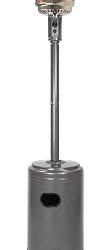
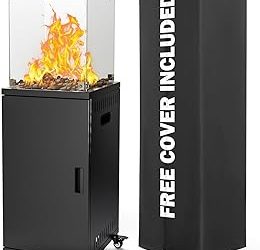
Propane Space Patio Heater with Reinforced Base
The reinforced base sets this unit apart for car-campers and outdoor hosts who set up on uneven ground. It distributes broad radiant heat across a patio or large tent footprint, and the steady propane flow means consistent output over long sessions. For winter gatherings around a portable table, it provides the kind of enveloping warmth that lets people linger and actually enjoy the night air rather than escape it.
Frequently Asked Questions
Can I safely run a propane heater inside my tent?
Propane heaters with oxygen depletion sensors and tip-over shutoffs are designed for use inside well-ventilated tents, but ventilation remains essential. Always crack a vent or window, never run one in a fully sealed space, and carry a battery-operated carbon monoxide detector as a backup safeguard.
How long does a one-pound propane canister last with these heaters?
At moderate output, a standard one-pound green canister typically runs three to six hours depending on the heater’s BTU rating. Larger 9,000 BTU units consume fuel faster—plan on roughly three hours per pound at full blast, or stretch it significantly on lower settings.
Is the 500W electric heater enough for camping?
At powered campsites or in vans with inverter setups, 500 watts provides comfortable personal-zone warmth—enough to take the edge off without draining your battery bank aggressively. It’s not a solution for heating an entire tent off-grid, but for targeted, efficient warmth it’s remarkably effective for the size.
What’s the main difference between radiant and convection camping heaters?
Radiant heaters send heat in a direct line, warming whatever is in front of them quickly—think of a spotlight versus a floodlight. Convection heaters warm the surrounding air more evenly over time. Radiant is better for focused personal warmth; convection suits larger enclosed spaces where you want consistent ambient temperature throughout.
Final Thoughts
For car campers who want reliable, powerful warmth with zero fuss, the Mr. Heater Portable Buddy remains the benchmark at 9,000 BTUs. Backcountry users prioritizing pack weight and flexibility should look hard at the Cordless Propane Tent Heater with its clever foldable tank holder. And for powered campsites where a tiny, steady presence does the job, the Lerat 500W Mini Heater delivers exactly the kind of subtle, dependable warmth that makes a temporary space feel like it belongs to you.