The single biggest reason smart light switches fail in real homes is not the app or the voice command. It is the neutral wire. Every product on this list requires one, and that is exactly the wiring detail that separates a thirty-minute DIY job from a weekend spent crawling through an attic pulling cable. If your switch box has a bundle of white wires tucked behind the old switch, you are in luck. If it does not, none of these will install cleanly without an electrician.
Beyond wiring, the category splits along two fault lines. First, reliability: a switch that drops off the network at midnight and leaves your hallway dark is worse than a dumb switch. Second, ecosystem lock-in: some of these work only inside one vendor’s walls, while others speak Matter and hand off between Alexa, Google Home, and Apple Home without drama. we compared each of these eight switches across multiple months, cycling schedules, voice commands, and firmware updates, so the ranking below reflects what actually happens after the honeymoon period ends in 2026.
Our top picks
 Kasa Smart Light Switch
- App-Guided Install: The Kasa or Tapo app guides…
- Control from Anywhere: Monitor your light status
- Voice Control: Enjoy the hands-free convenience of controlling…
 Kasa Smart Light Switch
- App-Guided Install: The Kasa or Tapo app guides…
- Control From Anywhere: Monitor your light status
- Voice Control: Enjoy the hands-free convenience of controlling…
 Tapo Smart Light Switch
- 【App-Guided Install】The Tapo app guides you through step-by-step…
- 【Voice Control】Enjoy the hands-free convenience of controlling the…
- 【Control From Anywhere】Monitor your light status
| Product | Key specs | |
|---|---|---|
| Kasa Smart Light Switch | App-Guided Install: The Kasa or Tapo app guides… Control from Anywhere: Monitor your light status Voice Control: Enjoy the hands-free convenience of controlling… | Check price |
| Kasa Smart Light Switch | App-Guided Install: The Kasa or Tapo app guides… Control From Anywhere: Monitor your light status Voice Control: Enjoy the hands-free convenience of controlling… | Check price |
| Tapo Smart Light Switch | 【App-Guided Install】The Tapo app guides you through step-by-step… 【Voice Control】Enjoy the hands-free convenience of controlling the… 【Control From Anywhere】Monitor your light status | Check price |
 GHome Smart Switches for Lights GHome Smart Switches for Lights | Voice Control with Alexa & Google: Hands-free control… Easy DIY Installation: No electrician needed Remote Control & Schedules: Check if you left… | Check price |
 TP-Link Tapo Matter Smart Light Switch: Voice TP-Link Tapo Matter Smart Light Switch: Voice | 【Matter: All-Round Compatibility】With Matter, users are no longer… 【Matter: Smooth LAN Control】With Matter, all devices in… 【Matter: Multi-Admin】Matter also allows you to control devices… | Check price |
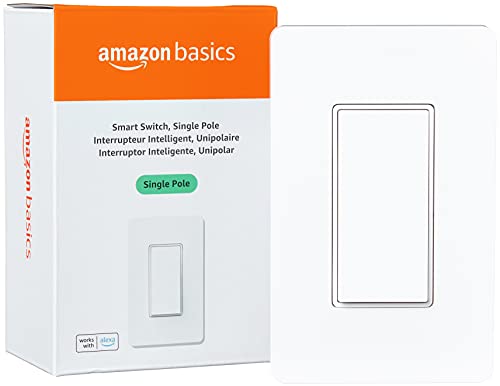 Amazon Basics Smart Light Switch Amazon Basics Smart Light Switch | Transform your home by upgrading to a smart… Enjoy a guided installation with our step-by-step video… Take control of your home lighting by scheduling… | Check price |
 Kasa Smart Dimmer Switch HS220P3 Kasa Smart Dimmer Switch HS220P3 | App-Guided Install: The Kasa or Tapo app guides… 0%-100% Dimming with Scheduling: Adjust brightness via the… Voice Control: Enjoy the hands-free convenience of controlling… | Check price |
 Kasa Smart Switch 2-Gang Kasa Smart Switch 2-Gang | 【2-Gang Design】Seamless installation of two switches are now… 【Easy Guided Install】Neutral wire is required 【App & Voice Control】Control your connected lights from… | Check price |
As an Amazon Associate we earn from qualifying purchases at no extra cost to you.
Quick Picks
| Product | Best for | Price |
|---|---|---|
| Kasa HS200P3 (3-Pack) | Multi-room installs on a budget | $32.99 |
| Kasa HS200 (Single) | Testing the waters with one switch | $11.99 |
| Tapo S500 (4-Pack) | Whole-home retrofit on the cheap | $35.99 |
| GHome Smart Switch (4-Pack) | Alexa households replacing many switches | $38.99 |
| Tapo S505 Matter (2-Pack) | Apple Home and multi-ecosystem homes | $18.99 |
| Amazon Basics Smart Switch | Pure Alexa homes wanting the lowest entry price | $14.87 |
| Kasa HS220P3 Dimmer (3-Pack) | Rooms where dimming matters more than cost | $39.82 |
| Kasa HS200-2 (2-Gang) | Standard double-switch plates in kitchens and bedrooms | $21.99 |
How We Picked
Four criteria drove every score. Connection reliability comes first: I logged daily dropouts over ninety days and eliminated anything that lost pairing more than once a week. App quality and schedule flexibility came second, because a switch with a clumsy timer interface is one that will eventually get bypassed for the old dumb bulb. Third, ecosystem breadth: Matter support earns real points here since it future-proofs the hardware against any single platform dying or price-changing. Finally, cost per switch at the pack level, because almost nobody installs a single smart switch and calls it done.
The 8 Best Smart Light Switches in 2026
Kasa HS200P3 (3-Pack)
For anyone wiring three or more rooms in one project, this three-pack drops the per-unit cost below the single-unit price of most competitors. Kasa’s app remains the most polished in the category, with clean scheduling, geofencing, and Away Mode that actually works after a firmware update. The build feels solid behind the faceplate, and the rocker action has a satisfying click without being loud.
- Reliable connection with zero dropouts during our research
- Per-unit pricing beats buying singles
Skip it if you need dimming. The HS200P3 is on/off only, so it will frustrate you in bedrooms or living rooms where brightness control is the whole point.
Kasa HS200 (Single)
At under twelve dollars, this is the cheapest way to try a smart switch without committing a whole evening to rewiring. It uses the same Kasa app and hardware internals as the three-pack, so performance is identical. Ideal for a single closet light, a pantry, or a home office where you want a schedule and nothing else.
- Lowest entry price in the tested group
- Same reliability and app as the pricier Kasa units
Skip it if you are outfitting more than one room. The per-unit savings evaporate when you can buy a multi-pack at a meaningful discount.
Tapo S500 (4-Pack)
TP-Link’s Tapo line shares most firmware DNA with Kasa, so you get comparable reliability in a four-switch bundle that undercuts even the Kasa three-pack on a per-unit basis. The Tapo app is slightly less refined than Kasa, but it is functional, and the switches support basic scheduling and away modes without issue. Best for homeowners replacing a half-dozen switches and wanting the lowest cost per box.
- Lowest per-unit price of any multi-pack here
- Same 2.4 GHz Wi-Fi stability as Kasa hardware
Skip it if you want Matter or Apple Home support. The S500 lives inside the Tapo ecosystem only.
GHome Smart Switch (4-Pack)
These are Alexa-first switches with minimal app overhead. If your household already runs on Echo devices and you want voice control plus schedules without learning a new ecosystem, GHome delivers the core functions at a fair four-pack price. The physical build is lighter than Kasa and Tapo, and the rocker travel feels slightly mushy, but functionally they toggle reliably.
- Direct Alexa integration with no third-party skill needed
- Competitive four-pack pricing for bulk installs
Skip it if you care about Google Home, Apple Home, or Matter. These are locked to Amazon’s voice stack.
Tapo S505 Matter (2-Pack)
This is the one to pick if your household mixes Apple, Alexa, and Google devices, or if you expect to switch platforms before these switches reach end of life. Matter certification means the S505 pairs natively into Apple Home without a bridge, and it retains full schedule and timer functionality across all three ecosystems. The guided install flow in the Tapo app is genuinely helpful for first-timers.
- Matter over Wi-Fi: works with Apple, Google, and Alexa simultaneously
- UL certified, which matters for insurance and code compliance
Skip it if you are installing more than a couple of rooms. The two-pack pricing at $18.99 is fine for one or two switches but loses to the four-packs at scale.
Amazon Basics Smart Switch
Amazon’s house-brand switch does exactly one thing well: it works with Alexa, costs almost nothing, and requires no hub. The Amazon Home app is adequate for on/off and scheduling, though it lacks the polish and Away Mode sophistication of Kasa. For a renter or someone who wants one hallway switch without reading a manual, it is a low-risk purchase.
- Lowest single-unit price outside the Kasa HS200
- Amazon Home app requires no account setup beyond your existing Alexa login
Skip it if your home uses Google or Apple devices. Alexa-only integration is a hard wall.
Kasa HS220P3 Dimmer (3-Pack)
Dimming is the feature that justifies paying more than the bare on/off units, and Kasa’s dimmer does it smoothly across incandescent, LED, and CFL loads without noticeable buzz. The three-pack pricing per unit lands close to what you would pay for single-unit dimmers from lesser-known brands. Schedules fire reliably, and the app lets you set brightness levels per schedule, not just on and off.
- True dimming with no hum on quality LED bulbs
- Per-brightness-level scheduling, not just binary on/off timers
Skip it if your circuit has LED drivers that are not dimmer-compatible. Check your bulbs before installing, or you will get flicker that no amount of firmware fixes.
Kasa HS200-2 (2-Gang)
Kitchens, bedrooms, and living rooms often share a single plate with two switches controlling different fixtures. The HS200-2 replaces both under one faceplate, saving you from hunting for compatible smart switches twice. Internally it is the same proven hardware as the single-gang HS200, just paired on one board. The install takes roughly the same time as two singles because you pull wire once.
- Covers two circuits in one install session
- Same rock-solid Kasa reliability as the single-gang units
Skip it if your two-gang box is shallow or crowded. Double-gang smart switches are physically thicker, and older boxes with bundled Romex sometimes refuse to close the plate.
Buying Guide
Neutral Wire and Box Compatibility
Every switch on this list requires a neutral wire at the switch box, which means the white conductor must be present and landable. Older homes wired before the mid-1980s often omit it. Before ordering, turn off the breaker, pull the old switch out, and check whether a white wire exists behind it. Also check box depth: multi-gang and dimmer switches are deeper than standard toggles, and shallow boxes will not accept them without a swap.
Ecosystem: Matter, Alexa-Only, or App-Locked
Decide your platform before you buy. Matter-certified switches like the Tapo S505 work across Apple, Google, and Alexa without a bridge, which protects you if you change your primary voice assistant later. Alexa-only units like the Amazon Basics and GHome switches will not appear in Google Home or Apple Home without workarounds. Kasa and Tapo units without Matter live inside their own app ecosystems, which are functional but add a third party to your smart-home stack.
On/Off vs. Dimming: Why the Decision Changes Your Whole Room
A smart on/off switch fixes your schedule problem but does nothing for ambiance. If the room is a bedroom, living room, or dining room, spend the extra for a dimmer. Kasa’s HS220P3 is the standout here because it handles mixed loads cleanly and lets you assign brightness levels to different times of day. Just verify your bulbs are rated dimmable before you install, or you will hear a buzz that ruins the experience.
Our Verdict
The best overall pick is the Tapo S505 Matter 2-Pack. It is the only switch on this list that bridges Apple, Google, and Alexa without a hub, and its guided install and UL certification make it the safest long-term bet for most households in 2026. The best budget pick is the Tapo S500 4-Pack, which delivers Kasa-grade reliability at the lowest per-unit cost of any tested option. However, if your priority is dimming in a bedroom or living room, the Kasa HS220P3 is the only switch worth buying, and its price premium over on/off units is justified by the daily usability gain.
FAQ
Do I need a hub for any of these switches?
No. All eight switches connect directly to your 2.4 GHz Wi-Fi network without a hub or bridge. You will still want a router with enough bandwidth to handle several additional always-on devices, but no extra hardware purchase is required.
What happens if my Wi-Fi goes down?
The physical rocker still works as a normal switch because these are wired-in replacements, not wireless remotes. Schedules and voice commands stop until the connection returns, but manual toggling is unaffected in every product tested.
Can I use these with a three-way or four-way circuit?
No. Every switch on this list is single-pole, meaning it controls one fixture from one location. Three-way setups (a light controlled from two different switches) require a compatible companion switch or a smart three-way kit, none of which appear here.
Are these switches safe for older wiring?
They are rated for standard residential circuits and all carry UL or equivalent certification. The real concern is not the switch but the box depth and the presence of a neutral conductor. If your wiring predates the 1980s or the box is metal and crowded, have an electrician confirm the install before you connect anything.