Key takeaways
- Sheen level: Matte weaves like chenille and brushed polyester diffuse light softly and hide wrinkles. Velvet and faux leather reflect, which means overhead cans will draw bright streaks across the cushions — beautiful with lamps, unforgiving with ceiling fixtures.
- Tonal value, not just color: A mid-tone like bluestone or toffee holds its character under warm 2700K bulbs. Very pale creams can go yellow-green under cheap LEDs, and true blacks swallow light in small rooms.
- Stretch and seam geometry: One-piece stretch covers move with the frame but rely on tuck-in for definition. Four-piece sets with separate cushion covers keep crisp shadow lines where the seat meets the back, which is what makes a sofa read as furniture rather than as a draped shape.
- Texture depth: Ribbed and jacquard surfaces create micro-shadows that give a sofa visual weight. Flat knits look cheap under raking side light, so if you have a floor lamp near the sofa, choose texture.
- Real-world maintenance: Confirm machine washability and whether the cover has a waterproof backing. Backed fabrics resist spills but breathe less and sit slightly stiffer, which actually helps them hold a clean silhouette.
What's inside
Most slipcover shopping starts with a stain and ends in disappointment. You measure the couch, order a cover that promises a tailored fit, and end up with something that puddles at the arms, catches every overhead beam at an unflattering angle, and reads as “we gave up” the moment anyone switches on a lamp. The fit problem is real, but there’s a second problem nobody warns you about: fabric is a light-handling surface. A slipcover changes how your sofa absorbs, scatters, and bounces every lumen in the room, and the wrong one can flatten a space you spent months getting right.
This guide looks at slipcovers the way a lighting designer would — by texture, sheen, and tonal value, alongside the usual questions of stretch, seam placement, and washability. I’ve grouped picks by the situation they solve: high-traffic family rooms with hard downlights, north-facing rooms starved of warmth, sectionals that need coverage without looking shrink-wrapped, and homes where spills are a scheduling matter rather than an accident. Each one below earns its place on fit and on how it behaves after dark.
As an Amazon Associate we earn from qualifying purchases.


How to Choose a/an Slipcover Sofa (2026)
- Sheen level: Matte weaves like chenille and brushed polyester diffuse light softly and hide wrinkles. Velvet and faux leather reflect, which means overhead cans will draw bright streaks across the cushions — beautiful with lamps, unforgiving with ceiling fixtures.
- Tonal value, not just color: A mid-tone like bluestone or toffee holds its character under warm 2700K bulbs. Very pale creams can go yellow-green under cheap LEDs, and true blacks swallow light in small rooms.
- Stretch and seam geometry: One-piece stretch covers move with the frame but rely on tuck-in for definition. Four-piece sets with separate cushion covers keep crisp shadow lines where the seat meets the back, which is what makes a sofa read as furniture rather than as a draped shape.
- Texture depth: Ribbed and jacquard surfaces create micro-shadows that give a sofa visual weight. Flat knits look cheap under raking side light, so if you have a floor lamp near the sofa, choose texture.
- Real-world maintenance: Confirm machine washability and whether the cover has a waterproof backing. Backed fabrics resist spills but breathe less and sit slightly stiffer, which actually helps them hold a clean silhouette.
The Best Slipcover Sofa (2026)s Reviewed
Easy-Going Stretch Couch Cover, Bluestone
The bluestone shade is the quiet standout here — a desaturated slate-blue that stays stable across daylight and warm lamplight instead of shifting muddy at dusk. The elasticated bottom band and one-piece construction give a clean, low-drama profile that won’t compete with a statement pendant.
H.VERSAILTEX Velvet Plush Slipcover, Taupe
Velvet is the closest thing to a dimmer switch you can buy in fabric form: the pile catches light directionally, so the sofa looks richer as the sun drops and your lamps take over. The four-piece format keeps cushion edges defined, and the taupe reads warm without going pink under incandescent-style bulbs.
VOIR Chenille Sectional Cover, Vintage Toffee
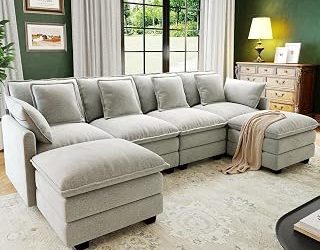
Chenille’s short, dense pile is the best diffuser in this lineup — it absorbs harsh downlight and returns a soft, even glow, which is exactly what you want under recessed cans. At 87″ x 150″ it genuinely covers oversized L-shaped sectionals, and the toffee tone adds warmth to rooms with cool northern exposure.
Stretch Sectional Cushion Cover, Ivory
Sold as individual cushion covers, this is the piecemeal solution for sectionals where a single cover never quite works. The ivory is bright enough to bounce light back into darker corners, though it does demand more frequent washing to stay that way.
4-Piece T-Cushion Leather-Look Slipcover, Brown
The faux-leather finish gives you specular highlights along the arms and seat edges — a defined, architectural look that suits directional or track lighting. Best in rooms with layered lamps rather than a single overhead source, since flat ceiling light can make any leather-look surface appear glossy in patches.
Frequently Asked Questions
Will a slipcover make my room look darker?
Only if you drop the tonal value significantly. Swapping a light sofa for a deep-toned cover removes a reflective surface from the room, so consider adding a lamp or a lighter throw to compensate.
Do stretch covers stay put?
Good ones do. Look for elasticated bottom bands, non-slip strips, and foam tuck rods, and re-tuck the seams every week or so as part of normal tidying.
How do I stop a cover from looking wrinkled under bright light?
Choose textured fabric over flat knit. Chenille, jacquard, and velvet break up light so creases never form a continuous shadow line, while smooth polyester shows every fold.
Are waterproof covers worth the tradeoff?
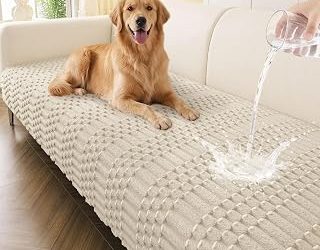
If you have young kids or pets, yes. The Easy-Going 100% waterproof jacquard cover blocks liquid at the backing while keeping a textured face, so you’re not staring at plastic sheeting.
Final Thoughts
For most rooms, the VOIR chenille sectional cover in vintage toffee is the smartest buy — it handles harsh overhead lighting better than anything else here and fits genuinely large sectionals. If your sofa is a standard three-cushion and you light with lamps, the H.VERSAILTEX velvet in taupe delivers the most depth after dark, while the Easy-Going waterproof jacquard is the practical choice for households where spills are inevitable.