Key takeaways
- Target setpoint: Set 45–50% for most basements. That band keeps light reading clean and crisp, protects wood and textiles, and stops mould growth without forcing the compressor to chase an unreachable number in summer.
- Capacity headroom: Pick a unit rated well above your actual footprint — a 4,500–5,000 sq. ft. class machine in a 900 sq. ft. basement reaches setpoint fast and then idles, which is quieter and cheaper than a small unit running flat out.
- Drainage you’ll actually use: Continuous gravity drainage via hose beats emptying a tank. If your floor drain sits higher than the outlet, choose a model with a built-in pump so the run stays hidden behind furniture.
- Sound floor: Anything above roughly 50 dB competes with conversation and music. Look for quoted 45 dB operation or a genuine sleep mode if the space doubles as a lounge or guest room.
- Light discipline: Bright status LEDs and glowing displays wreck a low-lit scheme. Prioritise units that dim or extinguish their panel — or, if you want the glow, one that turns it into deliberate accent light.
What's inside
A finished basement can be perfectly lit and still feel wrong. Once relative humidity drifts past the mid-fifties, the air carries enough suspended moisture to soften every beam a fixture throws — 2700K lamplight that reads honey-warm upstairs turns flat and slightly grey down here, wall washes lose their crisp falloff, and the whole room takes on that heavy, underlit quality no amount of extra wattage fixes. Damp air also does slower damage: paper shades cockle, veneer on media cabinets lifts at the seams, and upholstery starts holding a smell that competes with anything you’re trying to do with candlelight or dimmers.
The fix is rarely a bigger machine. It’s the number you set it to, and whether you let it hold that number. This guide covers the humidity setpoint that actually makes a basement look and feel intentional, how to match capacity to your square footage without short-cycling, the drainage and mode choices that let the unit disappear into the background, and six dehumidifiers worth setting up in a room where you care about atmosphere.
As an Amazon Associate we earn from qualifying purchases.


🛒 Best Price Today on Amazon
Prime members get fast, free shipping on everything above, plus member-only deals. New members get a 30-day free trial — cancel anytime.
How to Choose a Setting For Basement Dehumidifier (2026)
- Target setpoint: Set 45–50% for most basements. That band keeps light reading clean and crisp, protects wood and textiles, and stops mould growth without forcing the compressor to chase an unreachable number in summer.
- Capacity headroom: Pick a unit rated well above your actual footprint — a 4,500–5,000 sq. ft. class machine in a 900 sq. ft. basement reaches setpoint fast and then idles, which is quieter and cheaper than a small unit running flat out.
- Drainage you’ll actually use: Continuous gravity drainage via hose beats emptying a tank. If your floor drain sits higher than the outlet, choose a model with a built-in pump so the run stays hidden behind furniture.
- Sound floor: Anything above roughly 50 dB competes with conversation and music. Look for quoted 45 dB operation or a genuine sleep mode if the space doubles as a lounge or guest room.
- Light discipline: Bright status LEDs and glowing displays wreck a low-lit scheme. Prioritise units that dim or extinguish their panel — or, if you want the glow, one that turns it into deliberate accent light.
The Best Setting For Basement Dehumidifier (2026) Picks Reviewed
Waykar 80 Pints 5,000 Sq. Ft Energy Star Dehumidifier
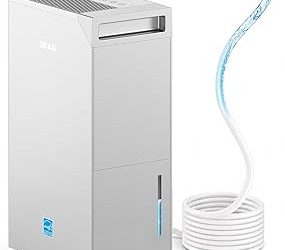
The 90° auto-swing louvre is the quiet star here: it pushes dried air across the room instead of parking it in one corner, which evens out the haze that otherwise pools under recessed cans. A 30–80% control range in 5% steps gives you fine authority over the setpoint, and continuous drainage means it runs unattended for months.
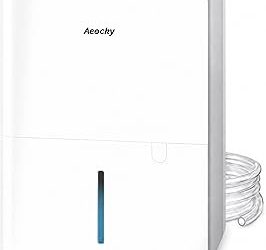
4500 Sq. Ft. 2026 Energy Star Dehumidifier, 115 Pints/Day
Rated at 45 dB, this is the pick for basements that host people — it holds 50% without ever becoming the loudest thing in the room. Auto shut-off and auto-restart make it forgiving after a power blip, and the 1.7-gallon tank is a fallback rather than a daily chore once the hose is run.
5,000 Sq. Ft. 100 Pint Dehumidifier, Energy Star Most Efficient
Three drainage options and real casters make this the most adaptable unit here, whether you’re conditioning a finished lounge or a garage-adjacent storage bay. Auto-defrost matters in an unheated basement, where cooler coils would otherwise ice up and quietly stop pulling water.
KNKA Energy Star 4500 Sq.Ft Dehumidifier, 80 Pint/Day
Smart humidity control holds your chosen setpoint tightly rather than swinging either side of it, so the room’s feel stays consistent through the day. Sleep mode dims the panel and drops fan speed — the right combination for a basement bedroom lit by a single bedside lamp.
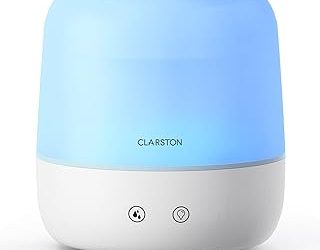
95OZ Dehumidifier with 7-Colour Ambient Light
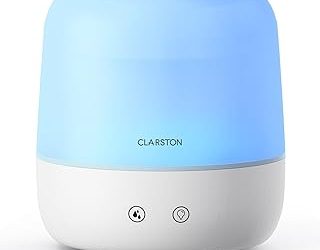
Thermoelectric rather than compressor-driven, so treat it as a spot solution for a 1,000 sq. ft. area, a closet wall, or a damp reading nook rather than whole-basement duty. The adjustable colour glow is genuinely useful as low-level accent light, and it’s near-silent enough to sit beside a sofa.
Frequently Asked Questions
What is the single best setting for a basement dehumidifier?
50% relative humidity is the reliable default; drop to 45% if you store instruments, artwork, or solid-wood furniture. Going below 40% wastes energy and dries out joinery and leather.
Should I run continuous mode instead of a setpoint?
Use continuous only for drying out after a leak or during initial commissioning. For everyday use, a setpoint lets the unit idle, which cuts running cost and noise substantially.
Why does my basement still feel clammy at 60%?
Sixty percent is above the comfort threshold and enough to scatter light and sustain mildew. Lower the setpoint to 50% and check that the unit isn’t fighting an open window or an unsealed rim joist.
Where should I position the unit?
Central, with at least 8–12 inches of clearance on the intake and exhaust sides, and off any rug that could restrict airflow. Keep it out of sightlines from your main seating position so the panel glow doesn’t intrude.
Final Thoughts
For a basement that has to look and feel finished, the 45 dB 4500 Sq. Ft. 2026 Energy Star model is the one I’d specify first — it holds 50% invisibly and inaudibly. Choose the Waykar 80 Pints for larger open plans where the auto-swing louvre earns its keep, and add the 95OZ ambient-light unit as targeted support in a nook where its colour glow becomes part of the lighting scheme rather than a distraction from it.