Key takeaways
- Height as a design variable: Add foundation height to mattress thickness and frame deck, then compare against your nightstand surface. You want the top of the mattress within roughly two inches of the lamp base for even, glare-free spill. A 2-inch bunkie board fixes a too-tall stack; an 8- or 9-inch base rescues a bed that reads too low against tall windows.
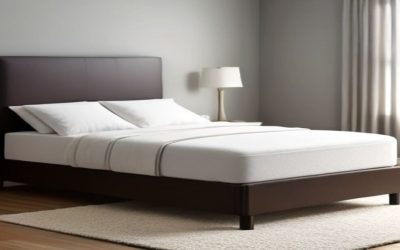
- Cover fabric and reflectance: Black knit covers swallow light and visually recede, which makes the mattress appear to hover. White or pale covers bounce ambient light back into the room and pair well with cove lighting or under-bed LED strips. Neither is wrong, but choose deliberately rather than by default.
- Load capacity and deflection: Ratings from 3,000 to 3,500 pounds signal a welded or heavily braced frame that won’t sag mid-panel. Even a slight dip changes how sheets drape and how light grazes the surface, which the eye reads as untidiness long before you consciously notice the sag.
- Genuine silence: Noise is ambience. Look for felt or fabric-wrapped contact points, non-slip surfaces, and slat spacing under three inches. Metal-on-metal joints without dampening will eventually announce themselves.
- Under-bed clearance and access: If you plan any indirect lighting beneath the bed, or you simply want to reach a plug, confirm how the foundation sits inside your frame and whether the perimeter blocks that channel.
What's inside
Most people shop for a mattress with real intensity and then treat whatever sits underneath it as an afterthought. I come at bedrooms from the lighting side, and from that vantage the foundation is one of the most consequential decisions in the room. It sets the mattress deck height, and mattress deck height determines whether your bedside lamp throws a soft pool across the sheets or blasts a bare bulb into your eye line. It decides whether a wall sconce mounted at 52 inches reads as intimate or as a spotlight. It even governs the shadow gap beneath the bed, which is the difference between a frame that appears to float and one that looks bolted to the floor.
This guide looks at box springs and low-profile foundations the way I’d assess any element in a layered lighting scheme: dimension first, surface behavior second, structural honesty third. Below you’ll find picks spanning 2-inch bunkie boards for people who need the mattress low and the light high, up through 9-inch steel bases for anyone rebuilding a room’s vertical rhythm from scratch. Load capacity, cover fabric, silence, and assembly all get weighed, because a foundation that creaks at 2 a.m. undoes every calm mood you’ve built with warm dimmers and blackout drapes.
As an Amazon Associate we earn from qualifying purchases.


How to Choose a Rated Box Spring (2026)
- Height as a design variable: Add foundation height to mattress thickness and frame deck, then compare against your nightstand surface. You want the top of the mattress within roughly two inches of the lamp base for even, glare-free spill. A 2-inch bunkie board fixes a too-tall stack; an 8- or 9-inch base rescues a bed that reads too low against tall windows.
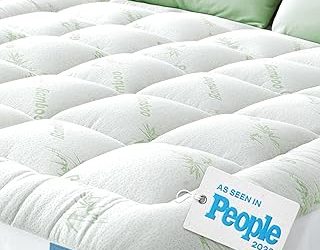
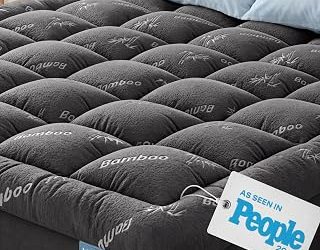
- Cover fabric and reflectance: Black knit covers swallow light and visually recede, which makes the mattress appear to hover. White or pale covers bounce ambient light back into the room and pair well with cove lighting or under-bed LED strips. Neither is wrong, but choose deliberately rather than by default.
- Load capacity and deflection: Ratings from 3,000 to 3,500 pounds signal a welded or heavily braced frame that won’t sag mid-panel. Even a slight dip changes how sheets drape and how light grazes the surface, which the eye reads as untidiness long before you consciously notice the sag.
- Genuine silence: Noise is ambience. Look for felt or fabric-wrapped contact points, non-slip surfaces, and slat spacing under three inches. Metal-on-metal joints without dampening will eventually announce themselves.
- Under-bed clearance and access: If you plan any indirect lighting beneath the bed, or you simply want to reach a plug, confirm how the foundation sits inside your frame and whether the perimeter blocks that channel.
The Best Rated Box Springs (2026) Reviewed
Amazon Basics Smart Box Spring, 5-Inch, Full
The 5-inch height is the diplomat of this category, tall enough to lift a thin mattress into a comfortable seated position without pushing the sleep surface above your nightstand lamp. Tool-free assembly and a metal support grid make it an easy, low-drama upgrade for a guest room or a first apartment.
EMODA 5 Inch Queen Foundation
The black fabric cover here is the quiet star: it absorbs stray light so the mattress edge dissolves into shadow, which reads as expensive in a dim room. With a 3,000-pound rating, non-slip surface, and no-squeak construction, it delivers a lot of structural confidence for its footprint.
MAF 2 Inch Queen Bunkie Board
When a thick hybrid mattress has already pushed your bed too high, this is the correction. Wood slats and rounded corners at just 2 inches restore your sightlines to bedside lighting and window treatments while still spreading load across a 3,500-pound-rated platform.
XINXINYAN Twin Box Spring, 9 Inch
The tallest pick here, and the right call for a twin that looks lost against high ceilings or a tall headboard. It ships with its own installation tools and a fabric cover, and the added height opens a generous shadow line beneath the bed that flatters a floating frame.
Greaton 8-Inch Wood Foundation, Queen
Amish-built, fully assembled, and split into two pieces for stairwells, this is the traditionalist’s choice and the one I’d specify for a room built around warm, low-color-temperature light. Solid wood construction means no resonance and no gradual creep toward squeakiness.
Frequently Asked Questions
Does box spring height really affect lighting?
Yes, more than most people expect. Every inch of foundation raises the sleep surface, and once the mattress climbs past your nightstand lamp’s shade opening you get direct glare instead of diffuse light across the bed.
Is a bunkie board the same as a box spring?
Functionally similar, dimensionally very different. A bunkie board like the MAF or the 2-inch king metal option provides support without meaningful lift, which is exactly what platform beds and embedded frames need.
Do I need a box spring with a modern platform bed?
Usually not for support, but many people add a low-profile board to close wide slat gaps or fine-tune height. Check your warranty first, since some mattress makers specify slat spacing.
What load capacity is enough?
For two adults plus a heavy hybrid mattress, 3,000 pounds is comfortable headroom. The rating matters less as a literal limit than as evidence of frame rigidity.
Final Thoughts
If I were specifying for a typical primary bedroom, the EMODA 5 Inch Queen is the balanced pick, its light-absorbing black cover and solid load rating serving both comfort and visual calm. The Greaton 8-Inch is the choice when you want warmth, silence, and no assembly at all, while the MAF 2 Inch bunkie board remains the fastest way to bring an overly tall bed back into proportion with your lighting.